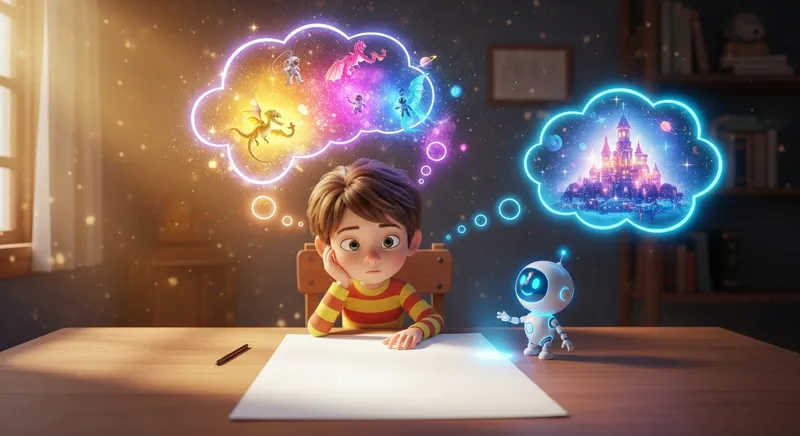
It's a scene so many parents know by heart. Your child, who can spend hours narrating epic adventures with their toys and who has an imagination that seems boundless, suddenly freezes when faced with a blank piece of paper. The vibrant storyteller disappears, replaced by a frustrated, reluctant writer who insists, "I don't know what to write!"
If you're feeling helpless and frustrated, wondering if this is a creative struggle, a developmental phase, or just plain defiance, take a deep breath. You are not alone, and your child is not broken.
This is writer's block, and it's completely normal for young kids. The pressure to translate those big, beautiful ideas from their brain onto a page can feel overwhelming. But what if you had a toolkit of fun, pressure-free "cures" to help them get past that hurdle? What if you could turn this point of friction into a moment of connection and creativity?
This guide is your answer. We'll explore why writer's block happens in young children and provide over 15 fun games, activities, and strategies to conquer the blank page for good. Plus, we'll reveal a magical AI tool that acts as a collaborative partner for your child's imagination, turning "I can't" into "Let's create!"
Why Does My Child Have Writer's Block? Understanding the "Why"
Before we jump into the cures, it helps to understand the cause. For kids aged 3 to 9, writer's block isn't about a lack of ideas. It's usually rooted in a few common, age-appropriate challenges.
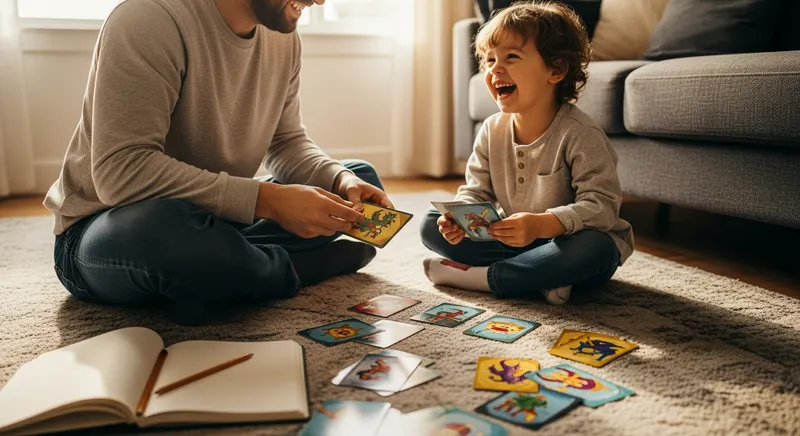
- Fear of the Blank Page: That big white space can be intimidating! Many children develop a form of perfectionism, worrying that their letters won't be neat enough, their spelling will be wrong, or their story won't be "good enough."
- Developmental Hurdles: Writing is a complex skill. According to experts at Vanderbilt University's IRIS Center, successful writing requires prerequisite skills like transcription (handwriting and spelling) and sentence structure, which are still developing in this age group. Their brains are often moving faster than their hands can keep up.
- Big Ideas, Small Hands: A child might have a grand idea for an epic like Pip's Gigantic Climb, but the physical act of writing it all down feels like an impossible task. This disconnect between their creative vision and their motor skills is a major source of frustration.
- Too Much Pressure: When writing feels like a chore or a high-stakes school assignment, the fun evaporates. As PBS KIDS for Parents points out, showing children the useful and fun purposes of writing in daily life is a powerful motivator.
Understanding these root causes helps us shift our approach from "Why won't you write?" to "How can we make this fun and easy together?"
The "Blank Page" Toolkit: 18 Fun Cures for Reluctant Writers
Here is a collection of games, exercises, and strategies designed to build confidence, spark creativity, and make writing feel like play. Pick and choose what works best for your child's age and personality.
Category 1: Games to Spark Ideas (No Writing Required!)
The first step is to separate the act of creating from the act of writing. These verbal games get the storytelling juices flowing without any pressure.
Storytelling Ball: Grab a ball. Whoever holds the ball adds one sentence to a story you build together. The sillier, the better! You start with, "Once upon a time, there was a purple squirrel who loved to dance…" then toss the ball to your child.
"What If?" Scenarios: Start a sentence with "What if…" and let your child's imagination run wild. "What if our dog could talk?" "What if you found a magical paintbrush like in the story of Justine and the Magical Paintbrush?" "What if it rained marshmallows?"
Character Hot Seat: Have your child pretend to be a character: a brave knight, a talking cat, or even the shy moonbeam from Raquel and the Shy Moonbeam. You then interview them with questions like, "What's your favorite food?" or "What are you most afraid of?"
Finish the Comic: The early education experts at Waterford.org suggest finding a simple comic strip online, covering the last panel, and having your child describe what happens next. This focuses on sequencing and plot without writing a single word.
Ready for more inspiration? Explore hundreds of magical stories to spark your next adventure!
Category 2: Low-Pressure Creative Exercises
These activities introduce the page in a playful way, focusing on words and ideas without the stress of composing a full story.
Start with a Title: This brilliant tip from Vanderbilt University's Writing Studio flips the process. Come up with a funny or exciting title together, like "The Mystery of the Missing Sock" or "The Day the Goldfish Flew." Now, you have a clear starting point.
Dive into a Photograph: Find an interesting photo: a bustling city, a strange-looking animal, a mysterious old house. Ask your child to describe what's happening, what happened right before the photo was taken, and what will happen next.
Blackout Poetry: Give your child a page from an old magazine or newspaper and a marker. Have them find words they like and circle them, then black out everything else. The remaining words form a unique poem. It's a fun way to play with language.
Story from a Bag: Fill a bag with random small objects: a key, a shell, a toy car, a button. Have your child pull out 3-4 items and weave a story that connects them all. What if the key unlocks a treasure chest found by the hero of Courtney and the Whispering Shell?
Category 3: Smart Story Starters & Prompts
Prompts are fantastic, but they work best when they are open-ended and tailored to your child's interests. As noted by Edutopia, giving children the power to choose their own topics is a powerful motivator.
Sensory Prompts (Ages 3-6): Focus on senses. "Imagine you are holding a sparkly, glittery rock. What does it feel like? What does it smell like? What magic does it have inside, like in Dania's Sparkly Adventure?"
Problem-Solving Prompts (Ages 6-9): Give them a problem to solve. "You are an animal expert planning a talent show, but the animals are all mixed up! How do you organize Rosie's Animal Show!?"
Use Real-Life Events: The National Writing Project suggests using shared life events to inspire writing that feels natural and purposeful. Talk about a recent family vacation, a birthday party, or a funny thing that happened at the park. Ask, "How could we turn that into a story?"
Become the Scribe: For younger children, offer to write the story down for them as they tell it. This honors their ideas and shows them how spoken words translate to the page. You can even read it back to them, making them feel like a real author.
Category 4: Breaking It Down (The 'Bird by Bird' Method)
Sometimes the task just feels too big. As advice from Scholastic for Parents highlights, the 'bird by bird' philosophy is a powerful tool. It means breaking a huge task into tiny, manageable steps.
Just One Sentence: Tell your child, "You don't have to write a whole story. Just write one sentence. The very first one." Often, getting that first sentence down is the hardest part.
The POW + WWW Strategy: Adapted from a method highlighted by Vanderbilt University's IRIS Center, this simple plan helps kids organize their thoughts before writing.
- Pick my idea.
- Organize my notes (Who, What, When, Where, Why).
- Write and say more.
Storyboarding: Forget sentences. Grab some paper and fold it into squares. Have your child draw the beginning, middle, and end of their story. This visual outline makes the writing process much less daunting, especially for visual thinkers who love stories like Leo and the Pet Pictures.
The Magical Cure: Using an AI Story Generator as a Collaborative Tool
Imagine your child's eyes lighting up as they see their own idea, once trapped in their head, transformed into a beautifully illustrated storybook where they are the hero. That's the magic of using an AI story generator like Dreamcraft Tale as a creative partner.
This isn't about replacing your child's creativity; it's about amplifying it. It's the ultimate cure for the "I don't know where to start" problem, turning a moment of frustration into a burst of excitement.
"My daughter went from refusing to write to creating three stories in one week. The difference? She became the hero of her own adventure. It completely changed her attitude." - Sarah, Mom to a 7-year-old
Our simple, 3-step process makes it easy:
- Imagine: Start with a fun idea. A princess who wants to be a scientist, a talking dog, or a quest to find the moon like in Luna's Moon Quest.
- Create: Enter the idea and watch as the app generates a complete, unique story with gorgeous illustrations. You can even make your child the main character!
- Read: Enjoy your brand-new story together, instantly.
Here's how Dreamcraft Tale helps bust writer's block for good:
- It Makes Them the Hero: When your child is the star of the story, their confidence and investment skyrocket. They aren't just writing about a hero; they are the hero.
- It Visualizes Their Idea Instantly: Seeing their idea come to life with professional illustrations provides immediate, positive reinforcement. This empowerment motivates them to create even more.
- It Creates a Perfect First Draft: The generated story can be read as-is or treated as a starting point. You can read it together and ask, "What should happen next?" or "Should we add a new character?" It turns writing into a fun, interactive editing game.
Best of all, you can create unlimited personalized stories in a completely safe, ad-free environment designed for families. A synthesis of studies on Research.com confirms that digital storytelling tools like this significantly enhance engagement and critical thinking.
Ready to Conquer the Blank Page for Good?
Turn your child into the hero of their own adventure. With Dreamcraft Tale, you can create a unique, beautifully illustrated story together in minutes.
➡️ Try Dreamcraft Tale for Free and Create Your First Story!
Frequently Asked Questions
How do I make writing fun for my reluctant writer?
The key is to remove the pressure and reconnect writing with play. Turn it into a game with activities like a "Storytelling Ball" or "Story from a Bag." Focus on the part they enjoy (the imagination) and separate it from the physical act of writing. Offer to be their scribe, writing down the story as they tell it. Also, as Edutopia suggests, letting them choose their own topics is a powerful way to increase their investment and enjoyment.
What are some good story starters for a 5-year-old?
For 5-year-olds, focus on simple, sensory, and relatable concepts. Instead of a complex plot, start with a "What if?" question. Examples include: "What if you found a key that could unlock any door in the world?", "What if your favorite stuffed animal came to life for a day?", or "What if you had a pet dinosaur? What would you do together?" These open-ended prompts spark imagination without a "right" answer.
Is it normal for a child to not want to write?
Yes, it is very normal, especially for children in the 3-9 age range. Writing is a complex skill that combines imagination, language, and fine motor control. Many children feel a disconnect between their fast-moving ideas and their ability to get them on paper, leading to frustration and avoidance. It is rarely a sign of defiance and more often a signal that they need a different, more playful approach.
Why does my child say they hate writing?
When a child says they "hate" writing, they are often expressing a deeper frustration. It could be that their hand gets tired (underdeveloped motor skills), they are worried about spelling words correctly (perfectionism), or they feel pressure to perform for a grade. The word "hate" is a powerful way of saying, "This is hard for me, and I feel like I'm failing." Address the feeling behind the word by making the process easier and more fun, celebrating ideas over perfect execution.
How can an AI story generator help my child with writer's block?
An AI tool like Dreamcraft Tale acts as a creative partner. It helps in several ways: 1) It eliminates the fear of the blank page by providing an instant, illustrated story. 2) It validates a child's idea by quickly turning it into a "real" book, boosting their confidence. 3) It makes the child the hero of the adventure, increasing their personal investment. 4) It turns writing into a fun, collaborative game of imagining and creating together, which is proven to increase engagement according to research on digital storytelling.