
It's 8:30 PM. You've read the same book three times, and your child's big feelings about the day are just starting to surface. How do you explain why it's not okay to grab a toy, or how to be brave when they feel scared? What if the answer was already on their bookshelf, or even better, waiting in their imagination?
Storytelling isn't just for bedtime; it's one of the most powerful and playful tools we have to nurture a child's emotional world. It's a secret passageway into understanding complex feelings like empathy, resilience, and self-awareness. Global organizations like UNESCO have highlighted that social and emotional learning is an essential priority for children's development, especially in a rapidly changing world.
But this isn't about finding the perfect book. It's about transforming story time—whether reading a classic or creating a new adventure—into a magical bonding experience that builds emotional intelligence. Here are five powerful, fun, and simple social-emotional learning (SEL) activities you can do through storytelling.
What is Social-Emotional Learning (SEL), and Why Does It Matter?
Before we dive into the activities, let's talk about what SEL is. It's a term you might hear from teachers, but it's really just about the skills we all use to navigate life successfully. The leading experts at the Collaborative for Academic, Social, and Emotional Learning (CASEL) define SEL as the process of developing the skills to understand and manage emotions, set positive goals, feel and show empathy for others, establish and maintain positive relationships, and make responsible decisions.
In simple terms, CASEL breaks it down into five core areas:
- Self-Awareness: Understanding one's own emotions and thoughts.
- Self-Management: Regulating emotions and behaviors effectively.
- Social Awareness: Showing empathy and understanding others' perspectives.
- Relationship Skills: Building and maintaining healthy relationships.
- Responsible Decision-Making: Making caring and constructive choices.
For our kids, these skills are the foundation for everything from making friends at the playground to building the resilience to try again after a failure. It's the toolkit they'll use for the rest of their lives.
How Storytelling Supercharges Your Child's Emotional Intelligence
Stories are like practice runs for real life. They allow children to explore complex social situations and big feelings from a safe distance. When a character in a story feels sad, disappointed, or proud, your child gets to experience that emotion without being overwhelmed by it. A comprehensive review published by the National Institutes of Health (NIH) found that shared book reading is a powerful vehicle for promoting these exact social and emotional skills, as it naturally leads to conversations about feelings and perspectives.
Furthermore, research shows a positive link between social-emotional skills and reading comprehension itself, suggesting that as children get better at understanding characters' feelings, they also get better at understanding the story. But the real magic happens when you move from simply reading a story to creating one together.
This is where you can truly boost your child's imagination and creative storytelling for emotional development. When you co-create a story, you're not just a reader; you're a guide, helping your child navigate a world of their own making.
"I started making up stories with my son about a 'shy little squirrel' before he started preschool. We talked about what the squirrel could do to make a friend. On his first day, he walked up to another boy and asked if he wanted to look for acorns. It was a real-life win born from a simple story we made together!" — Jessica, mom of a brave 4-year-old
5 Powerful SEL Activities You Can Do Through Storytelling
Forget just reading a book from cover to cover. Try these interactive activities to turn any story into an adventure in emotional learning.
1. The "Feeling Finder" Mission
The Activity: Turn story time into a detective game. Your child's mission, should they choose to accept it, is to find all the feelings the characters are experiencing. This simple shift turns passive listening into active emotional investigation.
How to Do It:
- Pause and Wonder: While reading, pause and ask, "How do you think the little bear felt when he couldn't find his mom? His face looks worried." This helps build social awareness.
- Connect to Real Life: Connect the character's feelings back to your child's own experiences. "Have you ever felt worried like that before? What was it like?" This builds self-awareness.
- Praise the Effort: Celebrate every time they spot a feeling. "Wow, you're an amazing Feeling Finder! You noticed the knight was feeling proud after being so brave."
2. "What Happens Next?" Scenarios
The Activity: This activity is all about empowering your child to become a problem-solver. Pause the story at a key decision point or a moment of conflict and ask them the magical question: "What happens next?"
How to Do It:
- Find a Dilemma: Stop the story when a character faces a challenge. "Oh no, the squirrel dropped all the acorns he collected for winter. What should he do now?"
- Explore the Choices: Encourage them to think through different options. This is a playful way to practice responsible decision-making. You can find dozens of ideas to get started with these 50+ Creative Story Starters for Kids.
- No "Wrong" Answers: The goal isn't to guess the book's actual ending, but to explore possibilities. This teaches them that they have agency and can think through problems creatively.
Ready for some instant inspiration? Explore our library of pre-made moral stories to spark your next adventure!
3. Co-Create a Character with Big Feelings
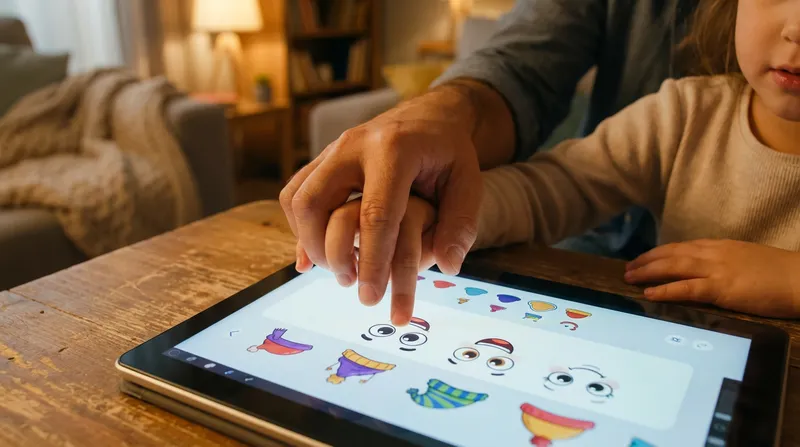
The Activity: This is where you become true story-making partners. Instead of reading about a character, create one with your child. The most powerful part? You can build a character who is dealing with the very same things your child is.
How to Do It:
- Start with an Emotion: Is your child feeling shy? Let's create a character who is a little timid but wants to be brave. "What should we name our shy little dragon? What does he want to do more than anything?"
- Use Digital Tools: This is where technology can become your creative partner. Research from Toronto Metropolitan University highlights how digital storytelling is a fantastic way to cultivate empathy. Using an app like Dreamcraft Tale lets you instantly bring this character to life. You can make your child the hero of the story or create a new friend for them, complete with vibrant, AI-generated illustrations that match your narrative.
- Guide Their Adventure: Help your new character navigate their challenges, celebrating their small victories along the way. Your child learns empathy by helping their character succeed.
4. Emotion Role-Play
The Activity: Bring the story off the page and into your living room! Acting out scenes is a fantastic, kinesthetic way for kids to understand emotions. Expert teachers often use these kinds of conversational strategies during reading to promote SEL, as confirmed by research featured in the Journal of Early Childhood Literacy.
How to Do It:
- Pick a Scene: Choose a part of the story with strong, clear emotions.
- Act it Out: Say, "Okay, you be the grumpy troll under the bridge. Show me your grumpiest face! Now I'll be the little goat trying to make you smile." Have fun and be silly with it!
- Talk About It: After your mini-performance, ask questions. "Was it fun being grumpy? What did it feel like to smile at the end?" This connects physical action to internal feelings. One parent found that when their child acted out the grumpy troll, he started giggling—and later explained that he feels grumpy when he's actually just tired. That one role-play opened up a whole new conversation!
5. The "Personalized Problem-Solver" Story
The Activity: This is the ultimate storytelling superpower for parents. Instead of searching for a book about sharing or being scared of the dark, you create personalized children's stories tailored specifically to your child's life. This is your unique opportunity to be the author of your child's emotional growth.
How to Do It:
- Identify the Challenge: Is your child anxious about an upcoming doctor's visit? Are they struggling with a new sibling? That's your story theme.
- Make Them the Hero: Create a story where the main character (with your child's name and features!) faces and overcomes this exact challenge. "Let's tell a story about the brave explorer, [Your Child's Name], who went on a mission to the doctor's office and discovered it wasn't so scary after all!"
- Leverage Technology: This is where AI becomes a parent's best friend. A tool like the Dreamcraft Tale app can take your simple idea and, in just three steps—Imagine, Create, Read—generate a complete, beautifully illustrated story. It's a powerful way to provide a personalized roadmap for navigating real-life feelings. For parents new to this, A Parent's Guide to AI can be a helpful resource.
From Story Time to Lifelong Skills: Making it Stick
Like any skill, emotional intelligence grows with practice. The key is consistency, not intensity. As noted by the experts at Big Life Journal, making storytelling a regular part of your routine helps children feel safe and open to sharing.
But what if your child isn't interested at first? That's okay! Start small. Try the "Feeling Finder" game for just one page of a book. Or let them choose a silly character to create, even if it doesn't seem to have a "lesson." The goal is connection, not perfection. Every story you create or explore together is a chance to say, "I see you, I hear you, and we can figure this out together."
Don't worry about being a perfect storyteller. Your enthusiasm is what counts. By making story time an active, creative, and personalized experience, you're not just reading—you're building a foundation of emotional strength and empathy that will last a lifetime, and maybe even help you end bedtime battles for good.
Ready to turn story time into your family's favorite new tradition? Start creating stories that build emotional skills tonight—download Dreamcraft Tale free and co-create a personalized story where your child is the hero of their own emotional journey.