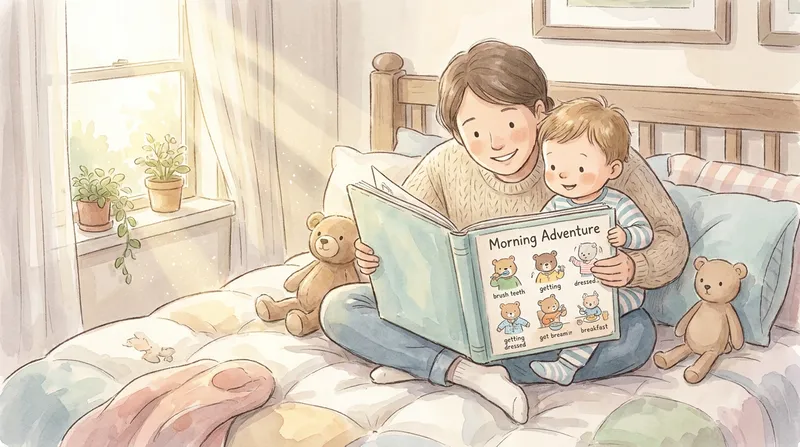
It's 7:15 AM. The clock is ticking loudly in the background. You've asked your child to put on their shoes five times, but they're currently on the floor playing with a plastic dinosaur. You feel the familiar frustration rising in your chest. You don't want to yell, but you're going to be late again.
If this sounds like your house, you're absolutely not alone. Parents everywhere are exhausted and stressed by daily morning power struggles, constant nagging, and inevitable meltdowns. We desperately need a way to get our toddlers and young kids dressed, fed, and out the door on time without resorting to yelling or handing over a tablet.
What if you could turn the most stressful part of your day into a magical adventure? By combining a visual schedule with the power of personalized storytelling, you can transform your mornings. In this guide, we'll show you exactly how to create a custom story that makes your child the hero of their own morning, ending the daily rush once and for all.
Quick Summary: What You'll Need
- A list of 5 to 6 daily morning tasks.
- The Dreamcraft Tale app to generate your story and illustrations.
- A poster board or fridge space for your visual chart.
- 10 minutes of setup time!
The Morning Struggle: Why Getting Kids Ready for School is So Hard
Every parent knows the exhausting reality of morning chaos. The cycle is incredibly predictable. First, everyone wakes up a little too late. Then, you spend twenty minutes begging your kids to get dressed while they stare blankly at their socks. Finally, the morning peaks with a massive meltdown right when it's time to walk out the door.
Establishing a peaceful morning routine for kids before school often feels like an impossible dream. But why is it so difficult? Young children, especially those between the ages of three and nine, simply don't share our adult sense of urgency. They don't care about traffic, school bells, or your 9:00 AM meeting. Their brains are wired for play, connection, and living entirely in the present moment.
When we try to force them into our rushed adult timeline, their nervous systems get overwhelmed. This overwhelm is the primary cause of morning pushback. Avoiding morning tantrums isn't about being stricter or talking louder. It's about speaking their language.
The secret to a cooperative, screen-free morning routine is imagination. When we stop fighting their natural desire to play and start using it to our advantage, everything changes. By turning mundane tasks into a personalized story, we can gently guide them through their morning without a single power struggle.
Why Traditional Checklists Fail (And What to Do Instead)
Many parenting books suggest printing out a rigid, corporate-style checklist to keep kids on track. While having a plan is essential, barking orders from a clipboard simply doesn't work for young children. Toddlers and preschoolers crave connection and autonomy. When mornings consist entirely of parent-led demands like "brush your teeth," "eat your eggs," and "find your backpack," children naturally push back to assert their independence.
According to early childhood experts at First Things First, predictable routines help preschoolers feel safe, reduce meltdowns, and build important life skills like responsibility and independence. However, these routines must be child-led rather than parent-enforced.
Instead of a boring checklist, your preschool morning routine needs to feel like a game they're winning. When you tell a child what to do, they resist. When you invite a child to solve a puzzle or complete a quest, they jump into action.
This is where the shift happens. You need to transition from telling your child how to get ready for school to letting a visual, story-based system guide them. When the routine becomes an engaging narrative, the child takes ownership. They're no longer following your orders. They're completing their own special mission.
The Magic of a Morning Routine Story for Kids
Imagine replacing your daily nagging with a personalized adventure. We call this the Dreamcraft Tale "Morning Hero" concept. Instead of a standard checklist, you create a morning routine story for kids where your child is the main character saving the day by completing their daily tasks.
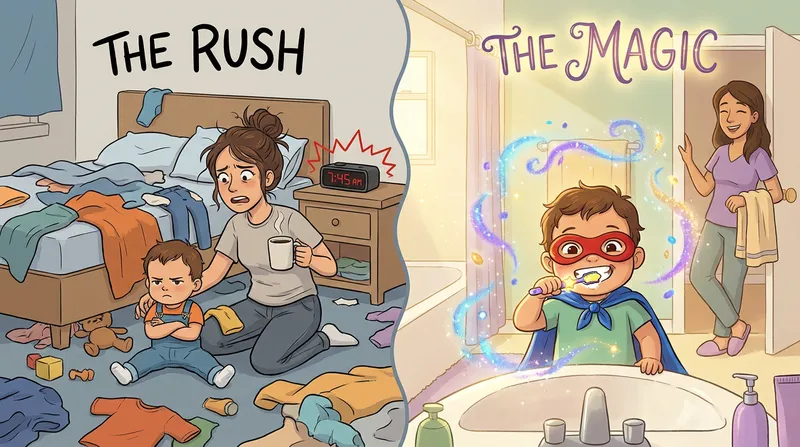
In this story, brushing teeth is no longer a boring hygiene task. It becomes an epic battle against the fuzzy plaque monsters invading the kingdom. Getting dressed isn't a chore. It's the crucial moment when the hero puts on their magical armor for the day. Eating breakfast is fueling up the spaceship for an intergalactic journey.
Framing tasks as quests builds incredible intrinsic motivation. Research from the National Association for the Education of Young Children highlights that children who engage in pretend play and storytelling build stronger cognitive skills and emotional regulation. By turning the morning into a story, you're boosting their development while getting them out the door.
If you want inspiration on how to turn a big challenge into a fun adventure, read Pip's Gigantic Climb. Just like Pip tackles a massive obstacle step by step, your child can conquer their morning tasks.
Using a custom story is also the ultimate screen-free morning routine. Many parents rely on morning cartoons to keep kids quiet, but turning off the television often triggers a massive transition meltdown. A story provides the entertainment and engagement they crave without the harmful effects of morning screen time.
How to Create a Visual Schedule for Toddlers Using Stories
Pairing your custom story with a physical toddler morning routine chart is the key to long-term success. Children are visual learners, and they need to see their story come to life. Here is a step-by-step guide to building a visual schedule for toddlers using the Morning Hero framework.
First, identify your anchor points. According to pediatric experts at Children's Health, a daily routine chart gives younger kids a helpful visual to understand what they need to do and what comes next. Write down the five or six non-negotiable tasks your child must complete every morning.
If creating a custom story from scratch sounds overwhelming at the end of a long day, Dreamcraft Tale does the heavy lifting for you.
The Dreamcraft Tale 3-Step Process:
- Imagine: Input your child's name and favorite theme (like dinosaurs or fairies).
- Create: Add their morning tasks and let the AI weave them into an ad-free, captivating adventure.
- Read: Enjoy the story together using our Beautiful AI Illustrations.
Once you have your story, you can print these Beautiful AI Illustrations directly from the app to use as your chart images! Much like the creative magic found in Justine and the Magical Paintbrush, creating the artwork together makes the process incredibly special.
Arrange these pictures on a poster board in chronological order. Underneath a picture of your child in a space helmet, write "Put on Space Suit" (Get Dressed). Under a picture of a rocket ship, write "Fuel Up" (Eat Breakfast).
Finally, transition from reading the story to independent action. On the first few days, read the story out loud as they complete the tasks. By the second week, simply point to the chart and ask, "What does our hero need to do next to save the galaxy?" The visual cues will guide them entirely on their own.
Building an ADHD Morning Routine for Kids
Mornings can be particularly challenging for neurodivergent children. Kids with ADHD often struggle with time blindness, meaning they can't feel the passage of time. They also face executive dysfunction, making it incredibly hard to break a large goal like "get ready for school" into small, actionable steps.
For these families, a standard kids daily schedule is simply not enough. An ADHD morning routine for kids must rely heavily on visual cues, clear steps, and high-dopamine engagement.
Occupational therapists at the NAPA Center explain that visual schedules help kids understand how to manage their time and provide a sense of security, especially for those who have difficulty following verbal instructions. When a child with ADHD hears a list of verbal commands, their working memory often drops the information immediately. A visual, story-based chart keeps the information present and accessible.
Pro-Tip for Neurodivergent Families: Gamifying the morning is essential. Use Dreamcraft Tale's personalized audio stories as a gentle, screen-free timer. Instead of setting a stressful alarm clock that induces anxiety, tell your child, "Let's see if you can put on your superhero armor before the story about Dania's Sparkly Adventure is over!"
This method keeps them moving forward, provides a steady stream of engaging audio to satisfy their brain's need for stimulation, and completely eliminates the need for nagging.
What strategies have worked for your mornings? Share in the comments below, our community of parents would love to hear from you!
Step-by-Step: Your Morning Routine Checklist for Kids
To help you get started, here is a realistic sequence of toddler morning activities. You can use this exact flow to build your morning routine checklist for kids.
The Raising Children Network notes that routines create an organized and predictable home environment which helps your child feel safe and secure. Keeping the steps in the exact same order every single day is crucial for building habits.
Here is a template you can adapt into your own story:
- Wake Up and Stretch: The hero awakens from their magical slumber. (Task: Get out of bed).
- Visit the Magic Waterfall: The hero must clear the sleepy dust from their eyes. (Task: Use the potty and wash hands).
- Put on the Armor: A hero cannot go on a quest in their pajamas. (Task: Get dressed).
- Fuel the Engine: The hero eats a powerful meal to gain super strength. (Task: Eat breakfast).
- Defeat the Plaque Monsters: The hero uses their magic wand to scrub away the fuzzy invaders. (Task: Brush teeth).
- Equip the Speed Boots: The final step before leaving the castle. (Task: Put on shoes).
If you want to see how fun a sequenced event can be, check out Rosie's Animal Show!, which follows a wonderful step-by-step narrative.
You can take this exact checklist, open the Dreamcraft Tale app, and ask it to create a story featuring your child completing these six specific missions. Print the results, stick them to your fridge, and watch the morning magic happen.
Conclusion: Start Your Screen-Free Morning Adventure Today
Swapping screens and nagging for personalized storytelling is the most effective way to change your family's daily rhythm. By making your child the hero of their own morning, you build their confidence, nurture their imagination, and completely eliminate the need for power struggles.
You don't have to change everything at once. Start small tomorrow morning. Pick just one task, like brushing teeth, and turn it into a tiny adventure. As your child responds to the magic, you can build out the rest of the visual schedule.
And when the day is done and it's time to wind down, Dreamcraft Tale is there for that too, turning bedtime into the magical bookend to your child's heroic day.
Ready to transform your mornings? Join thousands of families who've already traded morning meltdowns for morning magic. With our Shared Story Library, an ad-free experience, and a free trial to get you started, your first personalized adventure is waiting. Just like the brave journey in Luna's Moon Quest, your family's path to peaceful mornings starts with a single step.
Download Dreamcraft Tale on iOS or Get it on Android today!
Frequently Asked Questions
How long should a toddler morning routine take?
A realistic morning routine for a toddler or preschooler should take between 30 and 45 minutes. However, it's highly recommended to pad the schedule with an extra 10 to 15 minutes. This buffer accounts for dawdling, unexpected big feelings, or a sudden need to find a specific missing toy. Rushing creates anxiety, so giving yourself extra time is the best defense against morning stress.
How do I stop my toddler from dawdling in the morning?
The best way to stop dawdling is to replace verbal nagging with an engaging visual schedule for toddlers. Use a morning routine story to keep them moving forward to the next quest. Additionally, avoid turning on the television. Screens capture their attention completely, and turning them off almost always triggers stalling and tantrums.
What is a good morning schedule for a 4 year old?
A great schedule for a four-year-old is simple and chronological. A standard flow is: wake up, use the potty, wash hands, get dressed, eat breakfast, brush teeth, and put on shoes. The specific order matters less than the consistency. Doing the tasks in the exact same sequence every single day builds a predictable habit that their brain will eventually follow on autopilot.
Should kids watch TV in the morning before school?
It's highly advised to avoid morning screen time. While it might seem like a good way to keep them quiet while you pack lunches, turning off the TV often leads to major power struggles. Avoiding morning tantrums is much easier when you use screen-free alternatives. Listening to an audio story or looking at a personalized storybook keeps them entertained without the negative transition effects of screens.
How do you get an ADHD child ready for school on time?
Getting a neurodivergent child ready requires an ADHD morning routine for kids that relies on visual cues rather than verbal instructions. Use clear, step-by-step charts with pictures. Gamify the tasks by turning them into a story or a race against an audio track. Break big tasks down into micro-steps (like "put on left sock" instead of "get dressed") to help them overcome executive dysfunction.