From Stage Fright to Spotlight: The Magic of Storytelling for Kids
Every parent has experienced this heartbreaking moment. You are watching your incredibly creative child, the one who invents entire galaxies in your living room, suddenly freeze up when asked to speak in front of a group. Their brilliant imagination gets locked behind a wall of stage fright and anxiety. You desperately want to help them express their big ideas, but finding the time to create easy-to-use lesson plans and unique storytelling scripts feels like an impossible task.
If this sounds familiar, you are not alone. Many parents and educators watch young children struggle with a lack of confidence when speaking up. We know you want to make practice fun and engaging rather than stressful. The good news is that you do not need to be a professional public speaker to help your little one find their voice. Whether your little one is 2 or 10 years old, these strategies are designed to grow with them.
We know the struggle of trying to find the perfect balance between education and entertainment. You want activities that are meaningful, but you also need them to fit into your busy schedule. That is exactly why we put together this comprehensive resource. Whether you are a time-pressed professional parent looking for a quick weekend activity, or an education-focused caregiver preparing for a school event, these strategies will work for you.
This ultimate guide is designed specifically for you. We are going to share structured, fun, and interactive storytelling for preschoolers that build confidence naturally. From actionable lesson plans and tactile activity ideas to tips for creating winning competition scripts, you will find everything you need to turn stage fright into a spotlight moment. Let us dive into the wonderful world of preschool storytelling activities!
The Hidden Superpowers of Early Childhood Storytelling
Storytelling is so much more than a cozy bedtime routine. It is a foundational pillar for your child's cognitive and emotional development. When children practice oral storytelling activities for kids, they are actually building complex neural pathways that will serve them for the rest of their lives.
The benefits go far beyond just having fun. According to a long-term study by Duke University, children who engage in complex oral storytelling at a young age demonstrate higher language and literacy skills throughout their elementary school years. The research proves that when caregivers use engaging language during early childhood storytelling, children perform significantly better academically.
Furthermore, speaking stories out loud directly impacts future reading comprehension. Research from the University of North Carolina at Chapel Hill highlights a strong link between preschool oral storytelling skills and later reading development. They found that the stronger a young child's storytelling skills were as a preschooler, the faster their reading scores increased from first through sixth grade.
By introducing an early childhood storytelling lesson plan into your weekly routine, you are giving your child a massive head start. They learn how to sequence events, understand cause and effect, and develop deep empathy for others.
How to Teach Storytelling to Preschoolers: A Simple Lesson Plan
You might be wondering how to teach storytelling to preschoolers without making it feel like homework. The secret is to keep it short, sweet, and highly interactive. Here is a simple, 15-minute daily early childhood storytelling lesson plan that parents and teachers can use immediately.
Step 1: Start with the Familiar (5 minutes)
Begin by asking your child to tell a story about something that actually happened today. According to the National Association for the Education of Young Children, storytelling helps preschoolers process important daily events through collaborative narrative building. Ask guiding questions like, "What happened first when we went to the park?" and "What did we do next?"
Step 2: The "I Do, We Do, You Do" Method (5 minutes)
This is a classic teaching technique that works wonders for narrative building.
- I Do: You tell a very short, silly story. Make sure it has a clear beginning, middle, and end. Use exaggerated facial expressions and funny voices. This shows your child that it is okay to be silly.
- We Do: Start a new story and ask your child to help you finish the sentences. Gently guide them if they get stuck by offering two choices. You might say, "Did the magical frog jump over the moon, or did he dive into the sparkly pond?" This scaffolding gives them the support they need to feel successful.
- You Do: Give your child a prompt and let them tell a story all by themselves. Put your phone away, make eye contact, and react with genuine surprise and delight to their plot twists. This undivided attention is the most powerful tool you have to build their confidence.
Step 3: Read and Model (5 minutes)
Finish the lesson by reading a structured adventure together to model good story flow. A great example to read is Luna's Moon Quest, which perfectly demonstrates how a character faces a challenge and finds a creative solution. Point out how Luna's feelings change throughout the adventure.
Engaging Preschool Storytelling Activities and Games
To keep the momentum going, you need to infuse play into your routine. Preschool storytelling activities should feel like a delightful game, not a chore. Here are some of our favorite storytelling games for kindergarten and preschool that require almost zero prep time.
1. The "Pass the Story" Game
This is perfect for family dinners or car rides. One person starts the story with a single sentence, such as, "Once upon a time, a purple dinosaur found a magic key." The next person adds one more sentence. Keep passing the story back and forth. The sillier it gets, the better! This teaches kids how to build upon someone else's ideas and think on their feet.
2. Picture Prompt Storytelling
Visuals are incredibly powerful for young minds. Gather a few family photos, magazine cutouts, or magical illustrations. Place one picture prompt storytelling card on the table and ask, "What do you think is happening in this picture?" Let their imagination run wild. For inspiration on how a simple visual can spark a huge adventure, read Justine and the Magical Paintbrush with your little one.
3. The "What If" Game
Ask your child a ridiculous "what if" question to kickstart a narrative. "What if our dog could talk, but he only spoke in rhymes?" or "What if it rained marshmallows today?" The most important rule here is to let the child lead the creative direction without correcting their logic. If they say the marshmallows turn into flying horses, roll with it!
What is your child's favorite story theme? Tell us in the comments below, we would love to hear their most imaginative ideas!
Hands-On Fun: Storytelling Props and Sequencing Activities
Young children are highly tactile learners. They often need physical objects to anchor their thoughts while speaking. Incorporating storytelling props for preschool is a game-changer for kids who lose their train of thought easily.
Every child has a story worth telling. Your job is simply to give them the stage.
Create a DIY Storytelling Felt Board
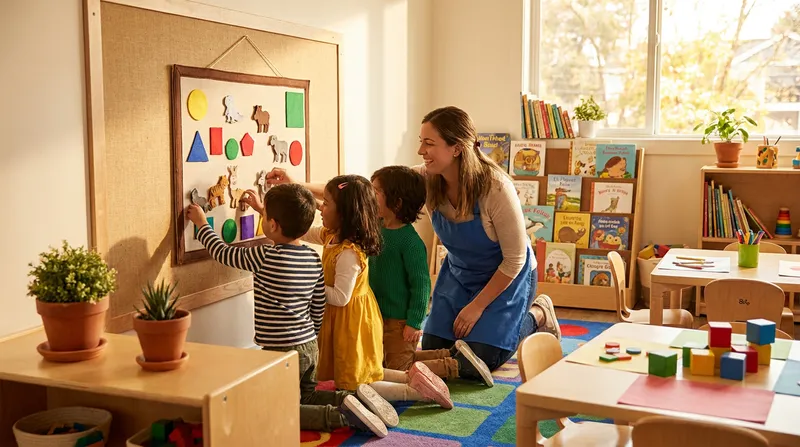
You do not need to spend a lot of money to create magic. You can make DIY storytelling felt board ideas at home in under ten minutes. Simply glue a large piece of plain felt to a piece of cardboard. Then, cut out simple shapes from different colored felt, like trees, suns, animals, and people. You can even print or display the beautiful illustrations from your Dreamcraft Tale stories and use them as your felt board characters, turning a digital story into a hands-on, tactile adventure. Because felt sticks to felt naturally, your child can move the characters around the board as they narrate their tale.
Mastering Story Sequencing Activities
Story sequencing activities preschool style are crucial for teaching the concept of beginning, middle, and end. Create three simple cards labeled 1, 2, and 3. Have your child draw a picture for each card representing the parts of their story. As they speak, they can point to the corresponding card. This visual roadmap gives them immense confidence.
Use Everyday Household Items
You can use animal toys or household items as props. Grab a toy microphone, a funny hat, or a stuffed bear. When they hold the prop, they step into character. To see how animals can inspire amazing narratives, check out Rosie's Animal Show! together.
Winning Hearts: Short Moral Stories for Kids Competition
As your child's confidence grows, they might want to participate in a school or community storytelling competition. This can be a nerve-wracking experience for parents, but with the right preparation, it can be an incredibly empowering milestone.
When preparing for a short moral stories for kids competition, it helps to know what judges are looking for. They want clear morals, engaging pacing, and unique concepts. They also look for emotional delivery.
According to the Texas A&M Institute for Early Childhood Development and Education, pausing during a story to ask children to imagine different outcomes encourages them to think about different perspectives and develop deep empathy. You can use this technique during practice. Pause and ask your child, "How does the hero feel right now?" This will help them naturally add vocal inflection and emotion to their performance.
Finding the perfect story telling competition script for kids is often the hardest part. You want something unique that fits a specific time limit. Translating these emotional nuances into a written script can feel overwhelming when you are short on time. This is where Dreamcraft Tale becomes your family's creative partner.
Dreamcraft Tale is completely ad-free and uses carefully designed AI to ensure every story is age-appropriate, wholesome, and safe for your little one to share on any stage. Our AI story generator allows parents to input specific themes, moral lessons, and character traits to create a completely unique, perfectly timed script.
With Dreamcraft Tale's easy 3-step creation process, you simply Imagine, Create, and Read. You type in a prompt like, "A story about a brave little squirrel who learns the importance of sharing acorns, taking exactly two minutes to read." In moments, the AI generates a complete narrative featuring personalized characters, making your child the hero, alongside beautiful AI illustrations. Because the story is tailored to them, children memorize it much faster. They are not just reciting words; they are sharing their own personal adventure. For an example of a beautiful, competition-worthy story about finding one's voice, read Lily's Happy Voice.
Overcoming Stage Fright: Oral Storytelling Activities for Kids
Even with the best script and the coolest props, stage fright can still strike. It is vital to validate your child's fear of speaking in front of others. Offer empathetic, gentle solutions rather than pushing them too hard. Let them know that even adults get nervous!
Practicing oral storytelling activities for kids in a safe, judgment-free home environment offers massive psychosocial benefits. A report from the U.S. Department of Education (ERIC) notes that oral storytelling provides critical opportunities for self-expression, identification with characters, and empathic understanding of others.
Start Small and Build Up
Do not start by having them perform for the whole extended family. Begin by having them practice in front of a row of stuffed animals. Once they master that, have them tell the story to the family pet. Animals are the best, most non-judgmental audiences! Finally, they can perform for you and your partner.
And if you need inspiration for the perfect practice story, explore thousands of ready-made adventures in Dreamcraft Tale's Shared Story Library, which features mobile-first offline capability for practice anywhere, no creation required on your most exhausted evenings.
If your child needs a boost of bravery, read them Pip's Gigantic Climb. It is a wonderful tale about overcoming big obstacles and finding inner courage, perfect for interactive storytelling for preschoolers.
Start Your Family's Storytelling Adventure Tonight
Every child has a beautiful imagination waiting to be shared with the world. By using these preschool storytelling activities and learning how to teach storytelling to preschoolers, you are giving your child the gift of confidence. Remember that perfection is never the goal. The true goal is connection, joy, and building a safe space where your child feels heard.
Whether you are preparing for a big school competition or turning tonight's bedtime into a magical bonding experience, download Dreamcraft Tale on iOS or Android today. Join thousands of families already creating memories together. Watch their eyes light up as they become the brave hero of their very own adventure!
Frequently Asked Questions
How long should a storytelling competition script be for a preschooler?
For children aged 3 to 5, the sweet spot is usually 1 to 2 minutes, which is about 150 to 250 words. This keeps the story short enough for them to memorize comfortably, but long enough to have a clear beginning, middle, and end.
What are the best storytelling props for preschool children?
The best props are simple and accessible. Hand puppets, felt board cutouts, story stones with painted pictures, and even everyday household objects work wonderfully. The goal is to provide a physical anchor that sparks their imaginative play.
How do I teach my child story sequencing?
A great method is to use three simple picture cards representing "first", "next", and "last". You can practice this concept using their favorite daily routines. For example, ask them to sequence getting ready for bed: first we brush teeth, next we read a book, last we turn out the light.
How can I help my child overcome stage fright before a storytelling competition?
Focus on low-pressure practice. Have them tell their story to a pet or a row of stuffed animals first. Remind them that the goal is simply to share a fun adventure with the audience, not to win a prize. Celebrate their bravery just for standing up!
Can AI tools help me write a moral story for my child's competition?
Absolutely! Platforms like Dreamcraft Tale are perfect for this. Parents can generate unique, personalized stories with specific moral lessons that perfectly match their child's speaking style and interests. This ensures your child has a one-of-a-kind script that they are excited to share.