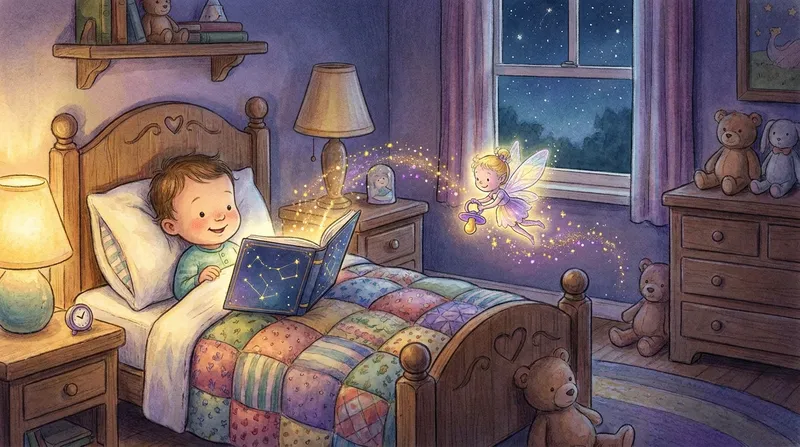
Let's talk about the elephant in the nursery. You are terrified of taking away your child's pacifier.
Whether you call it a pacifier, dummy, binky, or paci, every parent knows the deep, sinking feeling that comes with the thought of weaning. You are picturing the sleepless nights, the epic tantrums, and the heartbreaking tears. For parents of older children (ages 3 to 9), there is an added layer of complexity. Your child might feel a sense of shame about still needing their dummy, yet they have a deep, emotional attachment to this ultimate comfort object. You desperately need a gentle, empowering method to help them let go without feeling traumatized.
If you are wondering how to get rid of pacifier habits without turning your home upside down, you are in the right place. Bedtime doesn't have to become a battlefield. By combining expert advice, creative dummy fairy ideas, and the magic of a personalized pacifier weaning story, you can help your child feel proud and ready to say goodbye.
The Pacifier Struggle: Why Saying Goodbye is So Hard
Giving up the pacifier is a major milestone, and it's completely normal for both you and your child to feel anxious about it. For a toddler or a young child, a pacifier isn't just a piece of silicone. It is their safe space, their soothing mechanism, and their best friend during stressful moments.
For older children between the ages of 3 and 9, the dummy often becomes a secret source of comfort. They might only use it at night or hide it when friends come over. This creates a challenging dynamic where the child knows they are "too big" for it, but they simply don't know how to stop dummy habit behaviors on their own.
This is exactly why forcing the issue often backfires. When children feel pressured, they cling harder to their comfort objects. Instead of taking something away, the secret to success is giving them something better. By using a personalized story, you can shift the narrative. You transition the experience from a scary loss into an empowering adventure where your child is the brave hero.
When to Wean Pacifier: What the Experts Say
One of the most common questions parents ask is when to wean pacifier use. If you are feeling guilty that your child is still using one, take a deep breath. You are doing a great job, and it is never too late to start a gentle transition.
However, there are medical and dental reasons to begin the weaning process. According to the American Academy of Pediatric Dentistry (AAPD), parents should aim to stop pacifier use by 18 months, and absolutely no later than age 3. Prolonged use can lead to permanent changes in the shape of the roof of the mouth, causing what dentists call toddler pacifier teeth (often seen as an open bite or crossbite).
Additionally, research from the Mayo Clinic highlights a balanced perspective. While pacifiers are incredibly helpful for infants and can even reduce the risk of SIDS, continuing the habit into the toddler years increases the risk of middle ear infections and misaligned teeth.
If your child is already past three, the dental window has narrowed, but the emotional and behavioral transition is still absolutely achievable. The goal now is to focus on a positive, supportive environment to help them make the transition smoothly.
Signs Your Child is Ready to Drop the Dummy Habit
Sometimes, children give us subtle clues that they are developmentally ready to move on. Recognizing these signs can make figuring out how to stop dummy habit behaviors much easier.
According to pediatric experts at Children's Mercy Hospital, there are several actionable signs that indicate it's time to intervene:
- Speech Delays: If your child is having trouble talking, babbling, or pronouncing certain words, the pacifier might be getting in the way of their tongue movement.
- Chewing Issues: Difficulty biting or chewing food properly can be a sign that pacifier use is affecting their jaw development.
- Dental Shifts: If you notice their front teeth are not lining up correctly, it is time to start the weaning process.
- Increased Independence: If your child is showing signs of wanting to do things like a "big kid" (such as dressing themselves or helping with chores), you can leverage this desire for independence.
Finding their own voice is a magical milestone for any child. Just like the protagonist in Lily's Happy Voice who discovers the joy of singing, your child will discover that they have wonderful things to say once the pacifier isn't in the way.
Popular Pacifier Weaning Tips and Methods
Every child is unique, which means there is no single "right" way to say goodbye to the binky. The American Academy of Pediatrics (AAP) suggests starting the weaning process early, but if you are dealing with an older toddler, you need a solid game plan. Here are the most effective pacifier weaning tips to consider:
The Cold Turkey Pacifier Method
This method involves simply taking the pacifiers away all at once. While the cold turkey pacifier approach sounds harsh, many parents swear by it. It removes the confusion of gradual weaning. The catch? You have to stay incredibly strong through a few tough nights. If you choose this route, validate your child's feelings. Tell them, "I know you miss your dummy, and it's okay to feel sad."
Gradual Weaning
If cold turkey feels too intense, try fading the pacifier out slowly. Start by limiting its use to only the house, then only the bedroom, and finally, only at night. This gives your child time to adjust to life without their comfort object during the day.
The Snip the Pacifier Method
Here is a clever trick some parents swear by: snip a tiny hole in the tip of the pacifier. It breaks the satisfying suction, and many kids naturally lose interest within a few days. Caution: The American Academy of Pediatrics (AAP) advises closely monitoring any modified pacifier, as loose pieces can pose a serious choking hazard.
Using a Pacifier Transition Object
Replacing the pacifier with a new comfort item is a brilliant strategy. A pacifier transition object could be a soft blanket, a special stuffed animal, or even a magical item. You can read a story like Courtney and the Whispering Shell to introduce the idea of finding comfort in a new, special object that listens to their worries.
Enter the Dummy Fairy: A Gentle, Magical Approach
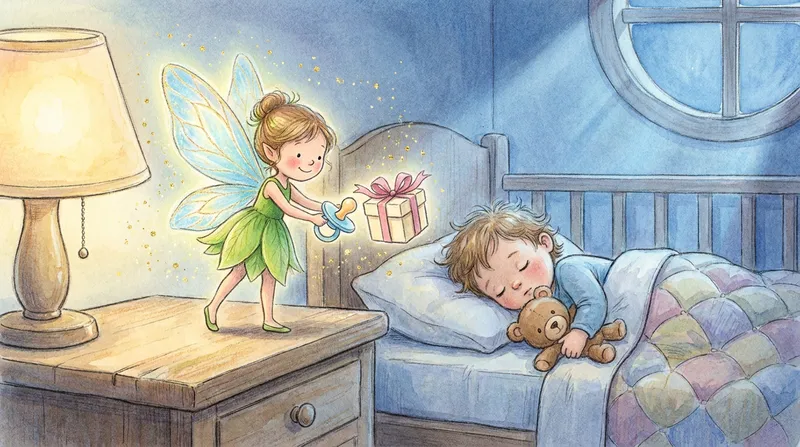
If you want to avoid tears and create a sense of wonder, the binky fairy story is a beloved parenting hack. The concept is simple: your child voluntarily gives their pacifiers to the Dummy Fairy, who takes them to new babies who need them. In return, the fairy leaves a special gift.
Here are some creative dummy fairy ideas to make the visit unforgettable:
- The Collection Box: Have your child decorate a special shoebox with stickers and markers. This gives them a sense of ownership over the process.
- The Countdown: Put a calendar on the fridge and count down the days until the fairy arrives. This eliminates surprises and builds positive anticipation.
- The Exchange: Have your child place the box on the front porch or at the end of their bed. Overnight, swap the box for a new toy or a special book.
To make this even more magical, you can read Dania's Sparkly Adventure to show your child how exciting it is to experience a visit from a magical friend.
What creative dummy fairy idea worked for your family? Drop it in the comments below, we would love to hear your story!
How to Use a Pacifier Fairy Letter Template
To seal the deal, the Dummy Fairy should leave a personalized note. A well-crafted pacifier fairy letter template does wonders for a child's self-esteem.
Here is a quick template you can copy and customize:
"Dear [Child's Name],
I am so incredibly proud of you! My fairy helpers told me that you are growing up so fast and that you are ready to be a big [boy/girl/kid]. Thank you so much for giving me your dummies. I am going to take them to the new little babies who really need them right now.
Because you were so brave and generous, I left you a special surprise. Whenever you miss your dummy, just hug your new gift and remember how strong you are!
Keep shining bright,
The Dummy Fairy"
Roll the letter up like a scroll and tie it with a shiny ribbon. You can even sprinkle a little glitter (fairy dust) on the windowsill for added effect.
Best Books to Help Stop Pacifier Use
Reading about a transition helps children process their emotions safely. A good bye bye binky book can introduce the concept of letting go in a way that feels relatable rather than threatening.
A few well-loved titles parents turn to:
- Pacifiers Are Not Forever by Elizabeth Verdick, illustrated by Marieka Heinlen. A gentle, matter-of-fact board book that explains why the pacifier goes away.
- No More Pacifier for Piggy! by Bernette Ford, illustrated by Sam Williams. Piggy's pacifier keeps getting in the way of playing, and Ducky helps her say goodbye.
- Bea Gives Up Her Pacifier by Jenny Album, illustrated by Claire Keay. A story built specifically to make toddlers want to give the dummy away themselves.
When looking for books to help stop pacifier use, you will find many generic themes. Usually, these books feature an animal or a cartoon child who realizes they are too big for their binky. While these traditional books are helpful, they have one major limitation: the characters and situations don't perfectly match your child's specific attachment or personality.
Reading a book about a little pig giving up a pacifier is nice, but it might not resonate with a child who dreams of being a brave astronaut. To truly capture their imagination and build their confidence, you need a story where they conquer a challenge, much like the hero overcoming obstacles in Pip's Gigantic Climb.
The Ultimate Hack: Create a Personalized Pacifier Weaning Story
What if you could create a binky fairy story where your child is the actual hero? This is where Dreamcraft Tale changes the game entirely.
Dreamcraft Tale is an AI-powered mobile app available on iOS and Android that transforms your child's imagination into beautifully illustrated personalized stories. As a completely ad-free, COPPA-compliant platform with multiple content filters, it is a space you can hand to your child with total confidence. Instead of relying on a generic book, you can create a custom adventure that directly addresses their dummy habit in a positive, magical way.
Here is how to use Dreamcraft Tale to create the ultimate weaning story:
- Imagine: Open the app and input a prompt tailored to your child. For example: "A story about a brave 4-year-old named Leo who goes on a quest to find the Dummy Fairy's castle to deliver his pacifier."
- Create: The AI story generation creates a personalized adventure in minutes. Your child becomes the brave protagonist who willingly hands over their pacifier to save the day.
- Read: Enjoy your unique storybook together. Every story comes to life with vibrant, professionally illustrated artwork that captures your child's imagination.
When children see themselves as the hero of their own adventure (like the creative star of Justine and the Magical Paintbrush), their confidence skyrockets. They stop feeling like a baby losing a toy and start feeling like a brave explorer completing a magical mission.
Ready to turn the pacifier transition into a magical adventure? Download Dreamcraft Tale today and create your child's personalized weaning story for free!
Getting Rid of Pacifier at Night: Surviving the First Few Days
Let's be honest. Getting rid of pacifier at night is the hardest part of this journey. The first three to five nights will likely feature some disrupted sleep and a few tears.
Here are some actionable tips to help you survive:
- Establish a New Routine: Replace the pacifier with a new, calming activity. A warm bath, soft music, and extra cuddle time can help signal that it is time to sleep.
- Introduce the Story: Read your newly created Dreamcraft Tale story every single night. If you want instant inspiration without the effort of creating a story from scratch, Dreamcraft Tale's Shared Story Library offers thousands of ready-to-read adventures. It is perfect for those exhausted first nights.
- Stay Consistent: If you cave and give the pacifier back at 2:00 AM, you are teaching your child that crying loudly enough will get the dummy back. Stay strong, offer hugs, and remind them of how brave they are.
- Offer Water: Sometimes the urge to suck can be curbed by offering a sip of water from a big-kid cup.
Nighttime transitions require patience. Remind your child that even brave heroes need to rest, just like the adventurer in Luna's Moon Quest.
Frequently Asked Questions
What is the best age to get rid of a pacifier?
While pediatricians suggest beginning the weaning process between 6 and 12 months, the most critical dental deadline is age 3. However, if your child is older, don't worry. It is never too late to start a gentle, story-based transition.
Does the cold turkey pacifier method actually work?
Yes, it works very well for many families. It removes the confusion of having the dummy sometimes but not others. It does require parents to hold their boundaries firmly through a few difficult nights of sleep.
What are some good dummy fairy ideas for older kids?
Older kids respond wonderfully to responsibility. Have them pack up their dummies in a special box, write a letter to the fairy together, and let them track the "shipping" of the box. Receiving a personalized Dreamcraft Tale storybook in return makes them feel incredibly grown-up.
Will toddler pacifier teeth fix themselves?
If the pacifier habit is stopped before age 3, many minor dental shifts (like an open bite) can correct themselves naturally as the child grows. However, you should always consult your pediatric dentist for a professional evaluation.
How long does it take for a child to sleep well after getting rid of the pacifier at night?
Set realistic expectations. It typically takes 3 to 5 nights of disrupted sleep before a child fully adjusts to their new bedtime routine and their new transition object.
Ready to make your child the brave hero of their own goodbye-to-the-dummy adventure? Download Dreamcraft Tale today and create your personalized weaning story tonight. It takes just minutes, and the magic lasts a lifetime!