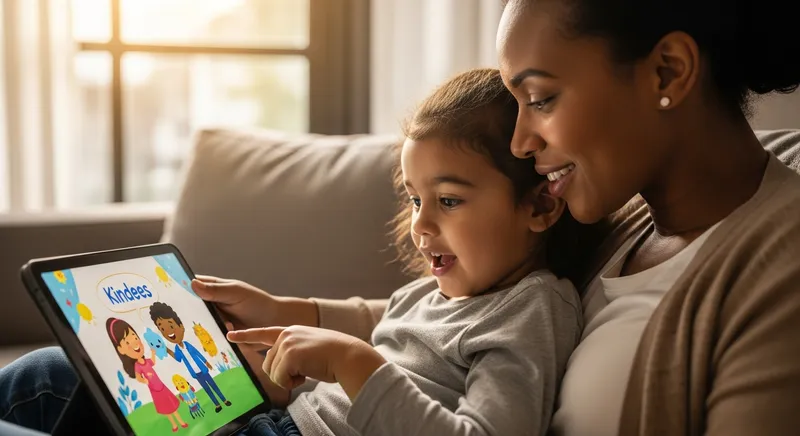
Storytelling for SEL: 5 Simple Ways to Teach Empathy and Kindness to Preschoolers
How do you explain "kindness" to a four-year-old? How do you teach them to understand how a friend feels when they're sad? As a parent, I know we want to raise good, compassionate humans, but teaching abstract concepts like empathy can feel overwhelming. You read books about sharing and you talk about being nice, but you're left wondering if it's truly sinking in, especially when a generic story doesn't quite match the unique challenge your child is facing right now.
If you've ever felt this way, you're not alone. The good news is, you already have one of the most powerful teaching tools in your parenting toolkit: storytelling.
Stories are more than just entertainment; they are a magical gateway into your child's heart and mind. By sharing stories, you can plant the seeds of empathy, kindness, and emotional understanding in a way that feels like play. Here are five simple, story-based ways to begin nurturing these essential skills at home.
What is Social-Emotional Learning (and Why Does It Matter for Your Preschooler)?
Before we dive in, let's talk about Social-Emotional Learning, or SEL. It's a term you might hear from teachers and child development experts. In simple terms, SEL is the process of learning to understand and manage our emotions, feel empathy for others, build healthy relationships, and make thoughtful decisions.
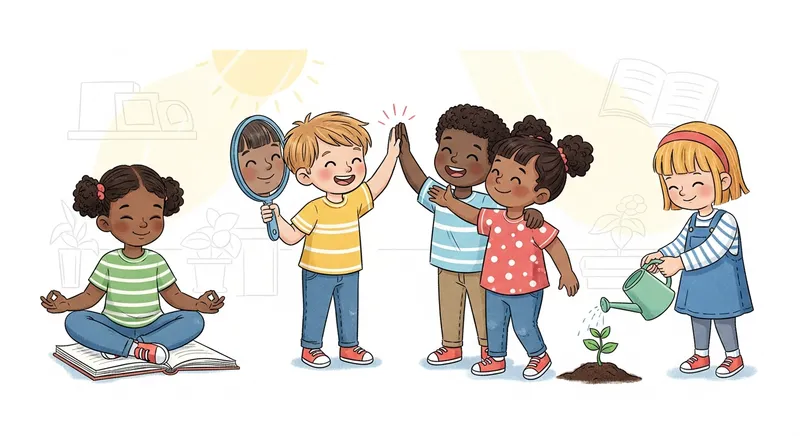
Think of it as the instruction manual for being a good human. For a preschooler, this looks like learning to name their feelings instead of having a tantrum, learning to share a toy with a friend, or giving a hug to someone who is upset. According to the U.S. Department of Health & Human Services' Head Start program, developing these skills is a critical part of being ready for school and for life. When we focus on SEL, we're giving our children the foundation they need to navigate their world with confidence and compassion.
The Magic Link: How Stories Build Empathy in Young Minds
Have you ever felt a surge of excitement when a character in a book achieves their goal, or a pang of sadness when they face a loss? That's empathy in action, and it's not just a feeling: it's science. Research from the Greater Good Science Center at UC Berkeley explains that when we get lost in a character-driven story, our brains can release oxytocin, a neurochemical that helps us feel more connected and empathetic to others.
Stories act as a kind of "social simulator" for the brain. They allow children to safely explore complex situations and feelings from a distance. They can experience a character's shyness, frustration, or joy without being in the middle of the conflict themselves. This gives them a rich playbook of emotional experiences to draw from when they face similar situations in their own lives.
5 Simple Story-Based Ways to Nurture Empathy and Kindness
Ready to put this magic into practice? These methods are simple, require little to no prep, and can be woven into the moments you already share with your child. They range from using books you already have to creating something entirely new and personal.
1. Talk About Feelings in Picture Books
This simple shift can transform your regular reading time into a powerful SEL activity. Instead of just reading the words on the page, pause and become an emotional detective with your child. Point to the characters and wonder aloud.
Here's how to do it:
- Ask "I wonder…" questions: "I wonder how the little bear is feeling right now. His shoulders are slumped and he's all alone."
- Connect to their life: "Have you ever felt shy like that? What did it feel like in your tummy?"
- Brainstorm helpful actions: "What do you think we could do to help the rabbit feel better? Should we invite him to play?"
According to the National Association for the Education of Young Children (NAEYC), using books this way gives children a safe space to explore big feelings.
Story Spotlight: A story about finding happiness, like Lily's Happy Voice, is a perfect place to start practicing this skill. Too tired to create a new story? Browse thousands of ready-to-read adventures in the Dreamcraft Tale Story Library!
2. Act It Out with Role-Playing
Preschoolers learn with their whole bodies. Role-playing takes the lesson off the page and brings it into the real world in a fun, active way. After reading a story, use puppets, stuffed animals, or just yourselves to act out a key scene.
Here's how to do it:
- Choose a simple scenario from a story: A character has to share a toy, welcome a new friend, or apologize for a mistake.
- Assign roles: "You be the big sister, and I'll be the little brother who wants to play."
- Act it out: Let your child experiment with different responses. What happens if they share? What happens if they don't?
This isn't about getting it "right." It's about letting them practice social skills in a low-pressure environment.
Story Spotlight: This is the perfect follow-up to a story about teamwork and performance, like the one in Rosie's Animal Show!
3. Use 'What If?' Story Starters
This is a fantastic, no-prep activity for car rides, waiting in line, or during a quiet moment at home. You provide the beginning of a story, and your child helps figure out the rest. This builds their problem-solving and decision-making muscles.
Here are some examples:
- "What if… you were at the playground and you saw a new friend who was too shy to play with anyone?"
- "What if… your friend accidentally broke your favorite crayon?"
- "What if… you saw someone being left out of a game?"
Listen to their ideas and gently guide them toward kind and empathetic solutions.
Story Spotlight: Exploring stories about overcoming shyness, like the gentle tale of Raquel and the Shy Moonbeam, can give them ideas to use in these "what if" scenarios.
Want instant story inspiration? Explore our Story Library for thousands of ready-to-read adventures created by families like yours!
4. Tell 'Kindness Stories' from Your Day
Your child is always watching you for cues on how to act. One of the most effective ways to teach kindness is to model it yourself and then narrate it as a story. At the dinner table or at bedtime, make it a habit to share a small "kindness story" from your day.
It can be as simple as:
"Today at work, my friend seemed a little sad, so I asked him if he was okay and listened while he talked. It made me feel good to be a good friend to him."
Or:
"At the grocery store, I held the door open for a man whose hands were full of bags. He gave me a big smile and said thank you!"
As experts at PBS Kids for Parents emphasize, modeling kindness is a powerful way to teach it. When you share these simple stories, you show your child that kindness is a normal, important, and rewarding part of everyday life.
From Parent to Parent: The Power of a Personal Story
Creating custom stories used to be hard. Now, with Dreamcraft Tale's 3-step process (Imagine, Create, Read), you can generate beautifully illustrated, personalized stories in minutes, where YOUR child is the hero. It's the perfect tool for the next, most powerful method.
5. Create a Custom Story for Their Exact Feeling
This is perhaps the most powerful method of all because it directly addresses your child's unique emotional world. What do you do when no book on the shelf is about being nervous for a new sibling to arrive, or being sad about moving to a new house, or being scared of the shadows in their specific bedroom?
You create a story just for them. This is where a tool like Dreamcraft Tale becomes your superpower. Simply share your child's specific situation, and our AI generates a beautifully illustrated story where your child is the hero who overcomes that exact challenge. Research supports this, noting that narrative fiction acts as a social simulator, helping children rehearse for real-world experiences.
Imagine this:
- Is your child afraid of the dark? Create a story where they, as the brave main character, discover friendly, sparkling creatures that only come out at night.
- Are they struggling to share? Create an adventure where they learn that sharing their magical tools with a friend leads to an even bigger quest.
- Feeling nervous about a new experience? A story like Justine and the Magical Paintbrush, where creativity solves a problem, can inspire them to face the unknown.
By making them the protagonist in their own emotional journey, you empower them with a script for success. You can do all this in a completely safe, ad-free environment where every story is filtered for age-appropriate, wholesome content.
💜 When your child sees themselves as the brave problem-solver in their own story, they internalize that confidence for real-life challenges.
Your Next Chapter in Kindness
Teaching your child to be kind and empathetic is a journey, not a destination. It happens in the small, quiet moments: a conversation about a character in a book, a silly role-playing game on the living room floor, or a custom-made story at bedtime that soothes a specific fear.
By weaving these five simple storytelling strategies into your routine, you are not just reading stories; you are building character, fostering connection, and giving your child the emotional tools they will use for the rest of their lives.
Ready to create a story that speaks directly to your child's heart? With Dreamcraft Tale, you can generate unlimited personalized stories in just 3 simple steps, where your child becomes the brave hero. Start your free trial tonight and transform bedtime into your favorite moment of the day.
Frequently Asked Questions
What are the 5 main SEL skills?
The most widely recognized framework comes from the Collaborative for Academic, Social, and Emotional Learning (CASEL). The five core skills are:
- Self-Awareness: Recognizing your own emotions, thoughts, and values.
- Self-Management: Managing your emotions, thoughts, and behaviors effectively.
- Social Awareness: Understanding the perspectives of and empathizing with others.
- Relationship Skills: Building and maintaining healthy and supportive relationships.
- Responsible Decision-Making: Making caring and constructive choices about personal behavior.
How do you explain empathy to a 4-year-old?
Keep it simple and relatable. According to child development experts at Zero to Three, empathy is about connecting feelings. You could say, "Empathy is when your friend falls down and you feel a little ouchy in your heart for them," or "It's like trying to understand what it feels like to be in your friend's shoes." Using real examples from their life makes the concept stick.
What are some simple kindness activities for preschoolers?
Beyond storytelling, you can make kindness a fun, hands-on activity. Try creating a "Kindness Jar" where you add a pom-pom for every kind act you see. Other ideas include drawing a picture for a neighbor, helping to water plants, giving a genuine compliment to a family member, or making a bird feeder for the birds outside.
Can stories really help a child with anxiety?
While stories are not a replacement for professional guidance, they are a powerful tool for managing everyday anxieties. Stories provide a safe distance for a child to explore a scary topic. When they see a character (especially one who is just like them) face a fear and overcome it, it gives them a mental and emotional blueprint for their own courage. It shows them that big feelings are manageable and that they are brave enough to handle them.
At what age should I start social-emotional learning at home?
Social-emotional learning begins the day your child is born. When you soothe your crying infant, you are teaching them trust and emotional regulation. As they grow into toddlers and preschoolers, you can become more intentional by naming feelings ("I see you're very frustrated that the block tower fell!") and modeling kind behaviors. It is never too early or too late to start building these foundational skills.