Snaut and the Emerald Quest: A Magical Bedtime Story About Finding Courage
For the Parent in a Hurry:
- Free Bedtime Story: Scroll down for a complete, original story about a little creature learning to be brave.
- Key Lesson: True courage isn't the absence of fear; it's acting despite it.
- Parent Guide: Get simple questions and activities to discuss bravery with your child after the story.
- The Takeaway: This story is an example of how powerful personalized tales can be. You can create your own stories just like this, starring your child.
It's that time of night again. You've finished dinner, baths are done, and you're staring at the bookshelf, trying to find a story you haven't read a dozen times. You're exhausted, and you're searching for more than just a way to pass the time until bedtime. You want a story that sparks imagination, a story that matters. You want an adventure that can help you teach your child about being brave, being kind, and embracing what makes them unique.
As parents ourselves, we get it. That search is why we believe so deeply in the power of storytelling. Reading aloud to our children is more than just a routine; it's what literacy experts at Reading Rockets call the single most important activity for building reading success. It's a moment of connection that builds their brain and your bond.
Tonight, we want to show you what's possible when stories are crafted with intention. Read the adventure of Snaut below, a perfect read-aloud for kindergarten and elementary-aged kids. Then, discover how you can create unlimited personalized stories where your child becomes the hero of their own magical quest.
A Magical Forest Adventure Story: Snaut and the Emerald Quest
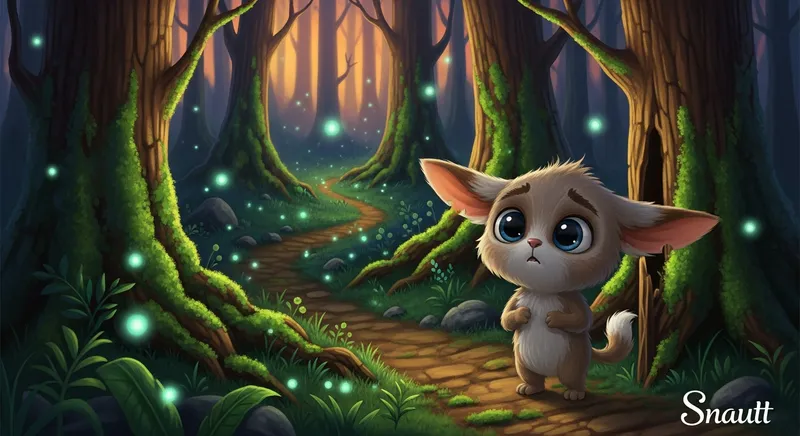
In the heart of the Whispering Woods lived a tiny creature named Snaut. The woods were a lively place, filled with creatures who could roar like thunder, sing like the wind, or paint the leaves with a flick of their tails. Snaut was quieter. He had soft, grey fur, one ear that stood straight up, and one that flopped down. He couldn't roar or sing loudly, but he was the best listener in the forest.
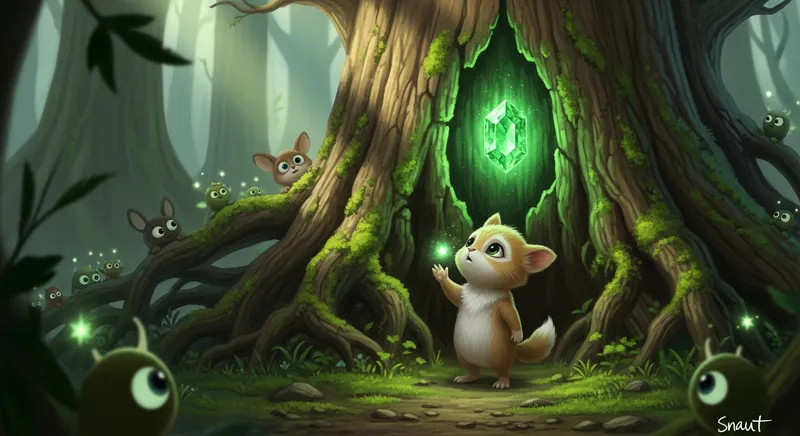
Lately, a hush had fallen over the woods. The cheerful chirps grew faint, and the vibrant colors seemed to fade. The problem was the Great Emerald, a giant gem hidden in the oldest part of the forest that pulsed with the woods' happiness. And its light was dimming.
The oldest creature, a wise owl named Hoot, gathered everyone. "The Emerald weakens because fear has crept into our woods," he hooted softly. "It can only be restored by the light of the Sunken Grove Moss. The journey is long, and the path is dark. It requires a brave heart."
All the big, strong creatures puffed out their chests. A bear roared, "I am the bravest!" A fox boasted, "I am the cleverest!" But they were all a little too loud, a little too sure of themselves. Hoot looked past them and saw Snaut, who was listening with his one ear up.
"Snaut," Hoot said, his voice gentle. "Your heart is quiet, and you listen more than you speak. You will see the path others overlook. You must go on the Emerald Quest."
Snaut's heart thumped. Him? Small, quiet Snaut? He was terrified. "But... I'm not brave," he whispered.
"Bravery is not the absence of fear," Hoot replied. "It is acting despite it."
So, with a tiny backpack filled with a single acorn cake, Snaut set off. The path was dark, and every rustle of leaves made him jump. He soon found a squirrel named Chatter, hiding under a root. "I'm scared!" Chatter chittered. "The shadows are moving!"
Snaut remembered Hoot's words. He was scared too, but he took a deep breath. "I'm scared too," he said, his voice small but steady. "But maybe if we are scared together, it won't be so bad." He offered the squirrel a piece of his acorn cake. Together, they continued on.
As they walked, they noticed a soft, green glow coming from the base of the trees. It was the Sunken Grove Moss! It wasn't just in one place; it grew wherever someone was a little bit brave. Each time Snaut comforted Chatter or took another step into the dark, a new patch of glowing moss would appear, lighting their way.
They soon found a young badger named Diggs, trying to dig a hole to hide in. He was trembling. Snaut and Chatter shared their story and the rest of their cake. Now a group of three, they ventured on, their combined courage making the path ahead of them glow ever brighter.
Finally, they reached the heart of the forest. The Great Emerald sat in the hollow of an ancient tree, its light a faint, sickly green. Snaut realized the glowing moss hadn't been the destination; it had only lit the way. There wasn't enough moss in the world to relight the huge gem.
He looked at his friends, then at the dim Emerald. He understood. The Emerald wasn't powered by moss; it was powered by courage itself. By facing his fear to come all this way, he had already done the most important part.
He stood tall, his mismatched ears no longer a sign of difference, but a symbol of his unique journey. He turned to his friends and all the other creatures who had followed the glowing path. "We don't need to bring light to the Emerald!" he announced, his quiet voice full of newfound strength. "We ARE the light!"
One by one, the creatures stepped out of the shadows. The bear admitted he was afraid of the dark. The fox confessed she was scared of getting lost. As each one shared their fear and stood together, the Great Emerald began to pulse. With each admission, its light grew stronger, warmer, and more brilliant. Soon, the entire forest was bathed in a magnificent green glow, more vibrant than ever before.
Snaut didn't roar or sing, but he smiled. He was still quiet, still had one floppy ear, but he was also Snaut the Brave, the creature who taught the Whispering Woods that the brightest light comes from finding the courage to be yourself.
From Snaut's Quest to Your Child's Adventure
Snaut's story is powerful, isn't it? Now, imagine if Snaut had your child's name. What if the Whispering Woods was their own backyard, and the Great Emerald was a challenge they were facing at school?
That's the magic of personalized storytelling. When a child sees themselves as the hero, the lessons of courage, kindness, and self-acceptance become deeply personal.
This is why we built Dreamcraft Tale. We wanted to give parents a tool to create an infinite library of stories that star their children. With our app, you can turn any idea into a beautifully illustrated adventure in minutes. It's as easy as:
- Imagine: Spark an idea with your child. What adventure will they have tonight?
- Create: Use our simple tool to generate a unique story with personalized characters and themes.
- Read: Snuggle up and enjoy a brand-new tale where your child is the hero.
Stories like Snaut's are just the beginning. With Dreamcraft Tale, you can create unlimited adventures that grow with your child's imagination.
Create Your Own Courage Story Tonight →
The Moral of the Story: A Deep Dive into the Lessons from the Emerald Quest
This magical forest adventure is more than just a tale about glowing moss; it's a story packed with life lessons that are perfect for building character in young children. By following Snaut's journey, kids learn powerful truths in a way they can understand and remember.
Here are the key morals of the Emerald Quest:
- True courage is acting even when you're scared. Snaut didn't suddenly become fearless. He was terrified! But he took the first step, and then the next one. This is the most important lesson about bravery for a child.
- What makes you different makes you strong. Snaut's quiet nature and listening skills were exactly what the forest needed. He wasn't like the loud, boisterous creatures, and that was his greatest strength.
- Friendship and empathy make us braver. Snaut's courage grew when he shared his fear with Chatter and helped him. This is a wonderful way to introduce stories about friendship and courage for kids, showing that we are stronger together.
When children see characters in books experience big emotions, it lets them know that their own feelings are normal and valid, a point highlighted by the Child Mind Institute. Like Snaut, your child might feel small or shy sometimes, just like the moon in Raquel and the Shy Moonbeam. Stories give them a safe space to explore those feelings.
A Parent's Guide: How to Talk About Bravery and Courage with Your Child
Reading the story is the first step. The real magic happens in the conversation that follows. This is your opportunity to connect the fantasy world of Snaut to your child's real world. But knowing how to start that conversation can be tricky.
Here are some actionable tips and questions to get you started:
Define Courage in Their Terms. Explain that being brave doesn't mean you're not scared. As experts at PBS KIDS for Parents explain, bravery for a child might look like trying a new food, sleeping in their own bed, or starting a new school. It's about not letting fear stop you.
Ask Open-Ended Questions. Instead of asking "Did you like the story?", try these questions to spark a deeper conversation:
- "When do you think Snaut was the most scared? What did he do?"
- "What was special about Snaut? What is something special about you?"
- "How did Chatter and Diggs help Snaut feel braver? Who helps you feel brave?"
- "Have you ever felt scared to do something but did it anyway, just like Snaut?"
Make it an Interactive Activity. Turn the story into a hands-on experience! This deepens their connection to the story's themes.
Pro Tip: With Dreamcraft Tale, you can create custom stories featuring challenges your child is actually facing, like starting a new school or making friends. It's a playful way to prepare them for real-life quests!
- Create Your Own Glowing Moss: Get some green paint (glow-in-the-dark is even better!) and paint some small rocks or cotton balls. Place them on a "path" in your living room leading to a special "emerald" (a green pillow or toy).
- Draw Your Quest: Ask your child to draw a map of their own Emerald Quest. What scary things might they see? What friends would they bring with them? This is a great way to talk about challenges in a playful way, similar to the adventure in Pip's Gigantic Climb.
By discussing the story and its themes, you are helping your child build a vocabulary for their emotions and empowering them with strategies for facing their own fears.
More Magical Adventures to Spark Imagination
Finding high-quality fantasy stories for young children that are both entertaining and meaningful can feel like a quest in itself. Research from Scholastic's Kids & Family Reading Report shows that what kids want most in books is a story that "makes them laugh" and lets them "use their imagination."
If your child loved Snaut's magical journey, they might also adore the creative magic in Justine and the Magical Paintbrush or exploring a new planet like in Luna's Moon Quest.
But why stop at our stories? At Dreamcraft Tale, we believe every child has a story inside them. Our app helps you turn their ideas into beautifully illustrated adventures where they are the hero. It's a way to have a limitless library of tales that grow with your child's imagination, ensuring you never run out of bedtime magic again.
Frequently Asked Questions
What is a good moral story for kids?
A good moral story for kids is one that seamlessly blends entertainment with a meaningful lesson. Instead of just stating a moral at the end, the story should demonstrate it through the characters' actions, challenges, and successes. For example, in Snaut's story, the moral about courage is shown through his journey, not just told. The best stories have relatable characters and a plot that keeps children engaged while teaching values like kindness, honesty, empathy, and bravery.
How do you explain bravery to a child?
Explaining bravery to a child is most effective when you define it as an action, not a lack of feeling. You can say something like: "Bravery doesn't mean you never feel scared. It means you feel scared, but you choose to do the right thing or try something new anyway." Use concrete examples from stories or their own life. For instance, "Remember how Snaut's tummy felt wobbly, but he still took a step onto the dark path? That was him being brave!" or "When you tried to ride your bike even though you were worried about falling, you were being brave."
Why are fantasy stories good for children?
Fantasy stories are incredibly beneficial for a child's development. They ignite imagination and creativity by introducing worlds that operate outside the rules of reality. This encourages flexible thinking and problem-solving skills. On an emotional level, fantasy allows children to explore complex themes like good vs. evil, fear, loss, and courage in a safe, distant context. It gives them a playground to understand big feelings and concepts without being overwhelmed.
What makes a good read-aloud story for kindergarten?
A great read-aloud story for a kindergartener captures their attention and is fun to listen to. Key elements include:
- Engaging Characters: Simple, relatable characters with clear motivations.
- Clear Plot: A straightforward story with a beginning, middle, and end.
- Rhythm and Repetition: Predictable patterns and repeated phrases help children participate in the telling.
- Vivid Descriptions: Language that paints a picture and engages the senses.
- Appropriate Length: Typically 500-1500 words is long enough to tell a complete story but short enough to hold their focus before bedtime.
How can stories help with character building?
Stories are powerful tools for character building because they provide models of behavior. When children see a character like Snaut face a challenge, make a difficult choice, and show kindness or courage, it gives them a blueprint for their own actions. These narratives help them understand the consequences of choices and the importance of values. Discussing the story afterward solidifies these lessons, helping them internalize concepts like empathy, integrity, and resilience and think about the kind of person they want to become.