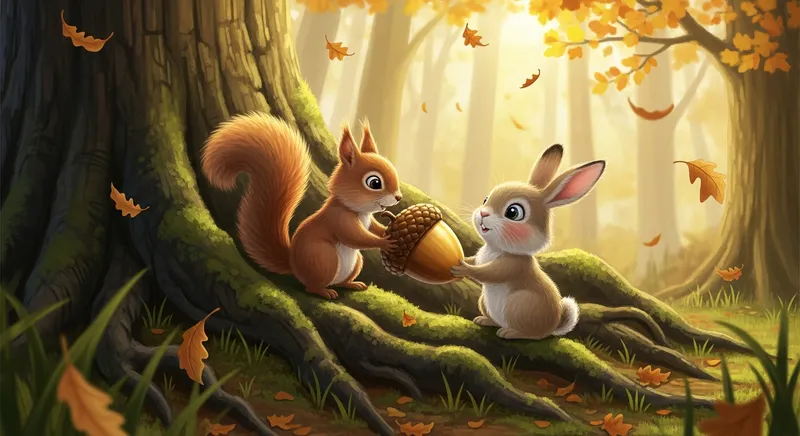
It's that time of night. The house is finally quiet, the day's chaos has settled, and you're cuddling with your little one for that last, precious moment before sleep. You want to make it count. You want to connect, to teach, to share something meaningful. But you're exhausted, and the thought of reading the same book for the tenth time makes your eyelids heavy.
We get it. As parents, we carry the world on our shoulders, and at the end of the day, we want nothing more than to raise kind, compassionate, and good-hearted children. But how do you teach something as big as 'kindness' when you're running on empty?
It starts with a story. And when that story stars your own child as the hero learning to be kind, the lesson becomes unforgettable.
Why a Simple Kindness Story for Children is More Important Than Ever
In our busy world, it's easy for kids to get the message that achievement is what matters most. But teaching them the value of character is just as critical. The Making Caring Common project at Harvard University highlights the urgent need for parents and educators to prioritize teaching kindness and concern for others. A simple story is one of the most powerful and gentle ways to do just that.
Storytelling isn't just entertainment; it's a time-honored tool for planting seeds of empathy, integrity, and goodness. It creates a magical space where you and your child can explore big feelings and important lessons together.
To help you turn tonight's bedtime into a moment of connection, we've written an original short moral story. It's a ready-made tool for a magical, meaningful experience, designed to spark a conversation about the simple, beautiful rewards of being good.
A Short Moral Story for Kids: The Little Squirrel Who Shared
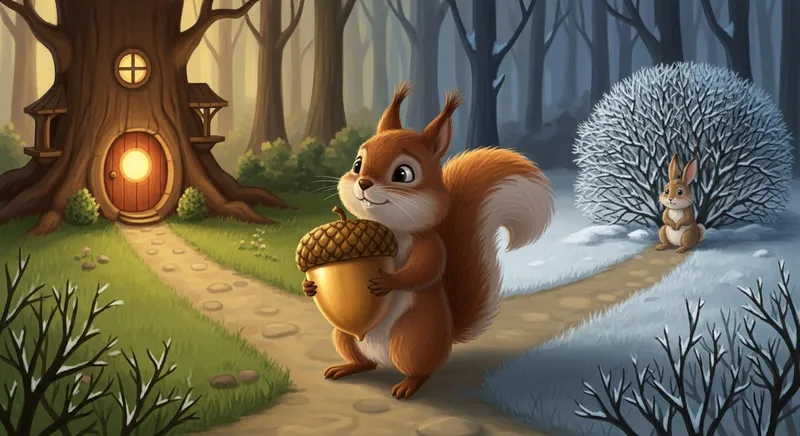
Once there was a little squirrel named Squeaky who lived in a cozy nest high in an old oak tree. Squeaky was a very hard worker. All autumn long, he scurried through the forest, gathering nuts and seeds for the long winter ahead. His cheeks were always chubby with acorns!
One crisp afternoon, just as the leaves were turning their brightest shades of red and gold, Squeaky found the greatest treasure a squirrel could ever imagine: a giant, perfect acorn. It was smooth, shiny, and bigger than his own head. "This will be my special treat for the coldest day of winter!" he chirped to himself, his heart thumping with excitement.
He hugged the giant acorn tight and started the long journey back to his nest. As he scampered down the path, he saw a little rabbit named Pip shivering under a bush. Pip's ears were droopy, and his nose twitched sadly. He hadn't found a single berry or root all day, and the cold wind was making him tremble.
Squeaky stopped. He looked at his perfect, giant acorn. It was his prize, his treasure! He had worked so hard for it. But then he looked at Pip, who looked so small and hungry. Squeaky's warm heart felt a little pang.
He thought for a moment. He could pretend he didn't see Pip and just scurry home. But that didn't feel right. He took a deep breath, walked over to the shivering rabbit, and held out his prize. With a mighty CRACK, he broke his perfect acorn right in half.
"Here," Squeaky said softly, offering the bigger half to Pip. "You look like you need this more than I do."
Pip's ears perked up. His eyes grew wide. "Oh, thank you!" he whispered, nibbling gratefully on the unexpected feast.
As Squeaky watched Pip eat, a wonderful feeling spread through his chest. It was a warm, glowing happiness, cozier than any nest and more satisfying than any acorn. He realized the good feeling from sharing was a treat all on its own.
He waved goodbye and scampered home with his half of the acorn. The next morning, the wise old owl of the forest, who had seen Squeaky's kind act from his branch high above, flew down to Squeaky's tree. "A kind heart deserves a full pantry," the owl hooted, and he led Squeaky to a secret, hidden hollow in an ancient tree. It was filled to the brim with more nuts, seeds, and dried berries than Squeaky could ever gather by himself!
And a few days later, Pip the rabbit came hopping by, leaving a pile of the forest's sweetest winter berries right at the bottom of Squeaky's tree. Squeaky learned that kindness was a gift you give to others, but its warmth always comes right back to you.
The Moral of the Story: The True Reward of Kindness
True kindness isn't about getting a reward, but the good feeling it gives you is the best reward of all. And often, when you are good to others, goodness finds its way back to you.
Squeaky didn't share his acorn to get something in return. He did it because it was the right thing to do, and that act alone made him feel happy and warm inside. The treasures he received later were just the forest's way of saying thank you.
Bring the Lesson Home: How to Talk About Kindness with Your Kids
A story is just the beginning. The real magic happens in the conversation that follows. Here are a few ways to turn this tale into a tangible lesson in kindness, with actionable tips inspired by resources like those from PBS KIDS for Parents.
1. Ask Open-Ended Questions:
Give your child space to think and feel. Try asking questions like:
- How do you think Pip felt when he was cold and hungry?
- How did Squeaky feel after he shared his special acorn?
- Has anyone ever shared something special with you? How did that make you feel?
- Can you think of a time you shared something? What was that like?
2. Go on a 'Kindness Mission':
Turn the idea of kindness into a fun activity. Frame it as a secret mission to make someone's day better. It could be as simple as:
- Drawing a picture for a family member or neighbor.
- Helping set the table for dinner without being asked.
- Giving a genuine compliment to a friend at school.
- Sharing a toy with a sibling, just like Squeaky shared his acorn.
3. Connect it to Their World:
Help them see opportunities for kindness all around them. Say things like, "That was a very Squeaky-thing to do!" when you see them being kind. This reinforces the story's lesson and connects it directly to their own positive actions.
4. Make Them the Hero:
The most powerful way to internalize a lesson is to live it. Create a new adventure together where your child is the hero who shows kindness. This connects the moral directly to their identity, making it part of their own story and a memory you build together.
The Science Behind the Story: Why Reading Moral Stories Builds Good Character
That warm, connected feeling you get during story time isn't just in your head: it's backed by science. Reading stories together is one of the most powerful developmental activities you can do with your child.
It Builds Better Brains: The American Academy of Pediatrics formally recommends that parents read to their children from birth. This simple act is proven to stimulate brain development, strengthen parent-child bonds, and build crucial language and social-emotional skills.
It Teaches Empathy: How does a child learn to understand someone else's feelings? Stories are a perfect training ground. Research on narrative empathy shows that reading literature consistently helps improve a child's empathy, encouraging prosocial behaviors like sharing, helping, and comforting others.
Kindness is its Own Reward: Interestingly, science agrees with our story's moral. An article in Psychology Today discusses research showing that performing acts of kindness improves the well-being of the giver just as much, if not more, than the receiver. When we teach our kids to be kind, we're also giving them a tool for their own happiness.
Make the Lesson Unforgettable: Put Your Child in the Story
Squeaky's tale is a wonderful start, but what if the hero who learns to be kind wasn't just a character in a book? What if the hero was your child?
Unlike traditional stories where children simply read about others, Dreamcraft Tale makes YOUR child the protagonist who demonstrates kindness, bravery, and compassion in their own personalized adventure. The lesson becomes more than just a moral; it becomes a memory.
Tired of the same old books? Turn your child into the hero of their own kindness adventure with Dreamcraft Tale.
It's as easy as 1-2-3:
- Imagine: Describe a character (your child!) and a simple idea for a story.
- Create: Our AI brings your idea to life with a unique, beautifully illustrated story in minutes.
- Read & Connect: Enjoy a magical bedtime story that you and your child created together.
Explore Our Library of Inspiring Adventures
Once your child gets a taste of being the hero, they'll want more! For instant inspiration, you can explore the Dreamcraft Tale story library for more adventures that celebrate bravery, creativity, and helping others.
Explore tales like:
- Courtney and the Whispering Shell, a story about listening to the quiet voice of nature and friendship.
- Pip's Gigantic Climb, an adventure about facing big challenges one small step at a time.
- Raquel and the Shy Moonbeam, a gentle tale about helping a friend find their courage.
- Rosie's Animal Show!, a fun story about teamwork and celebrating everyone's unique talents.
- Lily's Happy Voice, a story that shows how a positive attitude can change everything.
Frequently Asked Questions
What makes a good moral story for a 5-year-old?
A good moral story for a five-year-old should have three key things: relatable characters, a simple conflict, and a positive, clear moral. Characters like animals or young children are perfect because they are easy to understand. The problem should be simple (like Squeaky having one acorn and seeing a hungry friend) and the moral should focus on the good feeling of doing the right thing, rather than being scary or punitive.
How does Dreamcraft Tale help teach moral lessons?
Dreamcraft Tale helps teach morals by making them personal. Instead of just reading about a character learning a lesson, you can create a story where your child is the one who chooses to be kind, brave, or honest. When they see themselves as the hero making good choices, the lesson becomes much more powerful and memorable. You can even guide the story to focus on specific values you want to teach.
Why are short moral stories so effective for kids?
Short moral stories are effective because they are designed for how kids learn. First, they are short, which respects a child's developing attention span. Second, they provide a clear, memorable lesson that isn't lost in a complicated plot. Finally, as the National Association for the Education of Young Children (NAEYC) points out, books are a key tool for helping children build social and emotional health by providing a safe context to explore complex ideas like kindness and empathy.
Can you give another very short story about kindness?
Absolutely! Here is a tiny tale you can share: Leo the ladybug lost his favorite spot on a big green leaf after a gust of wind. He felt very sad. Seeing this, Maya the butterfly fluttered down from her flower. "You can share my flower," she chirped. Sheltered from the wind on the soft petals, Leo felt warm and happy. Maya discovered that sharing her flower made it feel even brighter and more beautiful to her, too.
What's the difference between a moral and a theme?
That's a great question! The theme is the big, general idea or topic of the story. In our story, the theme is kindness. Other themes could be 'bravery' or 'friendship'. The moral, on the other hand, is the specific lesson or piece of advice that the story is trying to teach you. In our story, the moral is that kindness is its own reward. It's the takeaway message you can apply to your own life.