
It's 8:30 PM. You've read three books, fetched a glass of water, checked for monsters, and tucked them in for the fourth time. Yet, you hear the pitter-patter of little feet on the floor again. If you feel exhausted, guilty, and utterly alone in a nightly power struggle with your toddler, please know this: you are not failing. You are a loving parent facing one of the most common and draining challenges of raising little ones.
But what if bedtime could become the most connected, peaceful, and magical part of your day? This isn't a fantasy. It's achievable with the right routine, a little understanding of your child's brain, and strategies that focus on reducing your stress first.
This guide is designed specifically for Australian parents. We'll move beyond generic advice to give you practical, gentle, and evidence-based tools that work. Let's turn those bedtime battles into treasured bonding moments.
Why a Consistent Bedtime Routine is More Than Just a Schedule
A predictable routine isn't just about ticking boxes; it's a powerful signal to your child's brain and body that it's time to prepare for sleep. According to the Sleep Health Foundation of Australia, a child's bedtime shouldn't vary by more than an hour, even on weekends, to support their natural sleep-wake cycle.
Think of it as a gentle, loving countdown. Each step—the bath, the story, the final cuddle—helps their body wind down and produce melatonin, the sleepy hormone. A chaotic or unpredictable evening can do the opposite, increasing the stress hormone cortisol and making your child feel wired and anxious.
Research from the Murdoch Children's Research Institute (MCRI) highlights that improving a child's sleep doesn't just benefit them; brief sleep interventions have been shown to significantly improve parents' mental health, too. A calm routine is a gift you give to your child and yourself.
The Building Blocks of a Peaceful Australian Bedtime Routine
Experts agree that a good routine should last about 20-45 minutes. The key is consistency and calm. Toddlers aged 3-5 need about 10-13 hours of sleep, including any daytime naps, so timing is crucial. The Raising Children Network notes that most toddlers are ready for bed between 6:30 PM and 7:30 PM, as they get their deepest sleep before midnight.
Here are the essential building blocks:
Your Secret Weapon: The 'Wind-Down' Hour This is the hour before the routine officially begins. Dim the lights, turn off all screens (TVs, tablets), and switch from high-energy play to quiet activities. This could be listening to calm music, doing a simple puzzle, or looking at a picture book. This quiet time helps lower stimulation and sets the stage for sleep.
A Note on Bathtime
For many children, a warm bath is a wonderfully relaxing part of the routine. However, for some, it can be a stimulating time of splashing and play. Pay attention to your child's cues. If they emerge from the bath more hyper than calm, consider moving bathtime to earlier in the day.
The Magic of Story Time
Reading together is the cornerstone of a great bedtime routine. It fosters literacy, connection, and a sense of security. But after the 100th reading of the same book, your own exhaustion can make it feel like a chore.
What if you could make your child the hero of their own, brand-new story every night? With Dreamcraft Tale, you can transform your child's imagination into a beautifully illustrated, personalized adventure in minutes.
Our AI-powered app makes it simple. Just follow three steps: Imagine, Create, and Read. You can make your child the protagonist, boosting their confidence and making them genuinely excited for story time. On nights when you're too tired to create, you can explore thousands of magical tales in our shared Story Library. It's a safe, ad-free experience designed to turn bedtime into your favourite moment of connection.
Creating a Sleep Sanctuary: Your Toddler's Bedroom
Your child's room should be a haven for sleep: cool, dark, and quiet. Blackout blinds can be a game-changer, especially during Australia's long summer evenings. A white noise machine can help block out household or neighbourhood sounds.
Tackling the Fear of the Dark
It's incredibly common for toddlers to develop a fear of the dark. Instead of dismissing it, validate their feelings. "I hear that you feel scared. I am here with you, and you are safe."
Here are some practical solutions:
- Monster Spray: A simple water spray bottle with a custom label can give them a sense of control.
- A Bedtime Guardian: Designate a special stuffed animal as their official 'guardian' for the night.
- Story Power: When 4-year-old Mia became afraid of shadows, her mum used Dreamcraft Tale to create a story where Mia was a brave shadow detective who discovered shadows were just shy friends. Creating a personalized story where your child befriends the dark can turn fear into curiosity.
The Australian Parent's Playbook for Common Bedtime Battles
Even with the perfect routine, you'll face challenges. Here's how to handle the most common ones with a gentle, positive parenting approach.
"Just one more drink!" – Handling Bedtime Stalling
Toddlers are masters of stalling. The best strategy is to pre-empt them. Make the 'last call' for water, toilet trips, and cuddles a formal part of the routine. When they ask again after lights out, you can calmly and firmly say, "We already had our water. It's time for sleep now. I love you."
The Revolving Door: When Your Child Keeps Getting Out of Bed
This is one of the most frustrating issues, but your consistency is your superpower here. The key is a calm, consistent, and 'boring' response. As recommended by Australian parenting organisations like Tresillian, if your child gets out of bed, you should silently and gently lead them back. Avoid a big reaction or engaging in conversation. Simply tuck them in, say "It's sleep time," and leave. You may have to do this many, many times at first, but your unemotional response will eventually teach them that getting out of bed doesn't result in more attention.
Understanding the 3-Year-Old Sleep Regression
Suddenly, your great sleeper is fighting bedtime for hours. What happened? A 3-year-old sleep regression is often tied to huge developmental leaps: their imagination is exploding (leading to new fears), they're dropping their daytime nap, or they're testing boundaries. Stick to your routine, offer extra reassurance, and know that this phase will pass.
Unique Australian Considerations
Parenting doesn't happen in a vacuum. Here are some topics specifically relevant to families in Australia.
Co-Sleeping with Your Toddler: Safe Australian Guidelines
Many Australian families choose to co-sleep or bed-share. While it can foster connection, it's vital to understand the safety guidelines. Red Nose Australia, the nation's leading authority on safe sleep, advises against co-sleeping in high-risk situations (e.g., if a parent is a smoker, has consumed alcohol, is overly tired, or if the child was premature). The Pregnancy, Birth and Baby service states the safest place for a child to sleep is their own cot or bed.
Transitioning from Co-Sleeping to Their Own Bed
If you've decided it's time to make the switch, do it gradually. Start by moving their cot or bed into your room. Then, begin the bedtime routine in their own room, perhaps sitting by their bed until they fall asleep and gradually reducing your presence over several nights. Celebrate their successes with lots of praise!
When to Seek Help: Sleep Consultants in Australia
If you've tried everything and are still struggling, remember you're not alone. A sleep consultant can be a lifesaver, offering personalized plans and support. Framing it as an investment in your family's well-being can help. The price for a sleep consultant for toddlers in Australia varies, from around $60 for a quick phone chat to over $500 for a comprehensive package. For example, providers like Baby Sleep Code offer packages in various price ranges.
Your Action Plan: Practical Tools
Bedtime Routine Chart
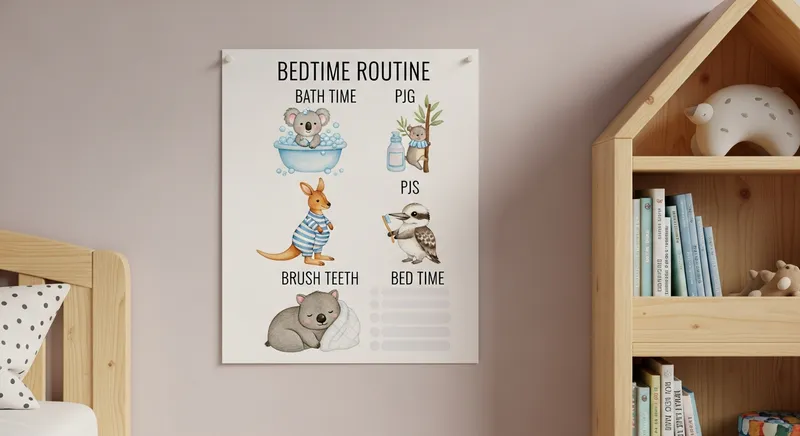
Visual cues are fantastic for toddlers. Create a simple chart with pictures for each step of the routine (e.g., bath, PJs, teeth, story, cuddle). Let your child move a peg or add a sticker after completing each step. This gives them a sense of control and predictability.
Download Your Printable Aussie Animal Bedtime Chart Here
The 'Stay-in-Bed' Reward Chart
For children over 3, a reward chart can work wonders. Keep it simple: they get a sticker every morning they stay in their bed all night. After earning 3 or 5 stickers, they get a small, non-material reward, like a family movie night or a special park outing. The focus should always be on positive reinforcement.
Frequently Asked Questions
Why does my 3-year-old suddenly fight sleep? This is often the "3-year-old sleep regression," a period of intense developmental change. Their blossoming imagination can lead to new fears, they might be dropping their nap, and they are fiercely testing boundaries. The best approach is consistency, extra reassurance, and validating their feelings without giving in to endless stalling.
How can I get my toddler to stay in bed without crying it out? Gentle methods require patience but are very effective. The 'silent return' method, recommended by Australian experts like Tresillian, is key. When your child gets out of bed, calmly and silently lead them back. Another gentle technique is 'Gradual Withdrawal,' where you sit by their bed and, over several nights, gradually move your chair closer to the door until you are out of the room.
What should be in a good bedtime routine for a 4-year-old? A great routine is about predictable, calming steps lasting 30-45 minutes. It could look like this:
- Wind-Down (30 mins before): Quiet play like puzzles or drawing; no screens.
- Warm Bath & PJs (20 mins): A relaxing transition from play to rest.
- Story Time (10 mins): One or two books read in their dimly lit room.
- Cuddles & Goodnight (5 mins): A final, loving connection before you leave.
Ready to Transform Bedtime?
Tired of nightly power struggles? Ready to turn bedtime into a moment of magical connection? Dreamcraft Tale helps you create unlimited, personalized stories that make your child the hero of their own adventure.