
It's 8:45 PM. You've done the bath, brushed the teeth, and read three books.
Yet as you lean in for a final goodnight kiss, you hear the words that make your shoulders slump: "I'm thirsty." "I need one more hug." "Just one more story?"
If you feel exhausted, frustrated, and stuck in a nightly power struggle, you are not alone. Many parents feel like they are failing when their well-intentioned bedtime routine devolves into tears and endless negotiations. The generic advice just doesn't seem to work for your child's creative stalling tactics.
But what if you could transform this nightly battle into your favorite moment of connection? What if bedtime could be peaceful, predictable, and even magical?
This guide offers a different approach: Connection Before Correction. We'll walk you through a practical, 5-step calming routine designed for kids ages 3 to 9. This isn't just about getting your child to sleep; it's about ending the day with love, security, and a full heart for both of you.
The Calming Routine at a Glance
For parents in a hurry, here's the 5-step framework. Read on for the details that make it work!
- Step 1: The Wind-Down (30-45 mins before bed): Screen-free, low-energy activities.
- Step 2: The Connection Point (10-15 mins): Proactively fill their attention cup.
- Step 3: The Practical Path (10 mins): Hygiene tasks made fun and collaborative.
- Step 4: Cozy Up with a Story (10-20 mins): Bond through shared or personalized stories.
- Step 5: The Gentle Goodnight (2 mins): A brief, loving, and consistent sign-off.
Why a Consistent Bedtime Routine is Your Secret Weapon
A consistent bedtime routine is more than just a series of tasks; it's a powerful signal to your child's brain and body that it's time to wind down. For children, who thrive on predictability, a routine provides a deep sense of security. It answers the unspoken question, "What's next?" and reduces the anxiety that can fuel bedtime resistance.
This isn't just a feeling; it's backed by science. A compelling study published in the National Library of Medicine found that a consistent nightly routine led to significant improvements in child sleep (like falling asleep faster) and also improved maternal mood.
A better bedtime routine for your child is also a gift of peace for you.
Furthermore, research highlighted by developmental psychologist Dr. Ashley Söderlund at Nurture and Thrive shows a "dose-dependent" relationship: the more nights per week a routine is used, the better the child's sleep becomes. Getting enough sleep is crucial for development, with the UCLA CARES Center noting that preschoolers need 11-13 hours of sleep, while school-aged kids need 10-11 hours.
The Parent-First Approach: Calming Yourself Before Your Child
Let's be honest: it's impossible to be a calm presence for your child when you're internally screaming. Children are incredibly attuned to our emotional state. When we are stressed, their nervous system mirrors ours, making escalation almost inevitable.
Before you can de-escalate a bedtime tantrum, you must regulate your own emotions. This is the foundation that standard advice often misses.
Actionable Tip 1: The Three-Breath Pause. When you feel frustration rising, stop. Close your eyes if you can and take three slow, deep breaths. Inhale calm, exhale frustration. This simple action can interrupt the stress cycle.
Actionable Tip 2: Reframe the Battle. Instead of thinking, "Here we go again," try shifting your mindset to, "My child is having a hard time, not giving me a hard time. This is a chance to connect." This small change can transform the energy of the entire interaction.
Remember, you are the thermostat for your home. By lowering your own emotional temperature, you create a calm environment where your child can feel safe enough to settle down.
The 5-Step Calming Bedtime Routine (Ages 3-9)
This routine is designed to be flexible and focused on connection. The goal is a predictable flow, not rigid perfection. Aim for a total routine time of 30-60 minutes.
Step 1: The Wind-Down (30-45 minutes before bedtime)
This is the crucial transition period. The goal is to move from the high-energy stimulation of the day to a state of calm. This means a screen-free bedtime routine is non-negotiable. The blue light from screens can interfere with melatonin production, the hormone that signals sleep.
Winding-Down Activities:
- Ages 3-5: Simple puzzles, looking through family photo albums, listening to calming music, or doing gentle "animal stretches" (like a cat-cow pose).
- Ages 6-9: Building with LEGOs, drawing or coloring, writing in a journal, or listening to an engaging audiobook like Luna's Moon Quest.
Step 2: The Connection Point (10-15 minutes)
Many bedtime battles stem from a child's unmet need for connection. This step is about proactively "filling their connection cup" so they don't have to fight for it when the lights go out.
Connection Ideas:
- "Roses and Thorns": Share one wonderful thing from your day (a rose) and one challenging thing (a thorn). Let your child share theirs.
- Special Handshake: Create a secret handshake that you only do at bedtime.
- One-on-One Chat: As parent Jessica shared, "The 'roses and thorns' ritual changed everything. My son used to stall for attention, but now he gets that connection upfront. He actually asks to start bedtime early so we have more time to talk."
Step 3: The Practical Path (10 minutes)
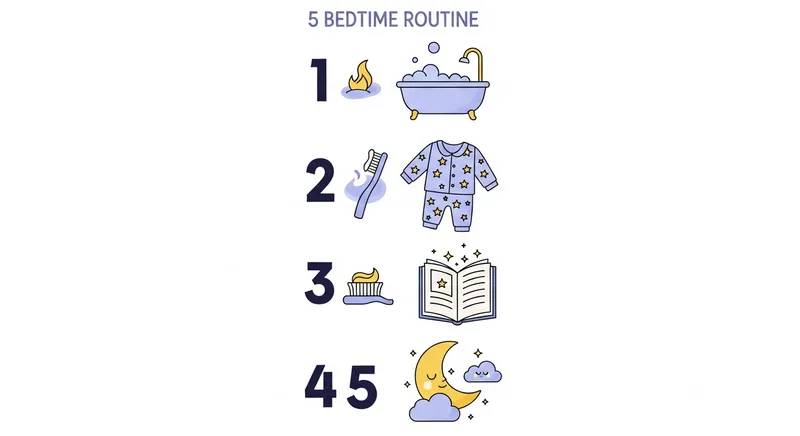
This is where you handle the necessary hygiene tasks: a warm bath, pajamas, and brushing teeth. A visual bedtime chart is a game-changer here. Instead of commanding, make it a team effort. Say, "Let's go look at your chart! What's next on our mission to dreamland?"
This turns chores into a shared mission, setting the stage for the final, most magical part of the night.
Step 4: Cozy Up with a Story (10-20 minutes)
After months of bedtime battles, a parent named Sarah discovered something that changed everything. She started creating stories where her daughter, Mia, was the hero. Suddenly, Mia wasn't fighting bedtime; she was racing to get into bed, excited to find out what adventure awaited her.
This is the magic of personalized storytelling. With the Dreamcraft Tale app, you can become a master storyteller in minutes. It's as easy as:
- Imagine: Give the app a simple idea, like "a story about my daughter Mia who finds a lost star."
- Create: The app instantly writes and illustrates a unique, beautiful story.
- Read: Enjoy a magical story time where your child is the star, all in a peaceful, ad-free environment.
Imagine your child's excitement when they get to be a brave hero like in Pip's Gigantic Climb or a creative problem-solver from Justine and the Magical Paintbrush.
When You're Too Tired to Create
Some nights, you just don't have the energy to create. We get it. For those moments, you can explore the Shared Story Library. It's filled with thousands of ready-to-read adventures, ensuring story time is always fresh and engaging, even on low-energy nights.
Step 5: The Gentle Goodnight
This is the final, loving transition to sleep. Keep it warm, brief, and consistent.
- Tuck them in snugly.
- Give a final hug and kiss.
- Use a consistent loving phrase, like "I love you to the moon and back. Sweet dreams."
- Set a clear, firm boundary: "It is time for your body to rest now. I will see you in the morning."
Ready to Make Bedtime Magical?
Stop the cycle of nightly struggles and start building a routine filled with connection and wonder. With Dreamcraft Tale, you can turn any idea into a beautiful, personalized story in seconds.
Start Your First Magical Story for Free
How to Handle Bedtime Resistance and Stalling Tactics
Even with a perfect routine, some children will still test boundaries. This is often driven by a need for control or separation anxiety. The key is to respond with empathy and consistency.
- Strategy 1: The Bedtime Pass. For children ages 4 and up, this works wonders. Give your child one "pass" they can redeem for one final request (a sip of water, one more hug). Once the pass is used, it's gone for the night. This empowers them with a choice while maintaining a clear limit.
- Strategy 2: Empathetic Boundaries. When they ask for a fifth glass of water, acknowledge the feeling behind the request. "I hear you, it feels hard to say goodnight. I love you so much. It's time for sleep now." You don't have to give in to the request to validate the emotion.
- Strategy 3: The Boring Return. If your child gets out of bed, calmly and silently lead them back. No lectures, no eye contact, no extra attention. The goal is to make getting out of bed less rewarding than staying in it.
Tailoring the Routine for an Anxious Child
Bedtime can be especially hard for an anxious child, as the quiet and darkness can make worries feel bigger. These children need extra layers of reassurance.
- Introduce "Worry Time": Set aside 10 minutes earlier in the evening to talk about anything on their mind. Giving worries a voice in the light makes them smaller in the dark.
- Create a Worry Box: Decorate a small box where your child can write or draw their worries and "lock" them away for the night.
- Storytelling as a Tool: Use stories to process fears. With Dreamcraft Tale, you can create a story where a character who shares your child's name learns to be brave. A story like Raquel and the Shy Moonbeam can gently model how to handle feelings of shyness or fear.
Frequently Asked Questions
How do I stop the bedtime battle?
Stopping bedtime battles requires shifting from winning a fight to fostering connection. The key is a consistent, calming routine that fills your child's need for attention before lights out. Implement the 5-step routine, emphasizing the "Connection Point" and using firm but loving boundaries like the "Bedtime Pass."
Why is my toddler fighting sleep so much?
Toddlers fight sleep for many normal reasons: a surge in independence, separation anxiety, or being overtired. A predictable routine helps them feel secure and understand what's coming next, reducing this anxiety.
How do I get my 5-year-old to stay in bed?
This is often about testing boundaries. Proactively, use a visual chart and give them choices. Responsively, use the "Bedtime Pass" to empower them and the "Boring Return" (calmly leading them back to bed) to make leaving their room uninteresting.
What are some calming, screen-free activities to do before bed?
For younger kids (3-5), try simple puzzles or listening to soft music. For older kids (6-9), consider drawing, building with LEGOs, or listening to an audiobook. The goal is any quiet, engaging activity that doesn't involve a screen.
What is a good bedtime routine for a 7-year-old?
A 7-year-old can have more input. A great routine might include 20 minutes of quiet play, 10 minutes of hygiene, 15 minutes of connection time, and 15 minutes of reading. They may enjoy creating a more complex story together with an app like Dreamcraft Tale.
End the Day with Connection, Not Conflict
Thousands of families have discovered that when children become the heroes of their own stories, bedtime becomes the moment they look forward to most. It's more than just a routine; it's a ritual of love and imagination.
Ready to transform your bedtime? Start creating your first magical story tonight with Dreamcraft Tale.