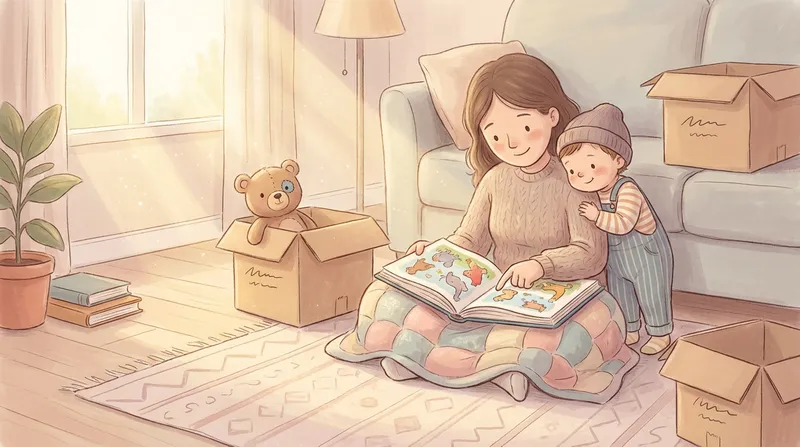
It is 2:00 AM. You are exhausted from packing cardboard boxes all day, and your toddler is awake crying for the third time tonight. You feel completely overwhelmed by the endless logistics of moving, and the parent guilt is starting to set in heavily. Why is your normally happy, independent child suddenly acting out, clinging to your leg, and refusing to sleep?
The truth is, moving is incredibly stressful for young children. They are losing their familiar environment, their safe space, and their predictable routine. Furthermore, they do not have the vocabulary to process these massive life changes.
But what if you could turn this scary transition into an exciting, magical adventure? Using a personalized moving book for kids is one of the most effective ways to help your little one process their big emotions. By making them the brave hero of their own kids moving day story, you can ease their anxiety, validate their feelings, and make the physical move significantly easier for the whole family.
In this comprehensive guide, we will explore how to explain moving to a toddler, how to identify moving anxiety symptoms in your child, and how Dreamcraft Tale can help you create the perfect custom children's book about moving to smooth out the transition.
How to Explain Moving to a Toddler
When it comes to preparing a child for a move, communication is your most powerful tool. However, toddlers and preschoolers process information very differently than adults do. You cannot simply hand them a timeline and expect them to understand. You need to speak their language: the language of play, imagination, and storytelling.
Here are the best toddler moving house tips for explaining your upcoming relocation:
Start Early but Keep It Simple Do not wait until the moving trucks arrive to break the news. Start talking about the move a few weeks in advance. Use simple, concrete language. Instead of explaining mortgages and leases, say, "We are going to live in a new house with a big yellow door and a backyard for your swing."
Focus on Toddler-Relevant Details When you explain the move, sit down with them in a comfortable, safe space. Bring out their favorite snacks and make it a positive conversation. Highlight small, toddler-focused benefits. Will they have a bigger bathtub for bubble baths? Will there be a new park with a faster slide?
Mirror Calm Energy Children are incredibly perceptive and will mirror your energy. If you sound stressed and frantic while talking about the moving boxes, they will internalize that stress. If you frame it as a wonderful family adventure, they are much more likely to embrace the change.
Encourage Repetitive Questions Your child might ask the same question ten times, such as "Will my teddy bear come with us?" Answer patiently every single time. Repetition is how young children learn and seek reassurance.
Use Visual Aids and Storytelling Children are highly visual learners. Show them pictures of the new house, their new bedroom, and the nearby park. Better yet, incorporate these details into a story. Reading books about moving house for toddlers helps them visualize the process. You can even read them Pip's Gigantic Climb to show them that tackling big, scary new challenges can actually be a fun adventure.
Focus on What Stays the Same A new home means a lot of change, which is exactly what triggers anxiety. Counteract this by emphasizing what will remain exactly the same. Assure them that their favorite toys, their cozy bed, their pet dog, and most importantly, their family, are all coming with them.
Actionable Tip: Take a "field trip" to the new neighborhood if you are moving locally. Visit the local playground and get ice cream to build positive associations with the new area before the moving boxes even come out.
Recognizing Moving Anxiety Symptoms in Your Child
Even with the best preparation, your little one might still struggle with the transition. According to the American Academy of Child and Adolescent Psychiatry, moving to a new community is one of the most stress-producing experiences a family faces. This massive disruption often triggers warning signs of distress in children.
Because toddlers cannot articulate their stress by saying, "I feel anxious about our change of address," their anxiety manifests in their behavior. Recognizing these moving anxiety symptoms in a child early allows you to intervene with comfort and support.
Watch out for these common signs:
- Sleep Disruptions: Refusing to go to sleep, waking up frequently, or experiencing nightmares.
- Toddler Separation Anxiety Moving House: Extreme clinginess, crying when you leave the room, or begging to be held constantly.
- Behavioral Regressions: Losing potty training skills, using baby talk, or demanding a pacifier they gave up months ago.
- Increased Tantrums: Having massive meltdowns over seemingly minor issues, like a broken cracker or the wrong color cup.
- Social Withdrawal: Refusing to play with siblings or losing interest in their favorite activities.
Actionable Tip: When your child exhibits these behaviors, do not punish the regression. Instead, validate the underlying emotion. Say, "I know you are feeling scared because everything is in boxes right now. It is okay to feel scared. I am right here with you."

Why a Personalized Kids Book is the Perfect Moving Day Tool
When facing toddler behavioral regressions, parents often feel helpless. This is where the psychological concept of bibliotherapy comes in. Bibliotherapy is the practice of using books to help children process difficult emotions and life events. While generic books about moving are helpful, a custom children's book about moving turns an abstract fear into a story your child already knows how to be brave in.
A 2024 clinical study indexed on PubMed found that bibliotherapy significantly reduced anxiety levels in hospitalised children, supporting it as an evidence-based intervention. Furthermore, experts at Psychology Today explain that targeted books help kids overcome anxiety by validating their feelings and modeling healthy coping skills. When a child reads about a character facing a similar struggle, they feel less isolated. But when that character actually has their name, looks like them, and is moving to a house that sounds exactly like their new home, the therapeutic impact is magnified tenfold.
This is what makes Dreamcraft Tale different. You are not just entertaining your child; you are actively equipping them with emotional resilience.
Here is why creating a personalized moving book for kids is the ultimate moving hack:
You Make Them the Hero When your child is the main character of the story, they are no longer a passive bystander to the move. They become the brave explorer discovering a new kingdom. Watch your child become the hero of their own adventure, which instantly boosts their confidence.
You Can Customize the Details You can input specific details about your actual move. Is your new house blue? Does it have a big oak tree in the front? By including these elements in your Dreamcraft Tale prompts, the AI creates a story that perfectly mirrors their upcoming reality. This makes the unknown feel familiar and safe.
Beautiful AI Illustrations Every story comes to life with vibrant, professionally illustrated artwork. Visualizing themselves succeeding in their new environment helps rewire their anxious brain into an excited one. If your child loves animals, you could create a story similar to Rosie's Animal Show! but set in their brand-new backyard.
Actionable Tip: Download Dreamcraft Tale and sit down with your child a week before the move. Ask them what kind of magical creature they want to find in their new bedroom, and generate a story about it. Read this unique story every night leading up to moving day.
Toddler Behavior Changes After Moving: What to Expect
The moving truck has driven away, the boxes are inside, and you are officially in your new home. You might expect your child to instantly bounce back, but the adjustment period is just beginning.
Clinical experts at the Child Mind Institute emphasize that younger kids thrive with routine and predictability. When you uproot that routine with a move, which is inherently difficult, establishing a new normal takes time.
Toddler behavior changes after moving are completely normal. You might notice that your child is overly hyperactive as they explore, or conversely, they might refuse to leave your side. They might test boundaries to see if the "rules" still apply in this new space. Helping toddlers adjust to a new home requires patience and intentionality. The goal is to give them a sense of mastery over their new environment.
It is also crucial for parents to give themselves grace during this period. You are likely exhausted from packing, lifting heavy boxes, and organizing logistics. When your toddler has a massive meltdown because their favorite cup is packed at the bottom of a box, it is easy to lose your temper. Take a deep breath. Remind yourself that this behavior is temporary. They are not trying to give you a hard time; they are having a hard time. Providing a calm, steady presence is the best way to help them co-regulate their emotions. If you find yourself losing patience, step into another room for a brief moment, collect yourself, and return with a comforting hug. Your emotional stability is the anchor they desperately need during this chaotic transition.
Actionable Tip: Let your child make small, age-appropriate choices in their new space. Let them choose which box of toys to unpack first, or let them pick where their bed goes in the room. This restores their sense of control and significantly reduces anxiety.
Your Moving House with Kids Checklist
To help you manage the chaos and prioritize your child's emotional needs, we have put together the ultimate moving house with kids checklist.
Phase 1: The Weeks Before
- Create your personalized moving book using Dreamcraft Tale.
- Read stories about bravery and new beginnings, such as Courtney and the Whispering Shell.
- Involve your child in packing. Give them a special box for their favorite toys and let them decorate the outside with stickers.
- Maintain your normal bedtime routine at all costs.
Phase 2: Moving Day
- Pack a "First Day Survival Kit" for your toddler. Include snacks, a change of clothes, their favorite stuffed animal, and a tablet loaded with their favorite Dreamcraft Tale stories for offline reading during the car ride (no WiFi needed!).
- Keep goodbyes brief but meaningful. Walk through the empty house and say "Goodbye, old kitchen," and "Goodbye, old bedroom."
- Try to stick to normal meal times, even if you are eating pizza on the floor.
Phase 3: Settling In
- Unpack the child's bedroom first. Seeing their familiar bed and toys will instantly ground them.
- Do not wash their bedding right before the move. The familiar smell of their sheets will help them sleep better in the new room.
- Establish the new bedtime routine on night one.
Do not rush the unpacking process at the expense of family connection. It is far more important to sit on the floor and play blocks with your child for twenty minutes than it is to empty every single box in the living room. The boxes can wait. Your child's emotional security cannot. Make the first night in the new house feel like a special occasion. Order their favorite takeout food, have an indoor picnic on the living room floor, and focus on laughing together. When it is time for bed, stick to the exact same routine you had in the old house. Bath time, teeth brushing, and then story time. This is the perfect moment to pull out the personalized Dreamcraft Tale story you created about the move. Reading their custom kids moving day story in their new bed will create a magical first memory in the new space, replacing their anxiety with a sense of wonder.
Phase 4: Community Integration Once the boxes are unpacked, focus on building community ties. Take your child to the local library, sign up for a nearby toddler gymnastics class, or simply take daily walks around the block. Familiarity breeds comfort. You can even use Dreamcraft Tale to write a story about making new friends at the neighborhood park, similar to the themes found in Dania's Sparkly Adventure.
Actionable Tip: Print out this checklist and stick it to your fridge. When the logistics get overwhelming, refer back to it to ensure your child's emotional needs are being met amidst the chaos.
Have a moving tip that worked for your family? Drop it in the comments below. We would love to hear what made your move easier!
Preparing Your Child for a Move with Dreamcraft Tale
You do not need to be a professional author or a child psychologist to help your little one through this transition. Dreamcraft Tale makes it incredibly easy to create therapeutic, engaging stories.
Create magical stories in just three simple steps:
- Imagine: Open the app and share your story idea. Tell the AI your child's name, their favorite interests, and the details of the move. For example: "A story about a brave 4 year old named Leo moving to a house with a big garden, where he discovers friendly talking animals."
- Create: The carefully designed AI generates the complete story with beautiful, age-appropriate illustrations in just minutes.
- Read: Enjoy peaceful, uninterrupted story time with our completely ad-free experience.
Every story is COPPA-compliant, completely ad-free, and kept private. Your child's name and details are never shared or sold. With multiple content filters and strict moderation, every story is safe and wholesome. If you are too exhausted from packing to create a new story, you can always explore thousands of magical, ready-to-read stories in our shared Story Library.
Conclusion
Moving house with a toddler is undeniably challenging, but it does not have to be a traumatic experience. By understanding the root of their anxiety, maintaining consistent routines, and using the power of storytelling, you can guide your child through this major life transition with confidence and love.
Remember that magical feeling when your child's face lights up during story time? You can use that exact magic to turn their moving fears into excitement. Dreamcraft Tale transforms your child's imagination into beautifully illustrated stories, making them the brave hero of their own real-life adventure.
Ready to make your upcoming move a little less stressful and a lot more magical? Try Dreamcraft Tale free and create your first personalized moving story together!
Frequently Asked Questions
How do I explain moving to a 3-year-old?
Keep your explanation incredibly simple, positive, and visual. Tell them you are going to a new home where all their favorite toys and family members will be. Use a personalized children's storybook to help them visualize the change, and avoid discussing stressful logistics like packing timelines or financial details. Focus entirely on the exciting aspects, like a new nearby park or a fun new bedroom color.
What are the main signs of moving anxiety in toddlers?
Signs of moving anxiety include sleep disruptions (like refusing to go to bed or waking up crying), sudden clinginess, increased tantrums over minor issues, and behavioral regressions like potty training accidents or baby talk. You might also notice changes in their appetite, social withdrawal, or a sudden fear of the dark.
How long does it take for a toddler to adjust to a new home?
Every child is different, but it typically takes anywhere from a few weeks to a few months for a toddler to fully adjust to a new home. Consistency is your best tool. The faster you can establish a predictable daily routine (especially a solid bedtime routine), the faster they will feel secure and settled in their new environment.
Why is my toddler acting out after moving?
Your toddler is acting out because their entire world has just been turned upside down, and they lack the emotional regulation skills to process it verbally. Acting out is their way of expressing feelings of loss, confusion, and anxiety. They are testing boundaries to see if they are still safe and if the "rules" still apply in this unfamiliar space.
How can a personalized storybook help my child with moving anxiety?
A personalized storybook acts as a form of clinical bibliotherapy. By making your child the hero of a story about moving, you validate their fears, model brave behavior, and help them visualize a positive outcome. It turns a scary unknown into an exciting adventure they can control, effectively reducing their stress and boosting their confidence.