The Playdate Panic: When Your Toddler Refuses to Share Toys
It is a scenario every parent knows all too well. You have invited a friend over for a playdate. The living room is perfectly set up with snacks, blocks, and toy cars. Everything is going beautifully until, suddenly, you hear a sharp shriek. You turn around to see your toddler tightly clutching a plastic fire truck to their chest, shouting, "Mine!" while their little friend bursts into tears.
In that moment, a hot flush of embarrassment can wash over you. The immediate, panicked reaction for many of us is to step in, pry the toy from our child's hands, and hand it to the guest to appear polite. We desperately want to raise kind, empathetic children.
But here is the truth that can instantly relieve your guilt: that shriek actually means your toddler's brain is working exactly as it should. True generosity cannot be forced. When we rip a toy away from a crying child, we are not teaching them empathy. We are teaching them that whoever is biggest and strongest gets to make the rules.
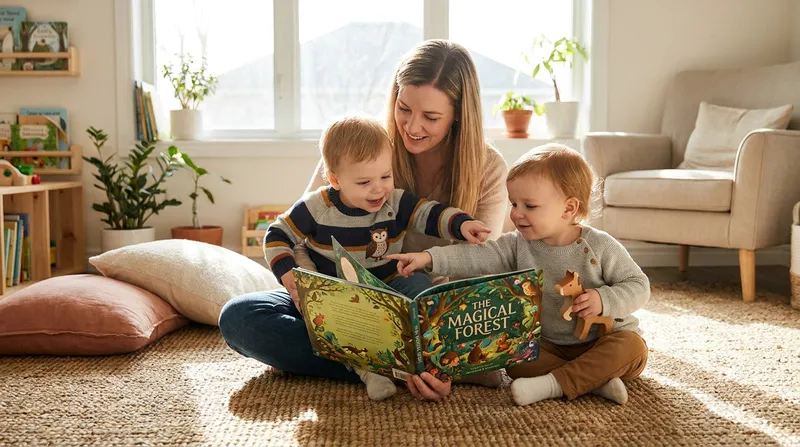
This is where gentle parenting sharing strategies come in. Gentle parenting does not mean letting your child walk all over others. Instead, it means understanding their brain development and guiding them with empathy. Telling a toddler to "share" rarely works because it is an abstract concept they cannot fully grasp yet. However, showing them how to navigate these big feelings through a story where they are the hero can completely shift their perspective.
In this guide, we will explore exactly why sharing is so hard for little ones, how to set your home up for playdate success, and how you can use personalized storytelling to model turn-taking and generosity without a single tear.
When Do Toddlers Learn to Share? (Understanding the Milestones)
Before we look at how to teach a toddler to share and take turns, we have to look at what their developing brains are actually capable of doing.
As adults, we know that if we lend a friend a book, we will eventually get it back. Toddlers do not have this understanding of time or object permanence. To a two-year-old, giving a toy to another child feels like that toy is gone forever. It feels like a permanent loss, which triggers a very real, very loud panic response.
According to First Things First, struggling with sharing and turn-taking is developmentally normal in early childhood because children have not yet developed the cognitive skill set to understand the concept of time and fairness.
If you are wondering about toddler sharing milestones, here is a realistic timeline to keep in mind:
- Age 2: At this age, children are engaged in "parallel play." They play next to each other, not with each other. Everything is "mine" because they are just beginning to understand their own individuality. Sharing is practically impossible at this stage.
- Age 3: Three-year-olds are beginning to understand the concept of taking turns, but they still struggle with impulse control. They might offer a toy to a friend but immediately snatch it back.
- Age 4 to 5: This is when true cooperative play begins. Children start to understand that sharing makes play more fun and can actually sustain a game. They have the language skills to negotiate and the emotional regulation to wait.
Recognizing these milestones is the first step in giving yourself (and your child) some much-needed grace.
Turn-Taking vs. True Sharing: Why the Difference Matters
One of the biggest breakthroughs you can have as a parent is realizing that sharing and turn-taking are two completely different skills.
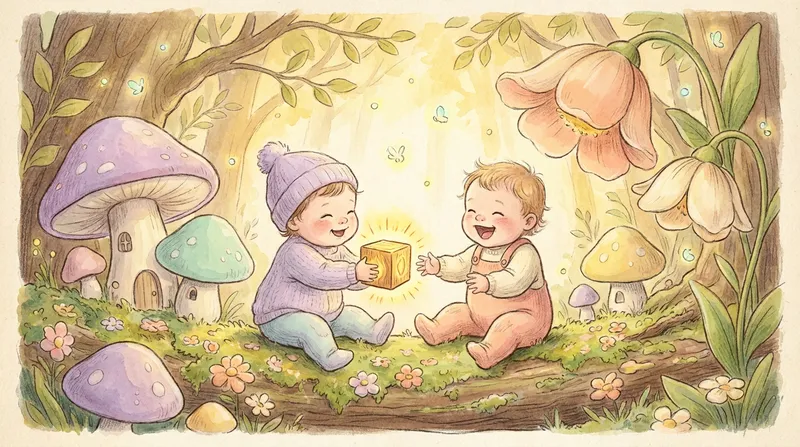
True sharing means giving something up completely, like splitting a cookie. Turn-taking means temporarily giving up an item with the absolute certainty that you will get it back, like waiting for a turn on the playground slide.
As developmental experts at Lovevery explain, turn-taking is often much easier for young toddlers (around 24 months) than sharing because they are more certain they will still have access to the object they want.
When figuring out how to teach turn taking to toddlers, focus on the language of time. Instead of saying, "You need to share," try these actionable scripts:
- "It is Sarah's turn with the blue car right now. You can have a turn when she is all done."
- "I see you want the dinosaur. Let's ask Leo if we can have it when he finishes his turn."
- "You have been playing with the drum for a long time. In two minutes, it will be time to pass it to your sister."
Why Forced Sharing Backfires (And What to Do Instead)
Imagine you are holding your brand new smartphone, and a stranger walks up, grabs it out of your hand, and says, "You need to share!" You would be furious. Yet, we do this to toddlers every day.
When we force a child to hand over a toy, we create a scarcity mindset. The toddler learns that their possessions are never safe and that adults can arbitrarily take things away. This actually makes a toddler hoarding toys much worse, as they feel they have to fiercely guard their belongings to protect them.
Guidance from child development experts at the University of Michigan emphasizes that practicing sharing early helps build positive relationships, but parents should recognize that not every item needs to be shared.
If you want to know how to encourage sharing in toddlers without forcing it, try these actionable steps before your next playdate:
- Hide the VIP Toys: Before a friend comes over, walk through the playroom with your child. Ask them, "Are there any very special toys you do not want anyone else to touch today?" Put those 2 or 3 highly prized items away in a closet. This respects their boundaries and prevents the biggest meltdowns.
- Set Up Multiples: Toddlers are terrible at sharing single items. Set out activities that have plenty of pieces, like a large bin of building blocks, a box of crayons, or a sensory bin filled with kinetic sand.
- Narrate the Good Moments: When you see your child naturally hand a toy to a friend, praise the specific action. "Wow, you gave Emma the green block. Look how happy that made her! You are being such a kind friend."
How Storytelling Builds Empathy Before the Playdate
If in-the-moment lectures do not work, how do we actually teach these skills? The answer lies in the magic of storytelling.
Toddlers process their entire world through play and narrative. When a child hears a story, they are not just passively listening. They are actively putting themselves in the character's shoes, safely experiencing the character's frustrations, and learning from the character's choices.
Research from Zero to Three highlights that toddlers experience more complex feelings as they grasp their individuality, making sharing difficult. Using puppets or stories about typical frustrations helps them process these emotions safely.
When it comes to teaching toddlers empathy, social emotional learning for toddlers is highly effective when introduced before the stress of a playdate begins. By reading a story about a character who struggles to share but eventually finds joy in taking turns, you give your child a mental script to follow.
For example, reading a story similar to Justine and the Magical Paintbrush can show a child how sharing a special tool (like a paintbrush) leads to creating something beautiful together, rather than losing the tool entirely.
What to Look for in Sharing Books for Toddlers
There are many wonderful traditional picture books about taking turns. When looking for the best books about sharing for preschoolers, you want to find stories that validate the child's feelings. Good books do not shame the character for wanting to keep a toy. Instead, they show the natural, positive consequences of cooperation.
Some excellent traditional examples include Llama Llama Time to Share by Anna Dewdney, which perfectly captures the anxiety of a new playdate, or Should I Share My Ice Cream? by Mo Willems, which humorously explores the internal debate of giving up a treat. A great example of cooperative fun is Rosie's Animal Show!, which highlights how friends can come together to create something amazing.
However, traditional printed books have one major limitation. If your child is currently obsessed with hoarding their blue dump truck, reading a book about an elephant sharing ice cream might not connect the dots in their developing brain. The scenario is simply too different from their current reality.
This is why personalized storytelling is becoming the ultimate parenting hack.
Actionable Story-Based Strategies to Teach Turn-Taking
To make story time truly effective for behavioral changes, you need a strategy. Clinical guidelines from Denver Health Early Childhood Mental Health Consultation suggest that children typically start learning how to share between 3 to 5 years old, which coincides with when they learn to use words to communicate their needs.
We can support this by giving them the exact words they need through customized stories. Here are specific activities to teach sharing to toddlers using storytelling:
1. The "Night Before" Story Routine The night before a playdate, tell a story where your child is the main character and they are facing the exact scenario that will happen the next day.
Use this fill-in-the-blank prompt: "Once upon a time, a brave kid named [Child's Name] was playing with their favorite [Favorite Toy]. Suddenly, their best friend [Friend's Name] came over to play! [Friend's Name] really wanted to play with the [Favorite Toy]. At first, [Child's Name] felt worried. 'Mine!' they thought. But then, [Child's Name] remembered a magic trick. They said, 'You can have a turn when I am done!'"
2. The "Pause and Ask" Technique While reading or telling the story, do not just rush to the end. Pause at the climax of the conflict. Ask your toddler, "Oh no, both kids want the exact same red ball! What should they do?" Letting them problem-solve in a calm environment (like bedtime) builds neural pathways they can access later during a high-stress playdate.
3. Focus on Teamwork Tell stories where sharing is required to achieve a goal. For example, in Pip's Gigantic Climb, working together and taking turns is the only way to reach the top. When children see sharing as a team effort rather than a personal loss, their resistance drops significantly.
Want a ready-made version of the Night Before Story? Explore our sharing and friendship stories in the Dreamcraft Tale Story Library!
Creating Your Own Sharing Hero Story with Dreamcraft Tale
While making up stories on the fly is great, sometimes at 7:30 PM, you simply do not have the creative energy to invent a compelling narrative about turn-taking. That is exactly the gap Dreamcraft Tale was built to fill.
Dreamcraft Tale is an AI story generator for kids that transforms your child's imagination into beautifully illustrated personalized children's stories. Available on iOS and Android with a free trial, the app allows you to create your first sharing story tonight at no cost.
With our easy 3-step process (Imagine, Create, Read), you can go from a blank screen to a personalized storybook in minutes. If your toddler is struggling with snatching toys, you can open the app and type a simple prompt: "A story about [Child's Name] who loves their toy dinosaur, but learns how fun it is to take turns with their friend Leo." (Just like the friendship modeled in Leo and the Pet Pictures).
Instantly, the app generates a complete, age-appropriate story where your child is the hero of their own adventure. Every story comes to life with vibrant, professionally generated artwork that captures their attention.
Imagine reading your child a story the night before a playdate where a character named exactly like them learns to say, "You can have a turn when I am done!" and then hearing them say that exact phrase the next afternoon. When a child hears their own name and sees a character who looks like them making kind, empathetic choices, the lesson sticks. It bridges the gap between abstract rules and their personal reality.
Stories can even be read offline after they are generated, so if you need a calming story mid-playdate with no Wi-Fi, you are covered. And on nights when even typing a prompt feels like too much, Dreamcraft Tale's Shared Story Library has thousands of ready-made adventures about friendship, kindness, and sharing that are ready to read in one tap.
Plus, Dreamcraft Tale provides a completely ad-free experience with strict content moderation, ensuring every story is safe, wholesome, and focused purely on your family's bonding time.
Conclusion: Patience, Practice, and Play
Learning how to encourage sharing in toddlers is a marathon, not a sprint. It takes years of brain development, patience, and practice for a child to master the complex social rules of generosity.
Remember that when your child refuses to share, they are not being "bad." They are simply being a toddler. By putting away the most special toys, setting clear boundaries around turn-taking, and replacing forced sharing with empathetic modeling, you are setting them up for lifelong success.
Most importantly, lean into the power of play and narrative. Whether you are reading a joyous tale like Lily's Happy Voice or creating a custom adventure on the Dreamcraft Tale app, stories are the gentlest, most effective way to teach your little one how to navigate the world with kindness.
Ready to create your first magical story about sharing and friendship? Start creating personalized stories on Dreamcraft Tale to build your toddler's empathy today.
Frequently Asked Questions
Why does my 3-year-old refuse to share?
Three-year-olds are still developing impulse control and a sense of self. They lack the cognitive ability to fully understand that giving a toy away temporarily does not mean it is gone forever. This behavior is developmentally normal and expected.
How do I handle a toy-stealing toddler at a playdate?
Step in gently and narrate what happened without shaming. You can say, "I see you really want that car, but Liam is taking a turn right now. Let's find another car to play with until he is all done." This enforces a clear boundary while offering a solution.
Should I force my child to share their favorite toy?
No. It is highly recommended that parents put highly prized or "special" toys away in a closet before a playdate begins. This prevents unnecessary conflict, respects your child's boundaries, and makes the playdate much less stressful for everyone.
What are the best activities to teach sharing to toddlers?
Simple turn-taking games are incredibly effective. Try rolling a ball back and forth, building a block tower together by taking turns adding a piece, or reading personalized stories that model empathetic behavior.
At what age should a child understand sharing?
While the foundation for cooperative play begins around 3 to 5 years old, mastering the concept of true sharing takes many years of practice, adult modeling, and cognitive brain development. Do not expect perfection in the preschool years.