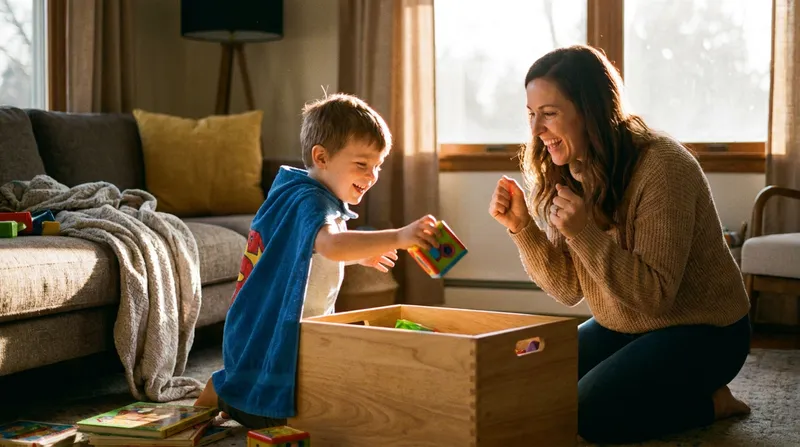
It's 6:30 PM. You're exhausted from a long day, and the living room floor is completely covered in building blocks, stuffed animals, and puzzle pieces. You ask your child to clean up for the fifth time, and the familiar whining begins. The daily power struggle over chores is a universal parenting pain point. You want to spend quality time with your kids, but you lack the creative energy at the end of the day to turn mundane routines into cooperative, stress-free activities. Sound familiar?
Every parent has been there. You want to teach your children responsibility, but you don't want to spend your entire evening acting like a drill sergeant. Fortunately, there is a magical bridge between the work you need them to do and the play they desperately want to continue.
By using the power of storytelling, you can transform everyday household tasks into epic adventures. Let's explore exactly how to make chores fun for kids, turning your daily cleaning and baking routines into moments of connection and joy.
Why Chores Feel Like a Battle (And How to Change That)
If you're constantly asking yourself how to get your kids helping around the house without a meltdown, it helps to understand why they resist in the first place. For young children, the world is a giant playground. When we interrupt their playtime to demand they clean up, we're asking them to switch off their imagination and do something that feels incredibly boring.
Children resist chores because they feel like work. To a 4-year-old, putting blocks in a plastic bin is a tedious task that takes them away from building their towering castle.
However, what if putting the blocks away was actually part of the game?
Key Takeaway: The secret to ending the chore wars is not found in stricter rules or bigger rewards. The secret is meeting your child where they already are: in their imagination.
When we wrap a mundane task in a captivating narrative, we completely change the child's perspective. They're no longer doing a chore. They're embarking on a mission.
The Secret to Turning Chores Into Games: Imagination
Many parents try turning chores into games by using timers, chore charts, or point systems. While these methods can work temporarily, they often lose their magic quickly. A timer just creates panic, and a sticker chart relies on external rewards that eventually lose their appeal.
Pretend play chores are entirely different. When you use storytelling, you build intrinsic motivation. According to the Child Mind Institute, pretend play supports the development of executive functioning skills, flexible thinking, and short-term memory. It engages a child's natural desire to explore and solve problems.
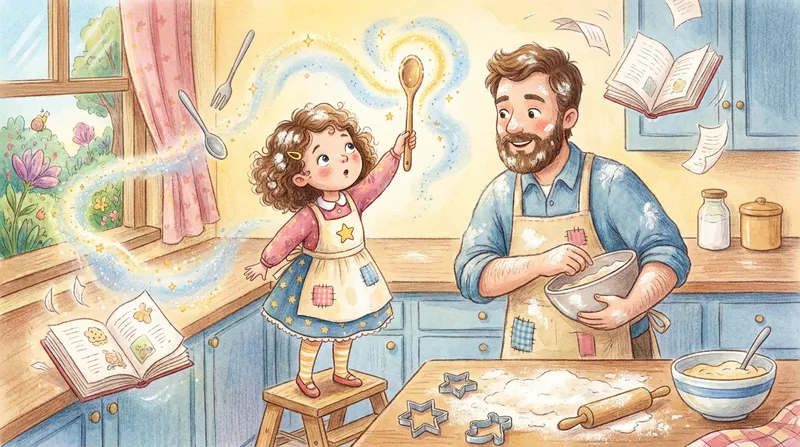
Think about the creativity sparked in Justine and the Magical Paintbrush. When a child feels like they hold the magic in their own hands, they're eager to see what they can create. By framing a chore as an imaginative quest, you invite your child to be the hero of the moment. They aren't just wiping a table. They're erasing a magical spell.
The Real Benefits of Household Chores for Preschoolers
Sometimes, it feels easier to just do the chores yourself. Doing tasks with toddlers often takes twice as long and makes a bigger mess. You might even feel a twinge of guilt asking your little ones to work when they could be playing.
But teaching kids responsibility through chores is one of the greatest gifts you can give them. Research from the American Academy of Child and Adolescent Psychiatry (AACAP) suggests there are immense benefits to including chores in a child's routine as early as age 3. Children who do chores often exhibit higher self-esteem, are more responsible, and are better equipped to deal with frustration.
Furthermore, a famous 20-year longitudinal study from the University of Minnesota found that one of the strongest predictors of success in young adulthood was whether children had begun doing chores at an early age. Starting household chores for preschoolers sets a foundation for lifelong competence. The goal isn't a perfectly clean house. The goal is building a capable, confident child.
3 Storytelling Cleaning Games for Kids
How do we actually put this into practice? Storytelling activities for kids work best when they involve clear, actionable scripts. According to Harmony Pediatrics, storytelling helps children process emotions and develop empathy, making them much more willing to cooperate.
Here are three ready-to-use cleaning games for kids that will transform your living room from a disaster zone into an adventure.
The Great Toy Rescue Mission
This game is perfect for the dreaded task of cleaning up a massive toy spill. Instead of saying, "Clean up your toys," try setting the stage for a rescue mission.
The Story Prompt: "Oh no! The living room floor has turned into bubbling hot lava, and your toys are stranded! We need a brave rescue pilot to save them before nightfall."
How to Play:
- Give your child a "rescue ship" (a laundry basket or toy bin).
- Have them fly around the room, swooping down to save the stranded toys.
- Use fun sound effects like helicopter noises or walkie-talkie static: "Base to Rescue Pilot, we have a teddy bear in sector four!"
- This turns the overwhelming cleaning up toys game into a focused, exciting imaginative play chore. Developmental bonus: It also helps them practice categorizing items, a key cognitive skill.
The Dust Monster Invasion
Dusting and wiping baseboards can be tedious, but it's a perfect task for little hands. Turn this chore into a heroic battle against invisible invaders.
The Story Prompt: "I just checked the radar, and we have a Dust Monster invasion on our baseboards! They're trying to turn our house gray and sneezy. We need to catch them!"
How to Play:
- Equip your child with a damp microfiber cloth, explaining that it is a "magic shield" or "monster net."
- Show them how to swipe the cloth along the baseboards to capture the dust.
- React with amazement every time they show you a dirty cloth, gasping at how many "monsters" they caught.
- These fun chore ideas keep them moving. This activity also builds fine motor skills and teaches cause-and-effect, as they can literally see the results of their effort on the cloth.
The Magical Animal Sanctuary
If your child has a mountain of stuffed animals, organizing them can feel impossible. Frame your child as a caring wildlife expert to tap into their sense of empathy.
The Story Prompt: "Welcome to the Magical Animal Sanctuary! Our animals have been playing all day, and now they're tired and need to go back to their proper habitats to sleep."
How to Play:
- Assign different bins or shelves as specific habitats: the jungle, the ocean, or the cozy cave.
- Ask your child to give each animal a quick "checkup" (a hug or a pat on the head) before placing them in their habitat.
- Much like the heartwarming tale of Rosie's Animal Show!, this game teaches kids responsibility by making them the caretaker of their beloved friends, which nurtures their emotional development and empathy.
Want to prime your little hero before the next big cleanup mission? Explore our Story Library for instant inspiration!
Baking With Toddlers: Stirring Up a Story
The same storytelling magic that transforms your living room into a rescue mission works just as powerfully in the kitchen. Moving from the living room to the kitchen, baking with toddlers is another incredible way to bond. Yes, kids baking activities are famously messy. There will be flour on the floor and eggshells on the counter. However, the kitchen is a fantastic classroom.
According to the University of Nevada, Reno, cooking with children enhances math, science, language, and motor development. To keep your little ones focused and listening to directions, weave a narrative into the recipe.
The Moon Rock Cookies
Turn a simple chocolate chip cookie recipe into a space exploration mission.
The Story Prompt: "Attention Astronaut! We are preparing for a long journey to the moon, and we need to bake special fuel for our rocket ship: Moon Rock Cookies!"
How to Play:
- Call the flour "stardust" and the sugar "moon sand."
- Have your toddler carefully pour the stardust into the mixing bowl.
- Let them use their hands or a spoon to mash the "moon craters" (butter) into the mixture.
- Remind them of the bravery found in Luna's Moon Quest as they wait patiently for the cookies to bake in the "solar oven."
- Developmental bonus: Measuring and pouring are fantastic ways to introduce early math and spatial awareness.
The Whispering Shell Cupcakes
If you're making cupcakes or muffins, transport your kitchen to an underwater kingdom.
The Story Prompt: "The mermaid queen is having a grand celebration today, and she has asked us to bake her famous Whispering Shell treats!"
How to Play:
- Engage their senses. Ask them to listen closely to the mixer: "Can you hear the ocean waves?"
- Use blue or green food coloring to make "ocean water" frosting.
- As you work together as a team, talk about the underwater adventures in Courtney and the Whispering Shell.
- This storytelling activity for kids turns a basic baking afternoon into a deeply immersive bonding experience.
How to Kickstart a Cleaning Mission With a Custom Story
Transitioning from baking and cleaning back to quiet time is much easier when you have the right tools. Sometimes, kids need a little primer before they're ready to jump into an imaginative game. This is where Dreamcraft Tale becomes your secret weapon, not just for bedtime, but for any moment when you need a little creative spark.
Imagine reading a personalized, AI-illustrated story where your child is the hero, overcoming a massive challenge like scaling a giant mountain, much like Pip's Gigantic Climb. After reading the story, you can look at your child and say, "You were so brave in that story! Do you think you have enough hero energy left to help me conquer the Mountain of Laundry?"
With our simple Imagine, Create, Read process, you can generate a magical adventure in minutes. Too tired to create tonight? Explore thousands of magical stories in our shared Story Library. And because Dreamcraft Tale is completely ad-free with strict content moderation, you can hand it over with total peace of mind. By reading a custom story first, you set a positive, empowered mindset before the actual cleaning even begins.
Conclusion: Making Memories While Making the Bed
Turning chores into games isn't about achieving a perfectly spotless house. It's about connection, patience, and celebrating the magic of childhood. When you use storytelling to guide your children through baking and cleaning, you're teaching them that responsibility can be joyful.
Every time you invite your child to rescue their toys or bake moon rocks, you're building lasting memories. You're showing them that they are capable, helpful, and deeply loved.
Running low on creative energy at the end of the day? Dreamcraft Tale creates beautifully illustrated, personalized stories in minutes, so your child can be the hero every night. Download free today and start your first adventure together!
Frequently Asked Questions
At what age should kids start doing household chores?
Children can start doing simple household chores as early as age 3. Tasks should be age-appropriate, such as putting toys in a bin, matching socks, or helping wipe up a spill. At this age, focus on building the habit and praising their effort rather than expecting perfection.
How do I get my 4-year-old to clean up their toys without crying?
Transform the task into a game using pretend play. Instead of commanding them to clean, invite them on a mission. Tell them they need to rescue their toys from a lava floor or feed their hungry toy box. Engaging their imagination instantly lowers resistance.
What are safe baking activities for toddlers?
Toddlers excel at safe, supervised tasks like pouring pre-measured dry ingredients, stirring batters, mashing soft fruits like bananas, and decorating with sprinkles. Always keep them at a safe distance from hot ovens, boiling liquids, and sharp tools.
How does storytelling help teach kids responsibility?
Storytelling places the child in the role of the hero. When they feel like a capable protagonist on a mission, they develop intrinsic motivation and a sense of ownership over their tasks. They want to complete the chore because it resolves the story.
What if my child still resists doing chores after trying games?
Validate their feelings of not wanting to stop playing. Start with very small, manageable tasks. Use a transitional story to gently shift their focus from their current activity to the chore. Remember that building a new habit takes time, consistency, and patience.