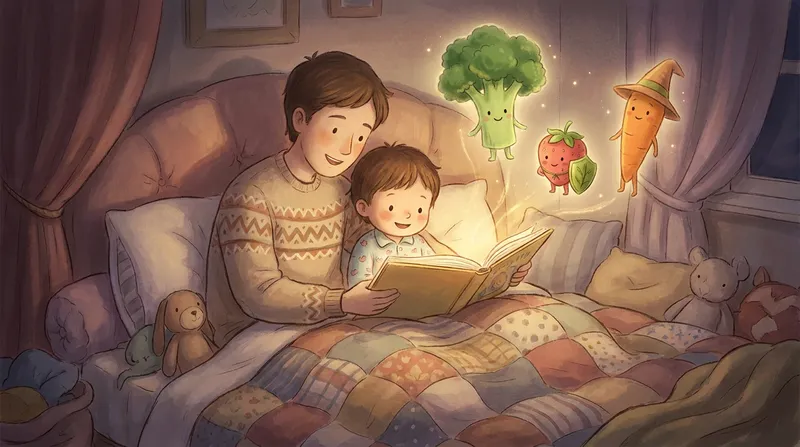
It's 6:00 PM. You've offered three different meals, and your toddler is in tears over a weirdly shaped noodle. Your voice is tired, you feel exhausted, and mealtime feels like a daily battle you're losing. If this sounds familiar, you're absolutely not alone.
Every parent has been there. You want your child to eat well and develop healthy habits, but the endless power struggles leave everyone feeling stressed and defeated. When a toddler refuses to eat, it's easy to feel like you're failing. But what if you could remove the pressure entirely? What if you could introduce new foods through the magic of storytelling, far away from the stressful environment of the dining table?
Welcome to the concept of low-pressure food exposure. By combining proven feeding therapy techniques with personalized narrative therapy, you can turn food anxiety into food curiosity. Today, we're going to explore how creating custom bedtime stories with Dreamcraft Tale can help your child overcome picky eating phases so you can start shifting the dynamic, one story at a time.
What is Low-Pressure Food Exposure?
Low-pressure food exposure is a feeding strategy that focuses on familiarizing children with new foods without any expectation that they actually eat them. Traditional parenting advice often relies on bargaining, such as offering dessert in exchange for eating three bites of peas. However, child nutrition experts agree that this type of pressure usually backfires.
When a child feels pressured to eat, their anxiety spikes. This anxiety triggers a fight or flight response, which actually suppresses their appetite. According to experts at NewYork-Presbyterian and Columbia University, taking the pressure out of mealtime is essential because parental stress directly impacts a child's relationship with food.
Instead of forcing a bite, low-pressure exposure involves looking at, touching, smelling, or simply talking about food in a safe, fun environment. Reading books about trying new foods is one of the most effective forms of low-pressure exposure. When your child reads a story about a brave explorer navigating a jungle of green beans, they're interacting with the idea of the food without the immediate, stressful expectation of swallowing it.
Actionable Tip: Move food exploration out of the kitchen. During playtime, use toy foods or read fun food books for young readers. Make the goal entirely about discovery, not consumption.
Sensory Eater vs. Picky Eater: Understanding the Difference
Before you can help your child, it's crucial to understand what kind of eating challenge you're facing. Many parents use the terms interchangeably, but there is a significant difference between a typical picky eater and a sensory eater.
According to research published by the National Institutes of Health, picky eating has a high prevalence in preschool children, often peaking around age three, and is usually a temporary behavioral phase. A typical picky eater might refuse broccoli today even though they loved it yesterday. They might want their sandwiches cut into triangles instead of squares. This is a normal developmental stage where toddlers are asserting their independence and testing boundaries.
On the other hand, sensory eating issues are rooted in how a child's brain processes sensory input. A sensory eater doesn't just dislike a food; they have a strong, sometimes physical aversion to it. They might gag at the smell of eggs, refuse any food that is wet or slimy, or only eat crunchy, beige foods. For sensory eaters, a new texture can feel genuinely alarming.
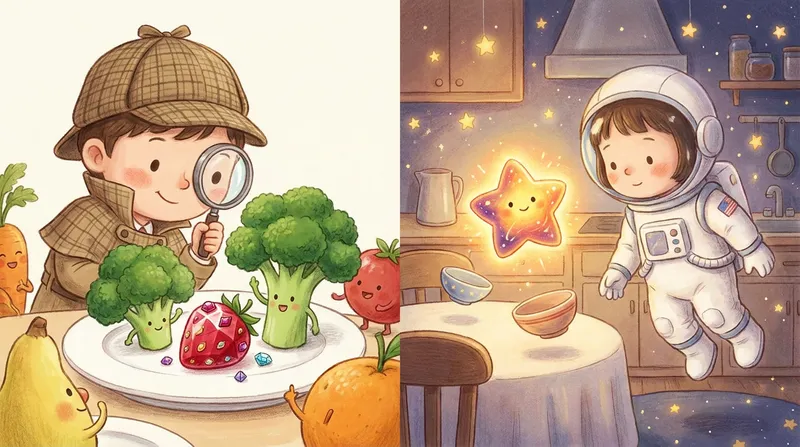
If your child is a sensory eater, low-pressure food exposure isn't just helpful, it's absolutely vital. Pushing a sensory eater to try a triggering food will only increase their food neophobia (a genuine, anxiety-driven fear of unfamiliar foods that is more than just stubbornness). Personalized stories are especially powerful for sensory eaters because they allow children to process the idea of different textures and smells in a completely safe, imaginary space.
Dreamcraft Tale AI Prompt: "Write a story about [Child's Name] visiting the magical Texture Museum. They find a room filled with crunchy cracker statues, a bouncy castle made of soft mashed potatoes, and a slippery slide made of smooth noodles. [Child's Name] touches everything and realizes different textures are fun to play with."
Actionable Tip: Keep a food journal for one week. Note not just what your child refuses, but the characteristics of those foods. Are they all soft? Are they all mixed together? Identifying these patterns will help you understand if you're dealing with a behavioral phase or a sensory preference.
The Division of Responsibility in Feeding
If you want to eliminate mealtime battles tonight, there is one psychological framework you need to adopt: The Division of Responsibility in Feeding.
Developed by pediatric feeding expert Ellyn Satter, this model is the gold standard for raising competent, stress-free eaters. The concept is incredibly simple but requires a major shift in how we parent at the dinner table. According to the Ellyn Satter Institute, the feeding relationship is divided into clear roles for the parent and the child.
The Parent is responsible for:
- WHAT food is served.
- WHEN the food is served (establishing regular meal and snack times).
- WHERE the food is eaten (at the table, without distractions).
The Child is responsible for:
- WHETHER they eat the food offered.
- HOW MUCH they eat.
When you fully embrace this division, the power struggle vanishes. You do your job by providing a balanced meal that includes at least one safe food you know they like. Then, you step back. If they choose to only eat the bread roll and ignore the chicken, you say nothing. You've done your job, and they're doing theirs.
Actionable Tip: At your next meal, serve the food family-style and don't make a single comment about what your child is or isn't eating. Praise their conversation, ask about their day, but leave their plate completely out of the discussion.
How Personalized Stories Help Toddlers Overcome Food Anxiety
So, how do we encourage kids to try new things if we aren't allowed to pressure them at the table? The answer lies in narrative therapy and imagination.
Children process the world through play and storytelling. When you read a generic book about a bear eating honey, your child might enjoy it, but they don't necessarily connect it to their own life. However, when you use Dreamcraft Tale to create a story where your child is the hero of a magical food kingdom, something shifts. They stop seeing broccoli as a threat and start seeing it as an adventure.
As a carefully designed AI story generator for kids, Dreamcraft Tale transforms your child's imagination into beautifully illustrated personalized stories in minutes. By placing your child as the main character who bravely explores, you're building their confidence. They get to visualize themselves interacting with new foods in a positive, empowering way.
Just as the character in Pip's Gigantic Climb learns to overcome physical obstacles, your child can learn to overcome their hesitation toward new flavors. The beautiful AI illustrations bring these foods to life in vibrant, non-threatening ways, making a scary vegetable look like a fun, magical artifact.
Actionable Tip: Create a bedtime routine where you read one personalized story about food exploration every few nights. Don't connect it to dinner. Let the story stand alone as a fun adventure.
Building Food Bridges: From Safe Foods to New Flavors
Another powerful clinical concept you can weave into your personalized stories is the idea of food bridges (also known as food chaining).
Food bridges involve taking a food your child already loves and making tiny, progressive changes to introduce a new food. If your child only eats fast-food french fries, you don't jump straight to mashed sweet potatoes. That bridge is too long.
Instead, you build a bridge:
- Fast food french fries.
- Frozen shoestring fries baked at home.
- Thicker steak fries.
- Homemade potato wedges.
- Sweet potato wedges.
You can use Dreamcraft Tale to create stories that mirror these exact food bridges. If your child's safe food is a chicken nugget, create a story where their favorite nugget goes on a journey and meets a carrot stick. This normalizes the new food by associating it with a beloved safe food.
Actionable Tip: Identify your child's top three safe foods. Write down one small variation for each food (a different brand, a different shape, or a different color) and introduce that variation this week.
5 Custom Story Ideas to Encourage Trying New Foods
Ready to turn bedtime into a magical bonding moment that also helps your picky eater? With Dreamcraft Tale's easy 3-step creation process (Imagine, Create, Read), you can generate these exact stories tonight.
Here are five personalized story prompts designed for low-pressure food exposure. Just copy and paste these ideas into the Dreamcraft Tale app, customize them with your child's name, and watch the magic happen.
1. The Broccoli Forest Adventure
The Concept: Desensitizing a child to the look and texture of green vegetables by turning them into a landscape for exploration.
Dreamcraft Tale AI Prompt: "Write a story about a brave explorer named [Child's Name] who shrinks down to the size of a bug. They must journey through the Giant Broccoli Forest to find a hidden treasure. Describe the broccoli trees as soft, green, and friendly. [Child's Name] has to climb the bumpy green branches and discovers that the forest smells like a warm, cozy kitchen."
Why it works: It changes the context of broccoli from a mandatory side dish to an exciting, interactive environment.
2. The Magical Tasting Potion
The Concept: Empowering the child to take control of mixing and creating foods, which is great for sensory eaters who need to understand what goes into their meals.
Dreamcraft Tale AI Prompt: "Create a magical adventure where [Child's Name] is a clever wizard studying at a magic school. Today is potion class, and [Child's Name] has to invent a brand new soup potion. They mix orange carrots for night vision, yellow corn for sunshine energy, and green peas for jumping power. [Child's Name] bravely tastes the magic potion and gains superpowers."
Why it works: Much like the creative magic found in Dania's Sparkly Adventure, this story associates different colored foods with positive, exciting attributes.
3. The Chicken Nugget's New Friend
The Concept: Using a food bridge to connect a highly preferred safe food with a new, challenging food.
Dreamcraft Tale AI Prompt: "Write a funny story about [Child's Name]'s favorite food, a brave little Chicken Nugget. The Nugget goes on a journey across the kitchen counter and meets a new, crunchy friend named Charlie the Carrot. At first, the Nugget is unsure because Charlie is bright orange and very crunchy, but they play a game of hide-and-seek and become best friends."
Why it works: It validates the child's love for their safe food while painting the new food as friendly and approachable.
4. The Superhero's Secret Energy Snack
The Concept: Linking a specific food to physical growth and energy, appealing to a child's desire to be strong and capable.
Dreamcraft Tale AI Prompt: "Tell a story about a superhero named [Child's Name] who needs to save their town from a sleepy spell. [Child's Name] needs extra energy to fly fast enough. Their sidekick brings them a special, mystery power-fruit (a strawberry). Describe the fruit as red, juicy, and sweet. When [Child's Name] takes a bite, they get super speed and save the day."
Why it works: It frames trying a new food as a heroic choice. If your child loves action, this prompt will make them feel powerful and brave.
5. The Rainbow Plate Quest
The Concept: Encouraging food exploration and dietary variety through a gamified collection quest.
Dreamcraft Tale AI Prompt: "Write a fantasy story where [Child's Name] is a noble knight on a quest to restore the colors to a gray kingdom. To bring the color back, [Child's Name] must find one food for every color of the rainbow: a red apple, an orange sweet potato, a yellow banana, a green cucumber, and a handful of blue blueberries. Describe how proud the knight feels when the plate is full of colors."
Why it works: Similar to the colorful journey in Luna's Moon Quest, this story teaches the concept of eating a rainbow without demanding that the child actually eat it right now.
Turn Bedtime into a Magical Solution
Parenting a picky eater is incredibly draining, but you don't have to fight this battle at the dinner table. By shifting the focus to imagination, play, and low-pressure exposure, you can help your child build a healthy, lifelong relationship with food.
Dreamcraft Tale makes it effortless to create these magical bonding moments. With our completely ad-free experience, multiple layers of safety filters, and beautiful AI illustrations, you can generate unlimited unique stories with a Dreamcraft Tale subscription tailored to your child's exact needs. Whether they need a story about a brave broccoli tree or just a comforting tale like Rosie's Animal Show!, the power of storytelling is right at your fingertips.
Which of these story ideas does your child need most right now? Tell us in the comments, we'd love to hear about your picky eater's food adventures!
Ready to turn bedtime battles into magical moments of growth? Download the Dreamcraft Tale app today, create your first customized food adventure, and watch your child become the hero of their own story.
Frequently Asked Questions
Why is my toddler suddenly refusing to eat their favorite foods?
It's completely normal for toddlers to suddenly reject foods they previously loved. This behavior is often linked to their developmental need to assert independence and test boundaries. Instead of reacting with frustration, continue to offer the food without pressure, pairing it with other safe options.
Should I force my picky eater to take at least one bite?
No, child nutrition experts strongly advise against the "one bite rule." Forcing a child to eat increases mealtime anxiety and can actually trigger a fight or flight response, which suppresses their appetite. The goal is to create a stress-free environment where they feel safe exploring food on their own terms.
What is the difference between a sensory eater and a picky eater?
A picky eater is usually going through a behavioral phase of asserting independence. They might refuse a food they previously liked. A sensory eater experiences genuine neurological distress from certain textures, smells, or temperatures. Sensory eaters often have a very limited list of safe foods and may gag or panic when forced to interact with new textures.
What is the Ellyn Satter Division of Responsibility?
The Division of Responsibility is a highly respected feeding framework. It states that parents are responsible for deciding what food is served, when it is served, and where it is eaten. The child is entirely responsible for deciding whether they will eat the food and how much they will consume.
How can personalized bedtime stories reduce mealtime anxiety?
Personalized stories remove food from the high-stress environment of the kitchen table. By making your child the hero of a story where they interact with new foods in a fun, magical setting, you allow them to process the idea of the food (its color, shape, and concept) without the immediate pressure to eat it.
What are food bridges for toddlers?
Food bridges, or food chaining, is a clinical feeding therapy technique where you take a food your child accepts and make tiny, incremental changes to it to slowly expand their palate. For example, moving from a preferred brand of cracker to a slightly different shaped cracker, then to a different flavor of that cracker.