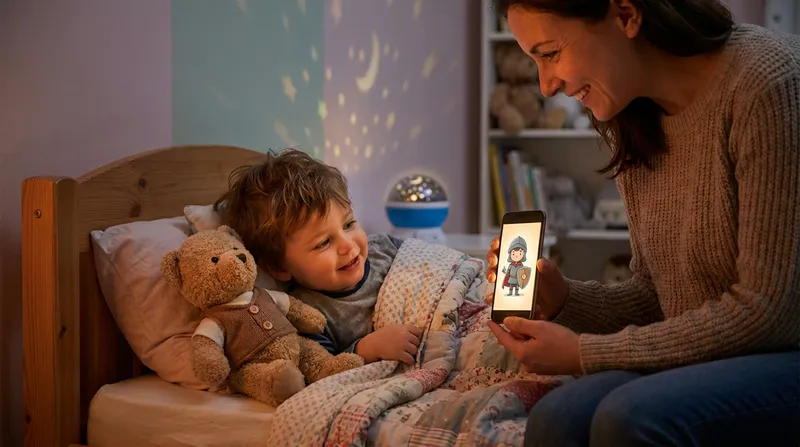
It's 9:15 PM. You've already tucked your child in three times, offered a final sip of water, and read their favorite book. You tip-toe out of the room, hoping for a moment of peace to finally relax. Then, you hear the familiar pitter-patter of little feet down the hallway. Your toddler is out of bed. Again.
If this sounds familiar, you're not alone. Every parent has been there. You want to make bedtime special, but you're running on empty. Bedtime battles are exhausting, and the constant nighttime wake-ups leave the whole family sleep-deprived. Many parents feel guilty about using harsh sleep training methods, like locking doors or letting their child cry it out, but they're desperate for a gentle alternative that actually works.
For many families stuck in this phase, the breakthrough is not a stricter rule or a longer lecture. It is giving your child a reason to want to stay in bed, by making them the hero of their own bedtime story.
What if you could shift bedtime from a battle of wills to a collaborative, highly anticipated event? What if your child actually looked forward to staying in their own room?
Welcome to the Story Reward System. This gentle sleep training method uses positive reinforcement and personalized AI bedtime stories for kids to help ease the dreaded jack-in-the-box toddler phase. By turning your child into the hero of their own adventure, you can build a bedtime routine that fosters connection, sparks imagination, and finally lets everyone get a good night's rest.
Why Your Toddler Won't Stay in Bed
Before we can fix the problem, we need to understand why it's happening. When children transition from a crib to a toddler bed, they suddenly gain a massive amount of physical freedom. This transition often coincides with major cognitive leaps, leading to a perfect storm of bedtime resistance.
There are three primary reasons your preschooler won't stay in bed:
- Boundary Testing: Toddlers are budding scientists, and your rules are their experiments. They get out of bed simply to see what you will do. According to the Cleveland Clinic, toddlers often lack the developmental self-control to stay in a big kid bed, making boundary testing a normal but challenging phase that requires positive reinforcement.
- Separation Anxiety at Bedtime: Nighttime is the longest period your child spends away from you. The dark, quiet room can trigger intense feelings of separation anxiety. They wander out of their room seeking the comfort and safety of your presence.
- Fear Of Missing Out (FOMO): Your toddler knows that you're still awake. They imagine you are eating ice cream, watching fun movies, or playing with their toys. They get out of bed because they want to join the party.
Actionable Tip: Validate their feelings during the day. Talk about how hard it is to say goodnight, but firmly explain that nighttime is for sleeping. Acknowledge their FOMO by explaining that parents do boring chores (like washing dishes) after bedtime, making staying awake seem much less appealing.
The Jack-in-the-Box Toddler Phase Explained
The jack-in-the-box toddler phase is exactly what it sounds like. You put them down, and they pop right back up. This cycle can repeat ten, twenty, or even thirty times a night.
When parents are exhausted, it's easy to accidentally reinforce this behavior. If your child gets out of bed and you respond with a long conversation, a back rub, or a stern lecture, you're still giving them exactly what they want: your attention. To a toddler, negative attention is still attention.
To break this cycle, you need a silent return to bed alternative. The American Academy of Pediatrics recommends returning a child to their bed quickly and lovingly if they get out, avoiding engaging in long conversations that might reward the behavior with attention.
Actionable Tip: The first time your child gets out of bed, calmly walk them back, say "It's time for sleep, I love you," and leave. The second time, walk them back and only say "Time for sleep." The third time, and every time after that, walk them back in complete silence. Be as boring as possible. Don't make eye contact. Don't show anger. Just silently return them to bed.
The Importance of a Consistent Bedtime Routine
A reward system designed to keep your toddler in bed will only work if it's built on a solid foundation. Children thrive on predictability. A consistent routine acts as a series of physical and mental cues that tell your child's brain it's time to wind down.
Research from the Sleep Foundation shows that a consistent bedtime routine should last around 30 minutes and include 3 or 4 calming activities, such as brushing teeth, putting on pajamas, and reading a book.
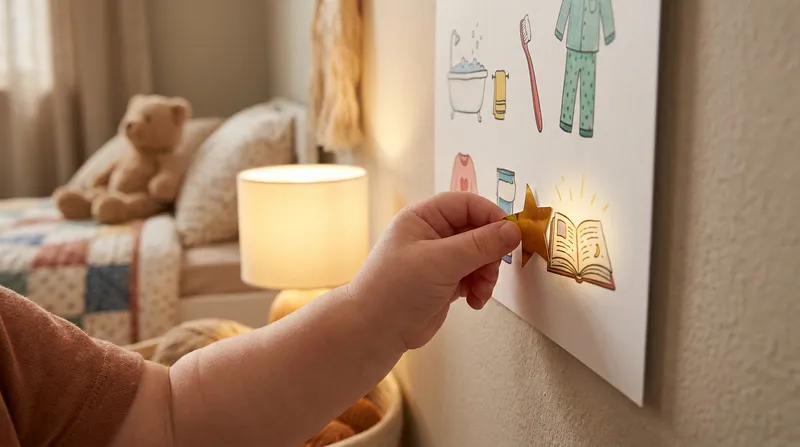
Actionable Tip: Create a visual bedtime routine chart printable. Draw or print pictures of a bathtub, a toothbrush, pajamas, and a book. Let your child check off each step as they complete it. This gives them a sense of control and ownership over the process, reducing the need to assert control by fighting bedtime.
Introducing the Story Reward System
Many parents try to solve bedtime battles with physical rewards. They offer candy, small toys, or extra screen time in the morning if the child stays in bed all night. While these extrinsic rewards might work for a few days, they quickly lose their magic. Your child will soon demand bigger toys or more treats.
We need a better approach to positive reinforcement bedtime strategies. We need an intrinsic reward that fosters connection, builds confidence, and creates lasting memories. This is where the Story Reward System comes in.
The concept is simple but incredibly effective. Instead of a physical toy, the reward for staying in bed all night is the privilege of being the "Co-Creator" of tomorrow night's magical bedtime story using Dreamcraft Tale.
The American Academy of Family Physicians explicitly recommends that parents compliment and positively reinforce their child when they stay in bed and fall asleep on their own, as prevention is the best treatment for sleep problems.
By offering a highly personalized, interactive storytelling experience as the reward, you're giving your child exactly what they crave most: your focused attention and a sense of magical wonder.
Step-by-Step: The Co-Creator Method
Here is exactly how to implement the Story Reward System to keep your child in bed (perfect for any child ages 2 to 10). We call this the Co-Creator Method.
Step 1: Set Clear Expectations
During the day, when everyone is calm and happy, introduce the new system. Explain that staying in bed all night takes a lot of bravery and big-kid energy. Tell them that if they can stay in their room all night until the morning light comes on, they earn the title of Master Storyteller for the next night.
Step 2: The Morning Praise
If your child successfully stays in bed all night, celebrate immediately in the morning. Offer specific praise. Say, "You stayed in your bed all night long! Your body is so rested, and you earned your Story Reward!"
If they didn't stay in bed, don't shame them. Simply say, "You had a hard time staying in bed last night. That's okay, we'll try again tonight. Because you got out of bed, we'll read a regular book tonight instead of making a new magic story."
Step 3: The Afternoon Brainstorm
This is where the magic happens. Sometime during the day, sit down with your child and ask them what kind of adventure they want to go on tonight. With Dreamcraft Tale, your child becomes the hero of their own adventure.
Ask them engaging questions:
- Do you want to be a brave knight, a clever scientist, or an underwater explorer?
- Who will be your sidekick? (Maybe the family dog or a talking turtle?)
- What problem will you solve?
For example, if your child loves the ocean, you might brainstorm a story similar to Courtney and the Whispering Shell. If they love animals, they might want to plan an adventure like Rosie's Animal Show!.
Step 4: Generate the Magic
Open the Dreamcraft Tale app and input your child's ideas. In just three simple steps (Imagine, Create, Read), our carefully designed AI creates a complete, age-appropriate narrative filled with beautiful illustrations. You can customize the character names, traits, and roles, ensuring your child is front and center.
Step 5: The Bedtime Reveal
When it's time for the final step of the bedtime routine, reveal the story you created together. Watch their eyes light up as they see vibrant, professionally illustrated artwork featuring a hero with their name. They'll be so captivated by their personalized adventure, like Pip's Gigantic Climb or Luna's Moon Quest, that their nervous system will naturally wind down.
Actionable Tip: End the story by reminding them of the deal. "What a brave hero you were in this story! If you want to be the hero in a brand new story tomorrow, you just have to stay in your cozy bed all night long."
What kind of story would your child create? A dragon rescue? A space mission? Share their dream adventure in the comments. We'd love to hear it!
How Dreamcraft Tale Makes Bedtime Magical
Picture this: your child snuggles under the covers, eyes wide, as a story unfolds where they (by name) are the brave explorer who saved the entire ocean kingdom. That's what Dreamcraft Tale creates every night.
Traditional storybooks are wonderful, but reading the exact same book for the fiftieth time can test any parent's patience. Furthermore, fixed characters don't offer the same level of engagement as a story where your child is the actual protagonist. Here is why our app is the ultimate tool for your bedtime reward system:
- Personalized Characters: Boost your child's confidence by making them the brave explorer or the kind helper. When they see themselves overcoming obstacles in a story like Justine and the Magical Paintbrush, they feel empowered to overcome their real-world fears of the dark.
- Shared Story Library: Too exhausted to brainstorm tonight? You're covered. Instantly browse thousands of magical stories created and shared by families worldwide. Just pick a magical tale like Lily's Perfect Pet or Leo and the Pet Pictures and start reading. The magic is already waiting for you.
- Ad-Free Experience: Enjoy peaceful, uninterrupted story time. There are zero advertisements and zero distractions, ensuring your family time remains private and focused on bonding.
- Safety and Content Moderation: With multiple content filters and strict moderation, every story is safe, wholesome, and perfectly tailored for children ages 2 to 10.
- Mobile-First and Offline Ready: Available on iOS and Android, stories can even be read offline, which is perfect for travel or those nights when the Wi-Fi is acting up.
Actionable Tip: If your child is struggling with a specific issue (like being afraid of shadows in their room), use the app to generate a story where the hero befriends a shy shadow, similar to Raquel and the Shy Moonbeam. Stories are incredible tools for social-emotional learning.
Overcoming Common Hurdles in Gentle Sleep Training
Even with the best reward system, you'll face setbacks. Illness, travel, or a new sibling can trigger sleep regressions.
The key to gentle sleep training older toddlers is absolute consistency. If you give in and let them sleep in your bed "just this once," you reset the boundary-testing clock. Stick to the silent return method for night wakings, and heavily lean on the positive reinforcement of the Story Reward System during the day.
If your child has a string of bad nights, don't take the app away entirely. Instead, read a pre-made story from the shared library, like Lily's Happy Voice or Dania's Sparkly Adventure. Remind them that the special privilege of co-creating a brand new, custom adventure is reserved for nights when they follow the sleep rules.
Frequently Asked Questions
How do I keep my 3-year-old in bed at night?
The most effective method is combining a consistent 30-minute bedtime routine with a highly motivating intrinsic reward. Using a system like the Story Reward System gives them something to look forward to. If they do get out of bed, use the silent return method to guide them back without offering the reward of your attention.
What makes a bedtime reward chart for toddlers actually work?
A bedtime reward chart only works if the reward is immediate and highly valued. Physical toys lose their appeal quickly. Instead, use positive reinforcement strategies like offering the privilege of co-creating a personalized AI bedtime story the next night. Visual charts help them track their success, but the shared experience is the true motivator.
How long does the jack-in-the-box toddler phase last?
The jack-in-the-box toddler phase typically lasts one to three weeks if you remain completely consistent. If you negotiate, offer extra hugs, or let them sleep in your bed, this phase can drag on for months. Consistency with the silent return to bed alternative is your fastest path to success.
How can I handle separation anxiety at bedtime?
Separation anxiety at bedtime is developmentally normal. Validate your child's feelings during the day, but maintain firm boundaries at night. Using personalized bedtime stories where your child plays the brave hero can significantly boost their nighttime confidence. Remind them that you're always nearby, but their job right now is to sleep.
Is gentle sleep training older toddlers possible without crying?
Yes, gentle sleep training older toddlers is entirely possible. By age 3, children understand cause and effect. You can replace crying-based methods with a positive reinforcement bedtime framework. By focusing on what they earn (a magical story experience) rather than what they lose, you turn bedtime into a collaborative and peaceful process.
Turn Bedtime Battles Into Magical Memories
Parenting is hard work, and sleep deprivation makes it exponentially harder. You deserve a peaceful evening, and your child deserves a restful night of sleep.
By moving away from empty threats and leaning into the positive reinforcement of the Story Reward System, you can completely transform your family's nighttime routine. You're not just keeping a preschooler in bed; you're nurturing their creativity, building their self-esteem, and creating magical bonding moments that they'll remember for the rest of their lives.
Ready to turn tonight's bedtime into a magical memory? Create your first personalized story with Dreamcraft Tale, and watch your child's face light up as they become the hero of their very own adventure. Start your free trial today and let's make bedtime your favorite part of the day!