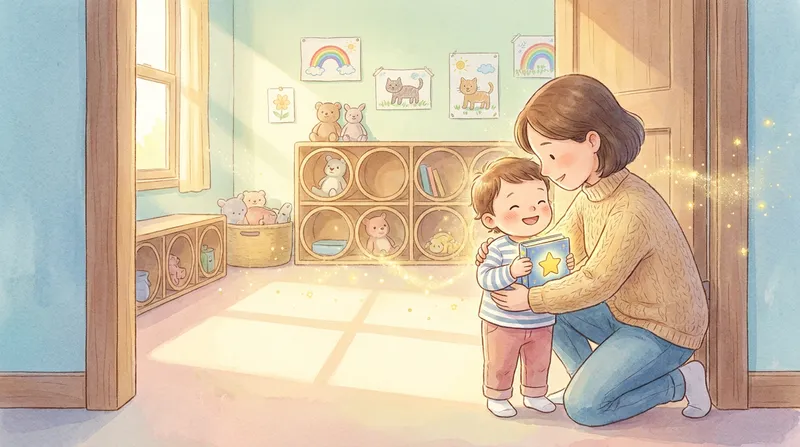
It is 8:00 AM. You have successfully wrestled your toddler into their clothes, packed the lunchbox, and managed to get out the door on time. But as you pull into the school parking lot, the mood shifts. The little hands grip your shirt a bit tighter. By the time you reach the classroom door, the tears start falling.
Leaving a crying, clinging child at daycare is one of the most painful experiences a parent can face. The intense guilt, the heartbreak, and the sheer stress of the morning meltdown can derail your entire day. You drive to work feeling like you are failing your child, wondering if there is a better way to help them cope with the separation.
Every parent has been there. You want to make the morning transition smooth and joyful, but standard advice often leaves you feeling empty. What if mornings did not have to be this way? What if your child actually looked forward to walking through those classroom doors?
Welcome to the "Magic Story" method.
In this guide, we will explore exactly how to use personalized storytelling to transform tearful goodbyes into confident, magical mornings where your child becomes the hero of their own adventure.
Why Daycare Drop-Off Feels So Hard (And Why It Is Not Your Fault)
Before we dive into the solution, we need to take a deep breath and acknowledge the emotional toll on you, the parent. Walking away from a crying child goes against every instinct you have. It is completely normal to feel a heavy weight of guilt when dealing with daycare drop off anxiety.
However, it is crucial to understand that toddler separation anxiety daycare drop off is a completely normal developmental milestone. It is not a parenting failure, and it does not mean your child dislikes their school.
According to the American Academy of Pediatrics (AAP), separation anxiety typically peaks between 10 and 18 months of age, but it can easily resurface during the preschool years when routines change. This anxiety is rooted in a cognitive milestone called object permanence. Your child is learning that you still exist even when they cannot see you, but they do not yet have the sense of time to understand when you will return.
Their tears are simply a sign of their strong, healthy attachment to you. But knowing this fact does not make the morning routine any easier. You need practical, actionable tools to help their growing brain bridge the gap between your departure and your return.
Why Standard Daycare Transition Tips Sometimes Fall Short
If you have been researching starting daycare separation anxiety, you have likely heard the same advice repeated everywhere. Experts will tell you to "keep goodbyes short", "never sneak out", and "project confidence."
While these daycare transition tips are absolutely correct, they often fall short in practice. Why? Because these tips are instructions for the parent, not the child.
Leaving quickly might prevent a prolonged meltdown in the hallway, but it does not give your child a comforting mental framework to process their big feelings. A quick goodbye can sometimes feel abrupt to a toddler who is struggling to understand what is happening.
Children process the world through play, imagination, and visualization. To truly conquer their fears, they need to visually and mentally rehearse the separation before it happens. They need a roadmap for their emotions. This is where traditional advice stops, and the magic of storytelling begins.
Enter the Magic Story Method: A New Approach to Preschool Separation Anxiety Strategies
For generations, parents have relied on standard books about going to daycare to help prepare their little ones for school. Books are wonderful tools, but they feature generic characters in generic schools.
What if you could take the concept of a helpful book and hyper-personalize it?
That is exactly why Dreamcraft Tale was created. As parents who have stood at that classroom door, we wanted a tool that gives children a real mental map for their feelings. With the Dreamcraft Tale app, you can generate a custom story where your child is the brave hero of their very own morning adventure. This is known as the "Magic Story" method.
Dreamcraft Tale is completely ad-free and designed with family safety at its core, so your child's story time stays focused, private, and wholesome. Using our easy 3-step process (Imagine, Create, Read), you replace standard books with a hyper-personalized narrative that gives your child a unique, magical roadmap for their day.
This method acts as a modern "social story." As noted by Head Start, using a social story can help reduce a child's anxiety during a new or difficult social situation by clearly describing what might happen, how the child might feel, and appropriate behavior expectations.
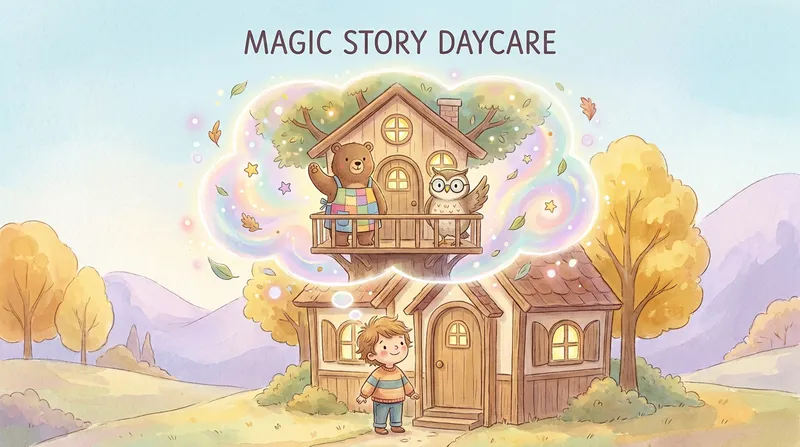
Instead of reading about a random bear going to school, your child reads about themselves. They see their own name, their teacher's name, and their actual classroom transformed into a magical setting. For inspiration on how magical these custom tales can be, you can read Dania's Sparkly Adventure, which shows how an ordinary day can become an extraordinary journey of bravery. Parents tell us their children now actually ask to hear their Magic Story before bed the night before school, a complete reversal from dreading the morning.
The Psychology Behind Personalized Stories for Kids Anxiety
Why does this work so well? The science of storytelling shows that narratives are powerful tools for building emotional resilience in young minds.
Research published in the Journal of Psychiatric and Mental Health Nursing demonstrates that resilience-themed storytelling helps children manage their emotions and improve coping skills. When a child hears a story about themselves overcoming a specific fear, their brain actually practices the emotional regulation required for the real event.
There is a distinct difference in how children of different ages process these stories.
- If you are dealing with separation anxiety in a 3 year old at preschool, the story should focus heavily on sensory details and simple cause-and-effect (for example: "Mommy leaves, but she always comes back after snack time").
- If you are managing separation anxiety 4 year old daycare transitions, the story can include more complex emotional problem-solving (for example: "When I feel sad, I can take a deep breath and ask my teacher for a hug").
- If you are preparing for kindergarten and managing separation anxiety in 5 or 6 year olds, the story can highlight their growing independence and the exciting new things they will learn.
Personalized stories for kids anxiety work because they remove the element of the unknown. To see how a child can overcome a massive obstacle through a story, check out Pip's Gigantic Climb. The mental rehearsal is exactly what your child needs to feel safe.
How to Create Your Child's Custom Daycare Transition Story
Creating stories for toddler separation anxiety is incredibly simple. You do not need to be a professional writer to craft a beautiful, comforting narrative.
Here is a step-by-step guide to generating a targeted morning routine story that will teach you how to ease separation anxiety in preschoolers.
Step 1: Cast Your Child and Their Teacher as the Heroes
The first step to figuring out how to stop toddler crying at daycare drop off is to build immediate trust and excitement. You do this by using familiar names in your story prompt.
Open the Dreamcraft Tale app and start a new story. In the prompt section, input your child's name as the main character. Then, add their teacher's name and the specific name of their classroom. If they are in the "Bumblebee Room" with "Ms. Sarah", include that exact phrasing.
Try this prompt: "Write a magical story about a brave 3-year-old named [Child's Name] who goes on an adventure to the magical Bumblebee Room. They are greeted by the friendly wizard, Ms. Sarah, who has fun toys waiting for them."
Each story your child hears becomes a beautifully AI-illustrated adventure, giving them visual scenes to hold onto throughout their day. Seeing their teacher cast as a friendly, magical guide in these vivid pictures helps bridge the trust gap. Just like in Rosie's Animal Show!, where familiar elements create a comforting environment, your child will begin to associate their teacher with safety and fun.
Step 2: Add Their Favorite Transitional Objects for Daycare
Transitional objects for daycare are physical items that bring the comfort of home into the school environment. This could be a special blanket, a small family photo, or a specific stuffed animal.
To make your Magic Story truly effective, you must weave this comfort item into the plot. Guide the app to include this specific item so your child sees their "magic item" helping them in the adventure.
Try adding this to your prompt: "[Child's Name] brings their magical blue dinosaur toy with them. Whenever they miss their parents, they squeeze the dinosaur, and it gives them a warm, invisible hug that makes them feel brave."
This gives the child a tangible tool to use in real life. If you want to see an example of a special item providing comfort and courage, read Courtney and the Whispering Shell.
Step 3: Write the Safe Return Ending
The most critical part of any daycare goodbye routine story is the ending. Every single transition story must end with the parent returning. This reinforces the concept of object permanence.
Provide details in your prompt that mirror your family's actual pick-up routine. If you always pick them up after afternoon snack, put that in the story.
Try adding this to your prompt: "After painting a beautiful picture and eating cracker snacks, the door opens. [Parent's Name] is standing there with a big smile! They give each other a giant bear hug, proving that parents always, always come back."
(Note: If you want instant inspiration before building your own, Dreamcraft Tale's Shared Story Library has thousands of magical adventures created by families just like yours, ready to read in seconds!)
Building the Ultimate Daycare Goodbye Routine
Now that you have your custom Magic Story, it is time to build a concrete, actionable morning checklist. Combining your personalized story with a predictable routine is the ultimate secret for how to stop toddler crying at daycare drop off.
Childcare experts at Bright Horizons emphasize that working with your child's teacher to create a predictable visual routine helps build trust and significantly reduces separation anxiety.
Here is your step-by-step daycare goodbye routine:
- The Night Before: Read your custom Dreamcraft Tale story at bedtime. Talk about the brave choices the character (your child) made in the story.
- The Morning Of: Keep the morning calm. Review the visual schedule of the day. "First we eat breakfast, then we put on shoes, then we drive to school."
- The Car Ride: Have the app read the story aloud in the car, or talk about the "magical Bumblebee room" they are about to enter. Remind them of their transitional object.
- The Drop-Off Door: Create a special, brief goodbye ritual. This could be a secret handshake, a "butterfly kiss", or a high-five. Match this ritual to a moment in their custom story.
- The Handoff: Hand them over to the teacher, perform the quick goodbye ritual, remind them exactly when you will return (for example, "after nap time"), and leave confidently.
Predictability is incredibly comforting to a child. Just like the structured fun in Leo and the Pet Pictures, knowing exactly what comes next removes the fear of the unknown.
Frequently Asked Questions
How long does daycare drop off anxiety usually last?
It varies by child, but separation anxiety typically peaks between 10 to 18 months and can last a few weeks during new transitions. It may also resurface during regressions or changes in routine. With consistent routines and tools like the Magic Story method, you will usually see significant improvement within two to three weeks.
Should I sneak away when my toddler is distracted at daycare?
You should absolutely never sneak away. While it might save you from hearing them cry in the moment, sneaking out breaks their trust. It makes the world feel unpredictable and will likely make their daycare drop off anxiety much worse the next day. Always say a clear, brief goodbye.
What are the best books about going to daycare?
Traditional classics like "The Kissing Hand" or "Llama Llama Misses Mama" are great staples. However, creating a personalized story with Dreamcraft Tale where your child is the main character offers a much more powerful, tailored approach to their specific fears and classroom environment.
How do I stop my 3 year old from crying at preschool drop off?
Consistency is your best friend. We recommend a combination of a highly predictable goodbye routine, a comforting transitional object, and reading a personalized Magic Story the night before. Be sure to focus on sensory details in their custom story to help them mentally prepare for the transition.
What is a good transitional object for daycare?
Check with your school's policies first, but great options include a small family photo album, a special stuffed animal, a soft blanket, or a matching "hug bracelet" that both the parent and child wear. The key is that the item provides sensory comfort and a tangible connection to home, which you can easily weave into their Magic Story.
Tired of tearful morning drop-offs? Dreamcraft Tale turns separation anxiety into a confident adventure. Download the app today to create your child's first Magic Story, and watch those tears turn into the smile of a hero heading off on their next adventure!