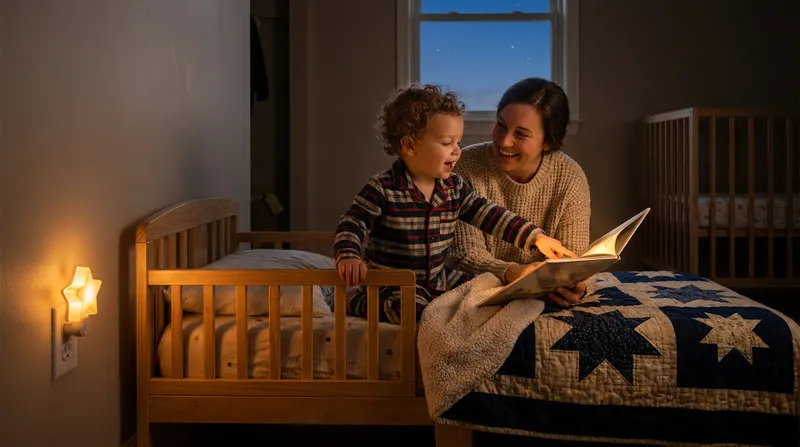
It is 8:00 PM. You have just completed the bedtime routine, and you are tip-toeing out of your child's room. For months, the crib has been your safety net. It kept your little one secure, contained, and most importantly, in one place while you finally got an hour to yourself. But lately, things have changed. Maybe your child is growing too tall, or maybe you have caught your toddler climbing out of the crib. Now, you are facing a major parenting milestone: the crib to toddler bed transition.
For many parents and caregivers, this switch is terrifying. The fear of losing that physical boundary is real. You might be exhausted just thinking about your toddler wandering the house at night, interrupting your sleep, and turning bedtime into an endless game of jack-in-the-box.
What if you could make this big kid bed transition exciting instead of scary? What if you could build a psychological boundary so strong that your child actually wants to stay in bed?
Welcome to the Story-First Transition Method. By combining practical safety steps with the magic of personalized storytelling, you can create a smooth crib to bed transition. Let us explore exactly how to know your child is ready, how to prepare their room, and how to use custom bedtime stories to keep them happily in their new bed.
Signs Your Toddler is Ready for a Big Kid Bed
Before you dismantle the crib, you need to know if your child is actually ready for the switch. Every child develops differently, and moving them too early can lead to a massive toddler sleep regression new bed scenario.
Here are the most common signs a toddler is ready for bed transitions:
- They are physically outgrowing the space. According to safety guidelines from Nationwide Children's Hospital, you should transition a child out of a crib once the railing is lower than their chest, or when they reach 35 inches tall, to prevent dangerous falls.
- You catch your toddler climbing out of the crib. If they are hoisting their leg over the rail, the crib is no longer a safe sleep space.
- They are asking for a big bed. Sometimes, older siblings inspire them, or they simply express a desire for a bed without rails.
- They are potty training. If your child needs to use the bathroom at night, they need unrestricted access to their bedroom door.
When to Transition to a Toddler Bed (Why Waiting is Often Better)
If your child is not climbing out and still fits safely in their crib, you might want to hold off. But what is the ideal toddler bed transition age?
Many parents rush the process around 18 months because they are expecting a new baby. However, data from the Sleep Foundation shows that while one-third of toddlers transition between 18 months and 2 years old, waiting until age 3 is completely normal and often reduces bedtime resistance.
The reason comes down to brain development. Research highlighted by Taking Cara Babies explains that 2-year-olds lack the impulse control required to stay in bed. They see an open room and their brain tells them to explore. Waiting until a child is closer to 3 years old results in decreased bedtime struggles, fewer night wakings, and longer stretches of sleep because they can finally understand invisible boundaries.
If you must transition early due to safety (like climbing), do not panic. This is where the Story-First Transition Method becomes your best parenting tool.
The Story-First Transition Method: Preparing Mentally Before Moving Physically
The biggest mistake parents and caregivers make is buying a new bed, setting it up, and expecting the child to sleep in it that very same night. This abrupt change is jarring. A toddler's world is built on routine. When you change their sleep environment overnight, you invite anxiety.
Instead, you need to prepare them mentally. You can do this by using the power of storytelling.
Children process major life changes through play and narratives. Reading the same stories regularly acts as a gentle cue to the brain, signaling that it is time to calm down and sleep, according to experts at The Baby Sleep Site.
This is where Dreamcraft Tale changes the game. Instead of reading generic books about moving to a big bed, you can use our AI story generator to create a personalized adventure where your child is the brave hero conquering their new sleep space. Dreamcraft Tale is completely ad-free, COPPA-compliant, and safe for children, so you can hand over the tablet at bedtime without worry. In just three steps (Imagine, Create, Read), you can generate beautifully illustrated stories personalized to your child in minutes.
Try this: Open Dreamcraft Tale and create a story where your child is an astronaut moving from a small space capsule (the crib) to a grand space station (the big kid bed). Because they are the main character, they internalize the lesson. They start to see the new bed not as a scary change, but as a magical upgrade. By the time the bed arrives, they will be begging to sleep in their new space station.

Why Your Child Should Be the Hero of Their Transition Story
Parents often search for the best books for toddler bed transition, hoping to find a story that resonates. While traditional books are wonderful, they feature characters your child does not know.
With Dreamcraft Tale, you can craft unlimited, unique stories tailored directly to your child's interests. Here is how you can use personalized stories to ease the transition:
- For the Toddler Who Is Scared of the Dark: Create a tale about a brave knight who needs to sleep in a castle tower. This helps them feel safe. You can draw inspiration from tales of bravery like Pip's Gigantic Climb.
- For the Toddler Who Needs to Protect Their Space: Write a story where your child is an animal rescuer who must stay in their special bed to protect their stuffed animals, much like the gentle themes in Lily's Perfect Pet.
- For the Toddler Who Keeps Getting Out of Bed: Generate a bedtime story where the new bed is a magical boat that only sails to dreamland if the captain stays on board.
By reading these personalized stories for a week before the actual bed arrives, you build anticipation. Your child will be begging to sleep in their new bed.
Transitioning From Crib to Bed: A Step-by-Step Timeline
To ensure a smooth crib to bed transition, follow this proven 7-day timeline. It combines room safety with emotional readiness.
Days 1 to 3: The Mental Preparation
Do not change the room yet. Instead, introduce the concept. Open the Dreamcraft Tale app and create your astronaut transition story. Read this story every single night. Talk about how exciting it is that they are growing up. You might even read stories about discovering new things, like Courtney and the Whispering Shell, to encourage a sense of wonder about new experiences.
Day 4: Room Safety and Baby-Proofing
Once your child is in a toddler bed, the entire bedroom becomes their crib. You must baby-proof the space completely.
- Anchor all heavy furniture (dressers, bookshelves) to the wall.
- Cover all electrical outlets.
- Remove any choking hazards or easily broken toys.
- Consider installing a baby gate at the bedroom door to prevent them from wandering the house at night.
Day 5: The Shopping Trip (or Unboxing)
Let your child have a say in their new sleep space. Let them pick out their new sheets or a special stuffed animal. If you are converting their current crib, let them help you take the front rail off. Giving them ownership of the process drastically reduces bedtime resistance.
Day 6: The First Night
Stick to your normal toddler bed bedtime routine. Give them a bath, brush their teeth, and snuggle up in the new bed. Read their personalized Dreamcraft Tale transition story. Remind them of the rules: the hero always stays in their magical bed until morning.
Day 7: Celebrate and Reinforce
When they wake up, celebrate their bravery! Read a celebratory story on Dreamcraft Tale, praise their courage, and establish the new routine as the permanent normal.
Want a ready-made transition story to start tonight? Browse our Shared Story Library for instant inspiration, no creation required!
Toddler Bed Transition Rules: How to Keep Your Toddler in Bed
Learning how to keep a toddler in bed is the most challenging part of this milestone. Because they lack physical barriers, you must establish clear toddler bed transition rules.
- The Invisible Forcefield: Use imagination. Tell them their bed has a magical forcefield that keeps them cozy, just like the magical elements in Justine and the Magical Paintbrush. If they leave the bed, the magic pauses until they return.
- Use an Okay-to-Wake Clock: These clocks turn red for sleep and green for awake. Explain that they cannot leave the bed until the light turns green.
- The One-Pass Rule: Toddlers will ask for water, another hug, or another trip to the potty. Give them one "hall pass" ticket at the start of the night. Once they use it, they must stay in bed.
What to Do When Your Toddler Keeps Getting Out of Bed
Even with the best preparation, you might face a toddler sleep regression new bed scenario. Your child might test the boundaries and pop out of bed multiple times a night. Here is how to handle it without losing your mind.
The Silent Return Method: This will feel hard. Staying silent when your child is upset goes against every parenting instinct. But the data is clear: attention, even negative attention, rewards the behavior. Here is how to stay consistent without losing your compassion.
The first time they get out of bed, gently guide them back. Say, "It is bedtime, I love you, goodnight."
The second time they get out, guide them back and say only, "Bedtime."
The third time (and every time after), guide them back completely silently. Do not make eye contact. Do not show frustration. Do not offer a hug or a drink. By being silent and boring, you remove the reward.
One caregiver in our community tried the Silent Return method for five nights straight. By night six, her daughter stayed in bed until 6:30 AM and proudly announced at breakfast: I stayed in my big bed all night!
Morning Praise: When they finally stay in bed all night, celebrate it! Create a brand new story on Dreamcraft Tale the next morning to commemorate their achievement. Make a story where they are rewarded with a magical parade, similar to the joyous themes found in Rosie's Animal Show!. Positive reinforcement works wonders for toddlers.
Make Bedtime Magical Again
The crib to toddler bed transition guide does not have to end in tears and frustration. By understanding your child's developmental readiness, baby-proofing their environment, and setting clear boundaries, you can protect your peace and your sleep.
Most importantly, by using the Story-First Transition Method, you turn a scary change into an exciting adventure. You replace their anxiety with imagination.
Ready to turn bedtime battles into magical milestones? Download Dreamcraft Tale today and create your first personalized transition story for free!
Want to understand more about why stories are so powerful for toddlers? Read our guide on how storytelling supports emotional development and impulse control on the Dreamcraft Tale blog.
Frequently Asked Questions
What is the best age to transition from a crib to a toddler bed? While some children transition around 18 to 24 months, experts recommend waiting until closer to age 3 if possible. Three-year-olds have better cognitive development and impulse control, making it easier for them to understand the rule of staying in bed.
How do I know my toddler is ready for a big kid bed? The most urgent sign is safety. If your toddler is 35 inches tall, or if the crib railing falls below their chest, it is time. If they are actively climbing out of the crib, you must transition immediately to prevent falls.
Should I use a toddler bed or skip straight to a twin bed? Both options are fine. A toddler bed is often less intimidating because it is lower to the ground and uses the same crib mattress they are used to. However, moving straight to a twin bed (perhaps with a side rail) saves money since you will not have to buy another bed a year later.
How do I keep my toddler in their room after switching to a toddler bed? The safest and most effective method is to completely baby-proof the bedroom and install a baby gate at the bedroom door. This allows the door to remain open for air circulation and comfort while preventing your child from wandering the house unsupervised while you sleep.
Is it safe to lock my toddler's door at night? Fire safety experts generally advise against locking a child's door from the outside, as it can be dangerous in an emergency. Instead, use a baby gate across the open doorway or place a child-proof cover on the inside doorknob, ensuring you can always easily access the room from the outside if needed.
Will transitioning to a toddler bed cause a sleep regression? Yes, it is very common to experience a toddler sleep regression new bed phase. The sudden freedom can be overwhelming, leading to frequent night wakings and bedtime resistance. Maintaining a strict bedtime routine and using consistent boundaries, like the Silent Return method, will help resolve the regression within a week or two.
How can I use stories to make the crib to bed transition easier? Personalized stories allow your child to mentally prepare for the transition before it happens. By making them the hero of a story about moving to a big bed, you reframe the change from something scary into an exciting, magical milestone. Reading this story nightly builds positive anticipation and creates a comforting psychological boundary.
What do I do if my toddler is scared of their new big kid bed? Validate their feelings and avoid dismissing their fears. Introduce the bed gradually by reading books or playing on it during the day. Let them choose special bedding or a new stuffed animal to make the space feel safe and entirely their own. Positive reinforcement and patience are essential during this phase.