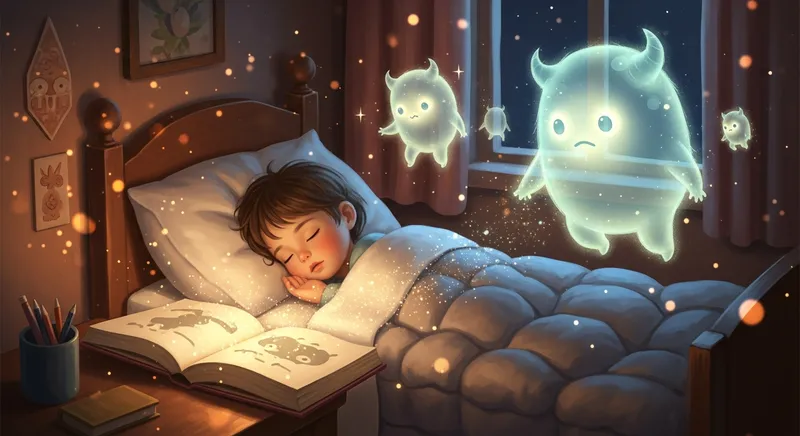
It's 8:47 PM. You've checked under the bed, scanned the closet, and left the door open just enough. Yet, you hear the same little voice call out, full of genuine fear: "Mom, Dad… I'm scared."
If this scene feels familiar, you're not alone. You feel helpless and exhausted, cycling through the same reassurances that offer only fleeting comfort. You know your child's fear of the dark, of monsters, or of being alone is very real to them, but the generic solutions just aren't working. You're looking for an actionable, creative tool that does more than just distract-one that empowers your child to conquer their fears for good.
What if you could turn your child from the victim of their scary story into the hero? This guide will show you how to use the magic of personalized storytelling to not just soothe nighttime anxiety, but to build lasting courage and turn bedtime into a moment of connection and empowerment.
Why Is My Child Suddenly Scared of the Dark?
First, take a breath. A sudden fear of the dark is a completely normal part of child development. In fact, one study from Children's Hospital Colorado found that nearly 75% of children report having nighttime fears. This often surfaces between ages 3 and 8, a time when a child's imagination is exploding.
The same incredible imagination that allows them to see a castle in a cardboard box is what allows them to see a monster in a pile of laundry. As a clinical child psychologist noted in the Children's Hospital Colorado article, a child's imagination is often what creates the fear in the first place. But here's the beautiful part: that same powerful imagination is your greatest tool to help them overcome it.
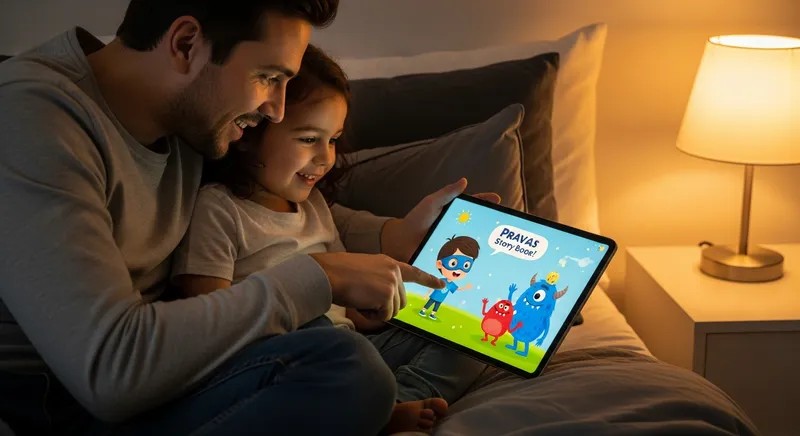
From Victim to Victor: The Psychology of Personalized Storytelling
Handing a child a book about a brave knight is one thing. Turning your child into the brave knight who saves the day is something else entirely. This is the core magic of personalization, and it's backed by child psychology.
Making Them the Hero Builds Real Courage
When children see themselves as the protagonist in a story-the one who solves the problem or outsmarts the monster-it does more than just entertain them. It builds a blueprint for bravery in their own minds. You're moving them from a passive role (the one who is scared) to an active one (the one who is brave). This isn't just make-believe; it's a powerful form of practice for real-life confidence, much like the hero in Pip's Gigantic Climb learns to face a big challenge.
Confronting Fears in a Safe, Magical Space
According to experts at the Australian Childhood Foundation, storytelling creates a "transitional space" where children can approach overwhelming feelings through metaphor. When you create a story about a goofy monster who is just lonely, you give your child's fear a name and a narrative. This process of attaching meaning to feelings helps calm the fear response in your child's brain and improves emotional regulation.
The Power of Bibliotherapy
This isn't just a parenting hack; it's a recognized therapeutic technique. Using stories to help with emotional challenges is known as bibliotherapy. A randomized controlled trial published via PubMed found that parent-led bibliotherapy was a significantly effective treatment for children with anxiety. By creating a personalized story, you are acting as your child's own bibliotherapist, crafting the perfect narrative to meet their specific emotional needs.
How to Respond When Your Child is Scared at Night
Your immediate response can make all the difference. The goal, according to the Child Mind Institute, is not to eliminate anxiety, but to help your child manage it.
Actionable Tip: Validate the Feeling, Not the Fear
Instead of saying, "There's nothing to be scared of," which can make a child feel unheard, try validating the emotion. You are not confirming that a monster exists, but you are confirming that their feeling of fear is real and okay.
Instead of this: "Stop being silly, there are no monsters under your bed."
Try this: "I can see you feel really scared right now. The shadows in your room can play tricks on our eyes and look like monsters, can't they? It's okay to feel that way."
This simple switch shows empathy and builds trust, making your child more receptive to a creative solution.
Actionable Tip: Move Beyond Temporary Fixes
Many parents turn to creative fixes like "monster spray" (a spray bottle of water). While a clever idea, this can sometimes suggest that the power to defeat monsters comes from an external tool. A more empowering, long-term strategy is to create a narrative where the child has the power within them to solve the problem, building their internal confidence. (See our FAQ for more on this!)
Parent Spotlight: From Monsters to Friends
"My son was terrified of a 'scratchy monster' in his closet. We used Dreamcraft Tale to create a story where he was the brave hero, discovering the monster was just a lonely creature who missed his family. In the story, my son showed him kindness and helped him find his way home. The next night, he told me, 'The scratchy monster isn't scary, he's just my friend now.' It was a total game-changer for our bedtime routine." — A Dreamcraft parent of a 5-year-old (names changed to protect privacy)
A Parent's Guide to Co-Creating a Fear-Busting Story
Ready to get started? With a tool like Dreamcraft Tale, you can create a unique, beautifully illustrated story in minutes. Here's how to make it a powerful tool against nighttime fears.
Step 1: Identify the 'Villain' Together Get specific. Ask your child, "What does the monster look like?" or "What is the scariest thing about the dark?" Is it a shadowy blob? A creature with ten legs? The feeling of being alone? Give the fear a name and a description. This externalizes the problem and makes it something you can tackle together.
Step 2: Brainstorm Your Child's Superpowers Now, make your child the hero. What are their unique strengths? Maybe they have a "super-giggle" that makes monsters laugh so hard they fall over. Maybe their kindness is a superpower, like in Lily's Happy Voice. Or perhaps they have magical creativity, just like the main character in Justine and the Magical Paintbrush. Focus on their real-life traits and turn them into heroic abilities.
Step 3: Create the Adventure in Minutes This is where the magic happens. Using Dreamcraft Tale's simple 3-step process, you can bring your story to life.
- Imagine: Input your ideas. For example: "Create a story about a brave girl named Chloe who discovers the monster under her bed is actually just sad because he lost his teddy bear."
- Create: The AI generates a complete, age-appropriate story with your child as the personalized hero, complete with vibrant, custom illustrations.
- Read: Enjoy the unique adventure you created together, watching your child's face light up as they see themselves bravely solving the problem.
Step 4: Make the Ending Victorious and Kind The hero must always win, but "winning" doesn't have to mean a big fight. Maybe your child teaches the monster how to read, helps the shy moonbeam find its glow like in Raquel and the Shy Moonbeam, or shows the shadows how to dance. A compassionate resolution is often the most powerful.
Bonus: Quick Story Prompts for Nighttime Fears
Stuck for an idea? Try one of these prompts:
- A story about a child who discovers the strange noises at night are just a family of tiny, musical elves tuning their instruments.
- A story where the shadows in the room come to life and want to learn how to dance, but they are too shy.
- A story about a grumpy monster who is only grumpy because he can't find his favorite pajamas.
- A story where your child receives a magical nightlight from a friendly star, which gives them the power to understand the secret language of the night.
Building a Calming Bedtime Routine for an Anxious Child
A powerful story is even more effective when it's the capstone of a soothing, predictable routine.
- The Wind-Down Hour: An hour before bed, switch off screens and opt for calm activities. This could be a warm bath, listening to soft music, or doing a simple puzzle.
- The Main Event: Your Personalized Story Adventure: Make story time the thing your child looks forward to most. Because every story is new and stars them, the excitement of "what will happen tonight?" can replace the anxiety of bedtime. The completely ad-free experience in Dreamcraft Tale ensures this special time is peaceful and uninterrupted.
- Guided Imagery for Extra Calm: For children with significant anxiety, the concept of guided imagery can be a game-changer. As explained by Children's Hospital of Orange County (CHOC), this technique uses descriptive language to help a child relax. A personalized audio story acts as a form of guided imagery, walking your child through a brave adventure in their mind right before they drift off to sleep.
- For Tired Nights: On evenings when you're too exhausted to co-create, you can always browse the Story Library for thousands of pre-made, courage-themed adventures.
From Bedtime Battles to Magical Memories
Your child's imagination is a superpower. Right now, it might be working overtime to create shadowy monsters and nighttime fears. But by channeling that same power into creating stories where they are the hero, you can help them rewrite their own narrative.
You aren't just reading a story; you are building a memory, strengthening your bond, and giving your child the lifelong gift of courage. You're showing them that no matter how dark the night gets, they have the light within them to make it bright.
Ready to help your child conquer their nighttime fears and become the brave hero of their own story? Download Dreamcraft Tale and create your first courage-building adventure tonight!
Frequently Asked Questions
Should I use 'monster spray' to help my child's fear?
While using a spray bottle with water is a creative and common tactic, it can sometimes unintentionally validate the fear by suggesting that monsters are real and require a physical deterrent. A more empowering, long-term approach is to build your child's internal sense of control. Instead of relying on an external tool like a spray, using personalized stories helps your child realize they have the power within themselves (through kindness, cleverness, or bravery) to overcome their fears.
How do I talk to my child about their fears without making them worse?
The key is to validate the feeling without validating the fear itself. Acknowledge that feeling scared is okay and normal. Say things like, "I can see you feel very frightened right now," instead of "There's nothing to be scared of." This builds trust. Then, gently guide them toward feeling powerful. Ask curiosity-based questions like, "I wonder what that silly shadow monster might be afraid of?" This shifts the dynamic from fear to curiosity and problem-solving.
What's the difference between a night terror and a nightmare?
This is a crucial distinction for parents. According to experts at Nemours KidsHealth, the main differences are timing and memory. Night terrors typically occur within the first 2-3 hours of sleep; the child may scream or thrash but is not fully awake and will have no memory of it in the morning. Nightmares happen later in the night during REM sleep. A child will often wake up from a nightmare, be able to recall what scared them, and need comfort. The strategies in this article are designed to help with the fears that cause nightmares.
Is it bad to let my child sleep with a nightlight?
Not at all! A nightlight is a perfectly acceptable tool for easing a child's fear of the dark. The goal is not to force a child into a pitch-black room but to help them feel safe and secure. You can think of it as a stepping stone. In fact, you can incorporate the nightlight into your empowering stories, framing it as a magical gem or a friendly star that gives your child's hero character extra power.
How can a personalized story truly help my child's anxiety?
Personalized stories work as a form of gentle, guided therapy. By casting your child as the brave hero who successfully confronts their specific fear, you are helping them rehearse courage in a safe space. This process is backed by psychological principles. It helps externalize the fear, gives them a sense of control, and rewires their brain to associate their fear with a positive, empowering outcome. It moves them from being a passive victim of their anxiety to an active, powerful protagonist.