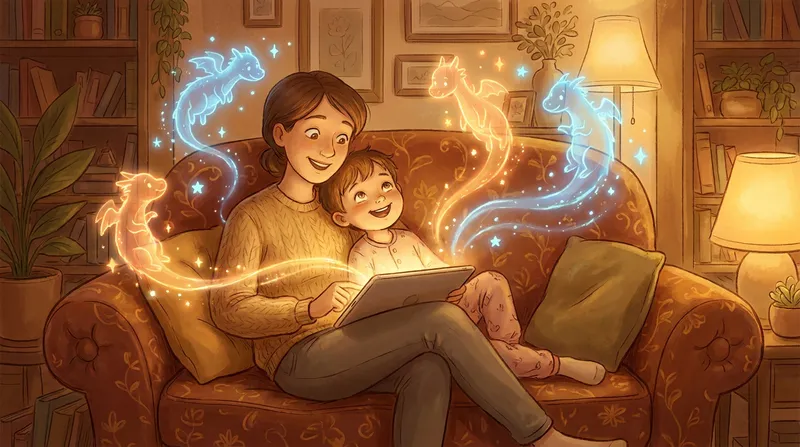
It's 4:30 PM. You're trying to cook dinner, answer a final work email, and keep your child entertained. You hand over the tablet and open YouTube. Peace descends for twenty minutes. But when it's time to turn the screen off, the peace shatters. The tantrum begins.
You know that moment when the tablet goes away and the whole evening unravels? You aren't doing anything wrong, you're just missing a better option. Every parent has been there. We want digital experiences that actively stimulate our children's brains without causing meltdowns when the screen goes dark.
What if screen time didn't have to be a passive zombie state? What if your child could actually look forward to an educational digital experience that leaves them feeling empowered instead of overstimulated?
Enter the world of AI interactive stories for kids. By shifting from mindless watching to active decision-making, you can turn screen time into a powerful tool for cognitive development and family bonding. I built Dreamcraft Tale for my own daughters after one too many bedtime battles, and I've never looked back.
What Are AI Interactive Stories for Kids?
AI interactive stories for kids are digital narratives where children don't just consume content, they actively participate in shaping the plot. Using carefully designed AI technology, these platforms allow you to input prompts, themes, and character traits to generate a completely unique adventure in minutes.
Instead of passively watching a fixed cartoon, your child becomes the protagonist. They get to make choices that change the outcome of the tale. This format transforms a passive viewing session into an active, choose-your-own-adventure experience.
Dreamcraft Tale takes this magic a step further. Our AI-powered mobile app transforms your child's imagination into beautifully illustrated personalized stories. Whether they want to be a brave knight, a clever scientist, or a daring space explorer, Dreamcraft Tale makes them the hero of their own adventure.
Active vs. Passive Screen Time: Why It Matters
To understand why interactive storytelling for kids is so powerful, we have to look at the science of screen time. Not all digital media is created equal.
Passive screen time involves sitting back and absorbing content without any required input. Think of scrolling through short videos or watching auto-playing cartoons. The brain is entertained, but it isn't working hard.
Active screen time requires deliberate user involvement. The child has to think, make choices, and interact with the content. According to guidelines from the American Academy of Pediatrics, parents should focus on the quality of interactions with digital media rather than just strictly counting the minutes.
Research backs this up. Multiple peer-reviewed studies published in Frontiers in Psychology suggest that passive screen time is consistently linked to weaker top-down attention control in preschoolers. Conversely, active screen time (where children interact, create, and problem-solve) correlates with improved attention and cognitive engagement.
When your child engages with a branching scenario story, they're practicing executive function. They have to remember the plot, weigh their options, and anticipate consequences. It's a mental workout disguised as playtime.
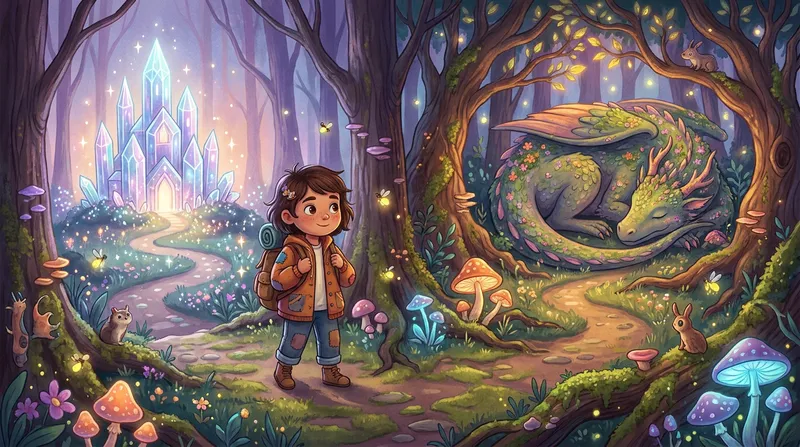
How Choose-Your-Own-Adventure Stories Boost Brain Development
Interactive learning stories do more than just hold a child's attention. They actively build essential developmental skills.
When children engage with choose-your-own-adventure stories, they experience a sense of agency. They learn that their choices matter. This builds incredible self-confidence. If you read Luna's Moon Quest, you can see how a child navigating obstacles builds resilience and problem-solving skills.
Early childhood experts at Zero to Three emphasize that the best screen experiences are interactive, intentional, and shared. When an AI tool provides visual and auditory feedback based on a child's specific choice, it reinforces sensory integration and working memory.
Here are three actionable tips to maximize brain development during interactive screen time:
- Ask "What If" Questions: Before your child taps a choice on the screen, pause and ask them what they think will happen next.
- Relate Choices to Real Life: If the character has to share a toy to solve a puzzle, talk about a time your child shared with a friend.
- Encourage Emotion Identification: Ask your child how the hero feels after making a tough decision.
The Co-Engagement Strategy: Bonding Over Personalized Stories
One of the biggest content gaps in the discussion around educational AI tools for kids is the role of the parent. AI storytelling platforms should never be used as digital babysitters. Instead, they're the perfect medium for the "Co-Engagement Strategy."
Co-engagement means experiencing the digital world alongside your child. When you create interactive bedtime stories together, you're turning a solitary activity into a shared bonding moment.
Start by brainstorming together. Ask your child, "What kind of hero do you want to be tonight?" Input their ideas into Dreamcraft Tale. As the AI generates the personalized story, talk about the beautiful AI illustrations.
If you're too tired to create a new story from scratch, you can always explore thousands of magical stories in our Shared Story Library. Reading tales like Pip's Gigantic Climb or Lily's Perfect Pet together provides instant inspiration and connection on those exhausting evenings.
What kind of hero does your child dream of being? Tell us in the comments, we'd love to hear!
Improving Reading Comprehension with AI Storytelling Platforms
Interactive storytelling is a secret weapon for boosting early literacy. When a child is the main character of the story, their intrinsic motivation to read skyrockets.
According to research from the Institute for Child Success, AI can be a highly effective educational tool for young children by providing personalized learning experiences that build literacy and conversational skills.
Unlike traditional books with fixed characters, AI interactive stories for kids adapt to the child's reading level and interests. To actively track and improve reading comprehension for kids using Dreamcraft Tale, try these steps:
- The Pause and Predict Method: Stop the story before a major branching scenario. Ask your child to summarize what just happened.
- Character Motivation: Ask why the villain or the sidekick acted a certain way. This builds theory of mind.
- Vocabulary Spotting: Have your child point out one new word they learned in their customized adventure, like the unique animals found in Leo and the Pet Pictures.
Explore our Story Library for instant inspiration on your next reading session!
The Best Interactive Story Apps (And How to Choose)
There are some wonderful storytelling apps out there, and we think the whole category is moving in a great direction. That said, if you're specifically looking for true interactive experiences, it helps to know what to look for.
Platforms like Oscar Stories, BedtimeStory.ai, Story Spark, Storytime AI, StoryBee, AI Story Kids, and KidScribe offer personalized children's books and bedtime reading. However, many focus heavily on static text or physical book printing, which can be less engaging for casual daily use. Others provide linear read-along stories that lack the active decision-making necessary to shift a child from passive watching to active learning.
When evaluating the best interactive story apps, look for these crucial features:
- True Interactivity: Does the app allow the child to make choices that alter the narrative path?
- Dynamic Engagement: Does it offer rich visual storytelling rather than just a wall of text?
- Safety and Wholesomeness: Is the platform completely ad-free with strict content moderation? Dreamcraft Tale is COPPA-compliant and uses multiple layers of content filtering to ensure every story is age-appropriate and safe.
- Ease of Use: Can you generate a story in three simple steps (Imagine, Create, Read) without needing technical skills?
Dreamcraft Tale was built specifically to fill these gaps, offering a safe, ad-free environment where your child's choices actively drive the narrative.
A Gentle Transition Plan: Moving from Passive to Active Screen Time
If your child is currently used to endless scrolling on passive video platforms, transitioning them to educational AI tools requires a gentle, strategic approach. You can't simply delete their favorite app and expect a smooth evening.
Here is a step-by-step transition plan to introduce interactive stories without a battle:
- The "One for One" Swap: Tell your child they can watch one of their regular videos, but then you're going to create one special personalized story together.
- Hype the Hero Aspect: Emphasize that in this new app, they are the star. Say, "Do you want to watch a video of someone else playing with dinosaurs, or do you want to make a story where YOU are the hero who helps a lost baby T-Rex?"
- Establish a New Routine: Move interactive learning stories to a specific time of day, such as the wind-down period before bed. This naturally limits screen time while providing a high-quality cognitive activity.
- Use Offline Inspiration: After reading a story like Lily's Happy Voice, encourage your child to draw a picture of their adventure on real paper. This bridges the digital and physical worlds.
Parents tell us that simply framing the app as "your special story time" completely changes how their kids respond, turning resistance into excitement.
Start Your Child's Adventure Today
Tired of screen time battles? Dreamcraft Tale turns passive watching into active adventures your child will beg to return to. Start your free trial today and create your first magical story together tonight.
Frequently Asked Questions
What is the difference between active and passive screen time for kids?
Passive screen time involves sitting back and consuming media without any interaction, such as watching auto-playing YouTube videos or standard cartoons. Active screen time requires physical or cognitive engagement, like making choices in a branching story, playing an educational puzzle, or co-creating a narrative. Active screen time stimulates executive functioning and attention control, while passive screen time can lead to overstimulation and attention deficits.
How do interactive stories improve reading comprehension?
Interactive stories boost reading comprehension by making the child an active participant rather than a passive observer. When a child is the hero of the story and must make choices to progress, their intrinsic motivation increases. This heightened engagement encourages them to pay closer attention to plot sequencing, vocabulary, and character motivations, which are the core building blocks of reading comprehension.
Are AI interactive story apps safe for young children?
Safety depends heavily on the specific platform. The most secure AI interactive story apps, like Dreamcraft Tale, are strictly ad-free, COPPA-compliant, and use multiple layers of content filtering. They combine automated safety checks with human moderation to ensure that all generated stories, themes, and illustrations are wholesome, age-appropriate, and free from inappropriate content.
What are the best choose-your-own-adventure stories for a 5-year-old?
For a 5-year-old, the best choose-your-own-adventure stories feature simple, visually clear choices with immediate, positive feedback. Themes involving friendly animals, gentle magic, and basic problem-solving (like helping a lost puppy or discovering a new planet) are ideal. The content should be engaging but not overly fast-paced, allowing the child time to process their decisions without feeling rushed.
Can personalized stories help reduce screen time tantrums?
Yes, personalized stories are highly effective at reducing screen time meltdowns. Traditional passive videos are designed to be endless, triggering a dopamine crash when the screen is turned off. Interactive stories have a natural narrative arc with a clear beginning, middle, and end. This provides a natural stopping point, and the active cognitive engagement leaves children feeling creatively fulfilled rather than mindlessly overstimulated.