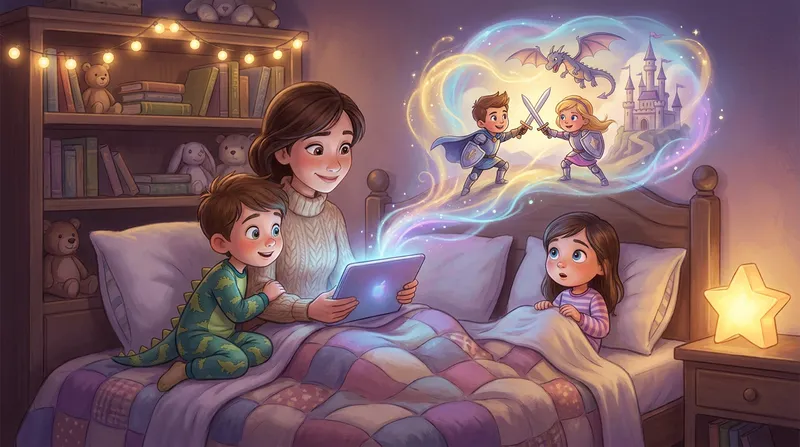
It's 8:47 PM. You're completely exhausted from a long day, and you're facing the ultimate parenting test: the shared bedtime routine. One child wants a book about dinosaurs, while the other is demanding a story about a magical princess. They're fighting over who gets to sit closest to you, who gets to turn the pages, and who the main character in the book looks like.
Every parent knows this struggle. You want to make bedtime a special bonding moment, but instead, you're running on empty and desperately trying to manage a living room argument that has spilled over into the bedroom. You need a single, shared routine that pacifies both children simultaneously while actively repairing their daytime relationship.
What if you could turn bedtime battles into magical bonding moments? The secret lies in changing the narrative. By moving away from traditional books with a single protagonist and embracing personalized "co-hero" stories, you can reduce bedtime jealousy and foster deep sibling connection.
Let's explore how you can use custom storytelling to stop sibling fighting at bedtime and create a peaceful, imaginative end to your day.
What Causes Sibling Rivalry at Bedtime? (And How a Bedtime Story App Can Help)
To ease the conflict, we first need to understand why it happens. Bedtime is a perfect storm for sibling rivalry. Children are tired, their self-regulation skills are depleted, and they're craving one-on-one connection with you after a busy day.
According to Nationwide Children's Hospital, sibling rivalry often occurs when children compete for their caregivers' attention or when they are at very different developmental stages. At bedtime, this competition becomes magnified. Your attention is the ultimate prize, and standard bedtime routines often force kids to compete for it.
When you read a traditional book, there is usually only one main character. If the character is a brave knight, your older child might claim to be the knight, leaving the younger child feeling left out. This instantly triggers feelings of jealousy and unfairness.
Actionable Tip: Implement a "cool down" period 15 minutes before story time. Dim the lights, turn off all screens, and have both children sit in a neutral space (like a shared rug or the parents' bed) to signal that competition time is over and family time is beginning.
The Benefits of Reading Together
Despite the challenges, reading together as a family is one of the most powerful tools you have for child development and relationship building.
Research published by the National Institutes of Health (NIH) shows that parent-child shared reading significantly predicts higher levels of social functioning. Furthermore, having emotional discussions during reading positively predicts prosocial behavior (like sharing, helping, and comforting others).
When siblings read together, they're participating in a shared emotional journey. They gasp at the same surprises, laugh at the same jokes, and feel relief at the same happy endings. This shared experience builds an invisible bridge between them. However, to get these benefits, you need a story that engages both children equally without sparking a fight over who the story is actually about.
The Shared Spotlight: Shifting to "Co-Heroes"
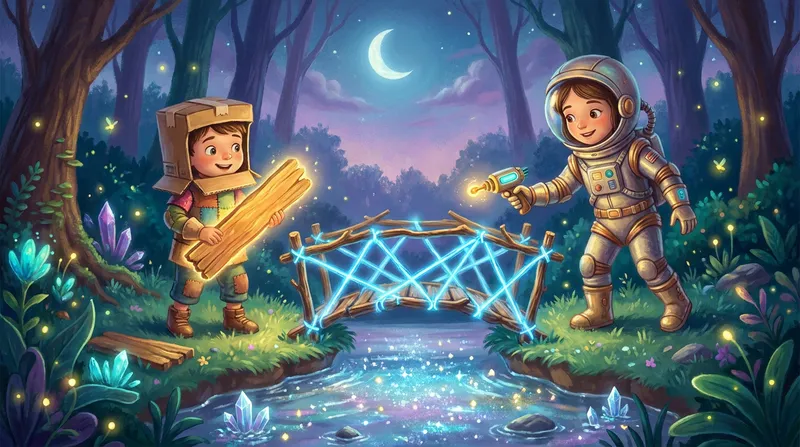
This is where the "co-hero" method changes everything. Instead of reading a book where your children have to project themselves onto a generic character, you can use Dreamcraft Tale to create a story where both of your children are the actual named heroes of the adventure.
When you shift the narrative from a single "Main Character" to "Co-Heroes," you instantly eliminate the primary source of bedtime jealousy. There is no need to fight over who gets to be the star because the spotlight is shared equally.
Imagine the look on their faces when the story begins: "Once upon a time, in the whispering woods, lived two brave adventurers named Leo and Dania." Instantly, they're on the same team. They aren't rivals fighting for your lap; they're partners facing a magical world together.
Actionable Tip: When setting up your story in the Dreamcraft Tale app, make sure to give both characters equal billing. If one child was the one to discover the magical cave last night, make sure the other child is the one who finds the hidden treasure map tonight.
The Complementary Superpower Method
Simply putting both kids in the story is a great start, but to truly transform sibling rivalry, you need to structure the narrative to model actual teamwork. The best way to do this is through the Complementary Superpower Method.
In many daytime conflicts, siblings fight because they have different abilities and frustrations. According to KidsHealth, as kids reach different stages of development, their changing needs can affect how they relate to one another. An older child might be frustrated that the younger one cannot play by the rules, while the younger child might feel overpowered.
You can use custom multi-character stories to reframe these differences as complementary strengths. Design stories where one child's strength covers the other's weakness. The quest can only be completed if they work together.
Try This Story Prompt: "Create a story about a 7-year-old girl named Maya who has the superpower of reading ancient maps, and a 4-year-old boy named Sam who has the superpower of talking to animals. They must work together to find the lost crown of the Forest King. Maya needs Sam to ask the birds for directions, and Sam needs Maya to read the warning signs on the path."
By highlighting that both skill sets are necessary and valuable, you gently teach them to appreciate each other's unique abilities in the real world.
Reframing Daily Conflicts into Nighttime Quests
One of the most unique angles of using an AI story generator for kids is the ability to address specific daily behavioral issues without lecturing. You can turn today's living room argument into tonight's dragon-taming quest.
Did your children have a massive fight over a set of building blocks today? Don't bring it up directly at bedtime to scold them. Instead, use Dreamcraft Tale to generate a story about two master builders who are tasked by the Queen to build the tallest tower in the kingdom. In the story, they realize that if they build separate small towers, they will fail, but if they combine their blocks, they can reach the clouds.
This gentle, story-based approach is incredibly effective. Children naturally absorb these lessons and process complex emotions much better through metaphor and storytelling than through direct reprimands.
Actionable Tip: Keep a mental note of the "conflict theme" of the day (sharing toys, respecting personal space, taking turns). Use that theme as the core moral lesson in your bedtime story prompt.
Bridging the Age Gap with Custom Multi-Character Stories
One of the hardest parts of a shared bedtime routine for siblings is bridging the age gap. A 9-year-old is going to be bored by a simple toddler board book, and a 3-year-old will lose focus during a lengthy chapter book without pictures.
Experts at Michigan Medicine emphasize that having regular family time together can significantly decrease the likelihood that children will engage in conflict. But how do you create family time that appeals to vastly different ages?
Personalized AI storytelling solves this by allowing you to blend interests and adjust the reading level perfectly. You can create a plot that features the 9-year-old's current obsession (like deep-space exploration) alongside the 3-year-old's favorite topic (like talking puppies).
For inspiration on how to blend magical elements with everyday curiosity, you might explore stories like Luna's Moon Quest or Leo and the Pet Pictures. These stories show how different themes can captivate young minds.
Actionable Tip: Let each child pick one element for the story. If the older child picks "a haunted pirate ship" and the younger child picks "a sparkly unicorn," prompt the AI to create a story about a sparkly unicorn who helps two siblings solve the mystery of a haunted pirate ship. The absurdity and creativity will have them both giggling.
Creating Custom Bedtime Stories for Your Kids
If you're wondering how to actually create these highly specific, personalized stories when you're already exhausted, Dreamcraft Tale is an AI bedtime story app designed exactly for this moment.
Whether you're reading on a phone tucked in beside them or a tablet propped on the nightstand, the app transforms your children's ideas into beautifully illustrated personalized stories where they become the heroes of their own adventure.
You don't need to be a professional writer to make magic happen. You simply Imagine your story idea by inputting themes and your children's names, let the AI Create a complete, age-appropriate story with vibrant illustrations in minutes, and then Read together in a peaceful, ad-free environment. It even supports offline reading for low-connectivity bedrooms.
Unlike traditional storybooks, every story is unique and personalized. When you're too tired to come up with a prompt, you can explore thousands of magical stories in the shared Story Library. You might find instant inspiration from community favorites like Pip's Gigantic Climb or Justine and the Magical Paintbrush.
Most importantly, Dreamcraft Tale provides a safe, wholesome environment. With multiple content filters and strict moderation, parents can trust that every story is appropriate, privacy-focused, and completely free of ads or tracking.
Moral Lessons in Childrens Stories
Children are highly perceptive. If a story feels too preachy or obvious, they'll tune it out. The beauty of custom storytelling is that you can weave moral lessons about sharing, teamwork, and empathy naturally into the plot.
Instead of a story that explicitly says, "You must share with your brother," you can create a narrative where two siblings are trapped in a maze. The only way out is to share their limited resources: one has a flashlight, and the other has the map. The moral lesson is demonstrated through the action of the story, allowing the children to internalize the value of cooperative play organically.
Stories like Rosie's Animal Show! or Lily's Perfect Pet are wonderful examples of how narratives can teach responsibility and kindness without feeling like a lecture.
Actionable Tip: After reading the story, ask open-ended questions. "Why do you think the two heroes were able to defeat the troll?" or "What would have happened if they didn't share the magic shield?" This reinforces the moral lesson and encourages reading comprehension.
Tips for a Peaceful Bedtime Routine
Beyond the story itself, the structure of your shared bedtime routine plays a massive role in stopping sibling fighting at bedtime. Here are some proven strategies to create a calm environment:
- Alternate the "Director" Role: To prevent fights over who gets to choose the story theme, assign nights. Monday is the older child's night to pick the setting, and Tuesday is the younger child's night. For example, if Monday is a space station, Tuesday can be a magical bakery. This guarantees fairness.
- Create a Neutral Reading Zone: Instead of reading in one child's bed (which can cause territorial disputes), create a special "story corner" in the hallway, the living room, or a parent's bed. Adding a dedicated beanbag or a special "reading blanket" makes this neutral zone feel like a treat.
- Embrace the Visuals: Use the beautiful AI illustrations generated by Dreamcraft Tale to keep visual learners engaged. Have the children point out different elements in the artwork, like the colors in Dania's Sparkly Adventure or the gentle lighting in Raquel and the Shy Moonbeam. This shared activity keeps their hands and eyes busy.
- Keep it Consistent: Try to start the routine at the same time every night. Predictability reduces anxiety, which in turn reduces irritability and fighting. Even a simple 5-minute warning before the routine begins can make a world of difference.
Frequently Asked Questions
How do you read a bedtime story to kids of different ages?
Use personalized AI stories to blend their interests and reading levels. You can include complex vocabulary and deeper plots for the older child, while relying on vibrant illustrations and familiar themes (like animals or magic) to keep the younger child engaged.
What is the best way to stop siblings from fighting at bedtime?
The most effective method is to remove the sources of competition. Establish a shared routine in a neutral space, ensure both children receive equal attention, and use co-hero stories where both children are the main characters. This eliminates jealousy over book choices and protagonist identification.
Can personalized stories help with sibling jealousy?
Absolutely. Sibling jealousy often stems from a perceived lack of attention or fairness. When you create a story where both children are named heroes with equally important roles and complementary superpowers, you validate both of their identities and show them they are equally valued.
How do you create a story where both children are the main characters?
Using an AI story generator for kids like Dreamcraft Tale, you simply input both children's names and define their roles as a team. Prompt the app to give them a shared goal that requires both of their unique skills to accomplish.
What are good story themes for teaching kids teamwork?
Great themes include treasure hunts requiring different clues, building a magical machine where each child has different parts, or rescue missions where one child navigates and the other negotiates. The key is that the goal cannot be reached alone.
How can I make my older child want to read with my younger child?
Give the older child a leadership role in the story creation process. Let them choose the setting or the main conflict. When they see their ideas come to life in a story that also includes their younger sibling, they become invested in the shared reading experience.
Make Bedtime Magical Again
Bedtime doesn't have to be a battleground. By reframing your nightly routine around personalized, co-hero adventures, you can turn a stressful chore into the most anticipated part of the day. You aren't just reading a book; you're actively building their self-esteem, expanding their imagination, and forging a lifelong bond between siblings.
Ready to turn tonight's bedtime into a magical memory? Join thousands of families already creating their own adventures with Dreamcraft Tale. Try it free tonight and see the difference a personalized co-hero story makes. Your first story is waiting, and so are your kids. Download Dreamcraft Tale today!