Bedtime Shadow Play: 5 Magical Shadow Puppet Stories for Kids to Act Out
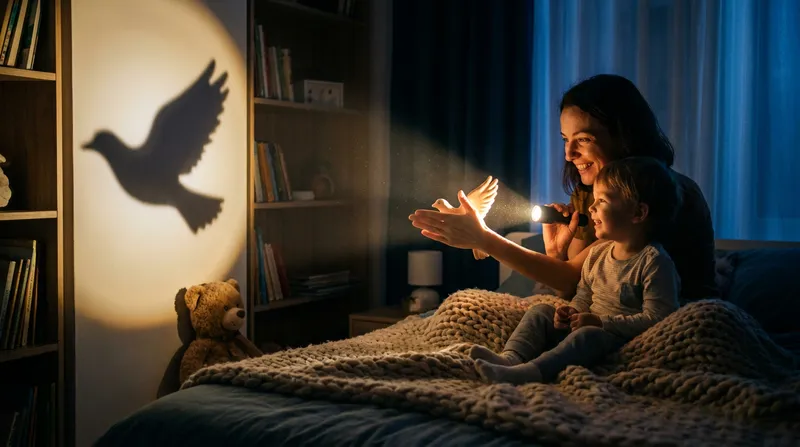
It's 8:45 PM. You've already read the same picture book twice, you've fetched the third glass of water, and your child is still bouncing around the room with endless energy. Bedtime battles are exhausting, and when your child is wired from a busy day, getting them to settle down feels like an impossible task.
If you're desperately searching for a low-effort, highly engaging, and screen-free wind-down activity that actually helps your child fall asleep peacefully, you're in the right place. Bedtime shadow play is the perfect solution. By simply turning off the main lights and turning on a flashlight, you can transform a plain bedroom wall into a magical theater.
Let's explore how to master hand shadow animals and use five simple shadow puppet stories to create a calming bedtime routine your kids will actually look forward to.
The Magic of Bedtime Shadow Play: A Parent's Secret Weapon
We know the struggle of trying to transition a highly energetic child into a dark, quiet room for sleep. When children are overstimulated, asking them to simply lie down and close their eyes rarely works. They need a bridge between the active playtime of the day and the quiet restfulness of the night.
This is where bedtime shadow play shines. It captures their attention and sparks their imagination, but it does so in a low-light environment that naturally cues their bodies for sleep. Instead of fighting the dark, your child learns to look forward to it. They get to be the directors of their own bedtime activities for toddlers, creating magic with just their hands.
According to guidelines from the American Academy of Pediatrics, avoiding screen exposure for at least an hour before bedtime is critical to protect sleep duration and quality. Digital technologies disrupt melatonin secretion, making it harder for kids to fall asleep. Shadow puppets offer the perfect alternative, providing the entertainment of a show like Rosie's Animal Show! without the harmful blue light. (Tip: You can find and customize these stories inside the Dreamcraft Tale app!)
Actionable Tip: Dim the overhead lights 30 minutes before bed to signal to your child's brain that it's time to wind down. This simple environmental change makes the transition to flashlight games for kids feel natural and exciting.
Why Screen-Free Bedtime Activities Work Better for Sleep
It's tempting to hand over an iPad or turn on the television when you're exhausted at the end of the day. However, the science behind screen time and sleep is clear. The blue light emitted by screens tricks the brain into thinking it's still daytime, halting the production of melatonin, the hormone responsible for sleep.
Furthermore, viewing screen content before bed is particularly harmful to sleep health, prompting the strong recommendation from the National Sleep Foundation to implement early, regular, and relaxing bedtime routines without screens. Peer-reviewed research from the National Institutes of Health also shows that children with reported screen use during their bedtime routine have shorter sleep durations and more sleep variability.
Shadow play is different. It's an active, tactile form of imagination play that requires focus but doesn't overstimulate the nervous system. When a child uses their hands to tell a story, they're engaging their brain in a soothing, rhythmic way. You might even inspire a creative tale like Lily's Happy Voice.
Actionable Tip: Create a "device drop zone" outside the bedroom. Have your child plug in their tablet or say goodnight to the television in the living room, ensuring the bedroom remains a screen-free sanctuary dedicated only to rest and calming bedtime activities.
Real Parent Moment: Want to take the stories you create at bedtime even further? Dreamcraft Tale lets you generate beautifully illustrated, personalized stories in minutes, completely ad-free. Explore the Shared Story Library for instant inspiration, even on your most exhausted evenings.
What You Need for Your Flashlight Puppet Show
The beauty of a flashlight puppet show is its simplicity. You don't need expensive toys or complicated setups to make magic happen. Here's everything you need to get started:
- A Light Source: A standard flashlight, a smartphone flashlight, or a small bedside lamp works perfectly.
- A Blank Canvas: A clear section of a bedroom wall or even the bedroom ceiling if you're lying down.
- Cozy Props: Pillows and blankets to create a comfortable viewing area.
- Your Hands: The most important tool for DIY shadow puppets.
To get the sharpest shadows, position the light source a few feet behind you and your child. The closer your hands are to the wall, the darker and sharper the shadow will be. If you move your hands closer to the light source, the shadow will grow larger but slightly fuzzier.
Actionable Tip: Use a piece of yellow or orange tissue paper secured with a rubber band over your flashlight. This creates a warm, sunset-like glow that promotes sleepiness and makes the light and shadow play feel even more magical.
How to Make Hand Shadows: A Quick Crash Course
Before you dive into the stories, it helps to know a few basic hand shadow animals. Don't worry about making them look perfect. Your child cares much more about the story and the time spent with you than they do about realistic anatomy.
Here are five easy shadow puppets to master:
- The Bird: Hook your thumbs together and spread your fingers wide. Flap your fingers to make the bird fly.
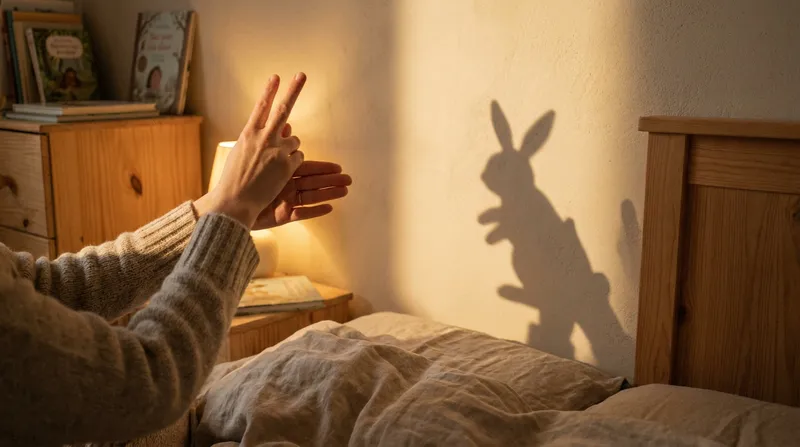
- The Bunny: Make a fist, then point your index and middle fingers straight up for ears. Tuck your thumb in to make the nose.
- The Dog: Hold your hand sideways, thumb pointing up for an ear. Drop your pinky finger down to make the dog open its mouth to bark.
- The Spider: Cross your wrists and wiggle all eight of your fingers to make the spider crawl.
- The Snail: Make a fist with one hand for the shell. Point your index and middle fingers of your other hand out and slide them under the fist for the body and antennae.
Learning these shapes is a fun activity on its own, and your child could become the hero of their own discovery journey just like in Leo and the Pet Pictures.
Actionable Tip: Practice these hand shapes together in the daytime first. This allows your child to stretch their fingers and learn the motor skills without the pressure of bedtime.
5 Magical Shadow Puppet Stories for Kids to Act Out
Now that you know the shapes, it's time to bring them to life. These five shadow puppet stories are designed specifically for bedtime. They feature slow movements, gentle themes, and built-in cues for deep breathing.
You can narrate the story while your child makes the shapes, or you can make the shapes while they watch and listen.
Actionable Tip: Print these scripts or write the bullet points on a piece of paper. This way, you don't have to look at a bright phone screen in the dark while you tell the story.
Story 1: The Little Bird's Big Journey
This story uses the Bird shadow puppet and focuses on rhythmic, calming breathing.
Parent's Narration: "Once upon a time, there was a little bird who had flown all day long. She flew over tall trees (swoop the bird high) and low valleys (swoop the bird low). Now, the sun was setting, and she was very, very tired."
Child's Action: Hook thumbs and gently flap fingers to make the bird fly across the wall.
Parent's Narration: "The little bird took a deep breath of the cool night air. Let's breathe with her. Inhale... exhale. She flew slower and slower. Finally, she found her cozy nest. She folded her wings tight, tucked her head down, and fell fast asleep."
Child's Action: Stop flapping, fold fingers down, and hold the hands still on the wall.
Actionable Tip: Have your child make soft "whoosh" sounds as the bird flies. This encourages deep, rhythmic breathing that mimics the relaxation techniques used in Pip's Gigantic Climb.
Story 2: The Shy Bunny's Moonlit Hop
This story uses the Bunny shadow puppet and teaches perspective and slow movements.
Parent's Narration: "In a quiet, moonlit garden, a shy little bunny poked his head out of his burrow. He wiggled his ears to listen to the night sounds."
Child's Action: Make the bunny shape and wiggle the two upright fingers.
Parent's Narration: "The garden was safe and sleepy. The bunny took a slow hop forward. Hop... hop... hop. He saw a giant carrot in his imagination, so he grew very big! Then he realized he was just sleepy, so he shrank back down into his cozy burrow to rest."
Child's Action: Move the hands closer to the light to make the bunny shadow grow huge, then move them closer to the wall to make the bunny shrink, eventually lowering the hands out of the light.
Actionable Tip: Move the flashlight slowly while your child holds their hands still to show them another way shadows can grow and shrink. This adds an element of wonder similar to Luna's Moon Quest.
Story 3: The Brave Puppy Finds a Friend
This story uses the Dog shadow puppet and encourages creative thinking and gentle interaction.
Parent's Narration: "There was a brave little puppy who was looking for the perfect place to sleep. They opened their mouth and let out a big, sleepy yawn."
Child's Action: Drop the pinky finger down to make the dog's mouth open wide, then close it.
Parent's Narration: "They walked across the bedroom wall, looking for a friend. Suddenly, they found you! The puppy gave your shadow nose a gentle shadow kiss, curled up into a little ball, and closed their eyes for the night."
Child's Action: Move the dog shadow over to where the parent's shadow is cast on the wall, make a kissing motion, and then close the hand into a soft fist.
Actionable Tip: Ask your child what color the shadow puppy is in their imagination to spark creative thinking before sleep, just like the imaginative pets in Lily's Perfect Pet.
Story 4: The Snail's Sparkly Shell
This story uses the Snail shadow puppet and is designed to drastically slow down your child's physical movements.
Parent's Narration: "Deep in the forest lived the slowest, sleepiest snail in the world. It carried a beautiful, sparkly shell on its back. It was trying to reach its favorite leaf to sleep on."
Child's Action: Form the snail shape with one fist resting on the other hand's extended fingers.
Parent's Narration: "It moved in super slow motion. Slide... slide... slide. It took a whole minute just to cross the wall. Finally, it reached the leaf, tucked its little antennae inside its shell, and went to sleep."
Child's Action: Move the hands across the wall as slowly as possible. At the end, tuck the extended fingers into the fist.
Actionable Tip: Have the snail move in slow motion to naturally slow down your child's physical movements. You can even count slowly to ten as the snail makes its journey, bringing a calm pace similar to Dania's Sparkly Adventure.
Story 5: The Magic Paintbrush and the Spider
This story uses the Spider shadow puppet and incorporates a physical prop for extra fun.
Parent's Narration: "A friendly little spider wanted to weave a magical dream-catcher web to catch all the best dreams for the night. She started at the bottom of the wall and wiggled her legs all the way to the top."
Child's Action: Cross wrists and wiggle all fingers, moving hands slowly up the wall.
Parent's Narration: "To help her, a magic paintbrush appeared! The brush painted invisible silver threads across the sky. The spider rested on the beautiful web, ready to bring wonderful dreams to everyone sleeping in the room."
Child's Action: Keep the spider still while the parent uses a real pencil or stick to cast the shadow of the "magic paintbrush" drawing circles around the spider.
Actionable Tip: Use a real object like a pencil or safe stick to cast the shadow of the "magic paintbrush" alongside the hand shadows. This adds a new layer to hand shadow art, inspiring creativity much like Justine and the Magical Paintbrush.
The Developmental Benefits of Light and Shadow Play
While shadow puppets are incredibly fun, they're also doing heavy lifting for your child's brain development. Integrating storytelling with shadow play supports children's speaking, listening skills, reading comprehension, and vocabulary development, according to the National Association for the Education of Young Children.
When your child forms a shape with their hands, they're practicing fine motor skills and spatial awareness. When they narrate what the shadow is doing, they're building narrative comprehension and learning how to structure a story with a beginning, middle, and end.
This type of interactive storytelling is highly beneficial. It turns a passive routine into an engaging bonding experience. You might notice them developing communication skills just like the characters in Courtney and the Whispering Shell.
Actionable Tip: Pause during the stories and ask your child, "What do you think happens next?" This encourages narrative building and lets them take ownership of the bedtime routine.
Transitioning from Shadow Play to Sleep
The most critical part of this screen-free bedtime routine is the ending. You don't want to abruptly turn off the flashlight and leave the room, as this can cause a sudden shift from fun to fear. Instead, you want to ease them into the dark.
Use the "fading light" technique. As your final shadow puppet story comes to an end, slowly move the flashlight further away from the wall, or cover it gradually with your hand so the light dims slowly. Tell your child that the shadows are getting sleepy and fading away into the night.
Actionable Tip: Have all the shadow animals wave goodnight on the wall. As the last shadow fades, whisper a short goodnight affirmation together, something like, "We are safe, we are cozy, and we are ready for wonderful dreams." This ritual signals the official end of story time and the beginning of sleep, creating a peaceful atmosphere similar to the ending of Raquel and the Shy Moonbeam.
Bring Your Shadow Stories to Life! If your child has fallen in love with shadow storytelling, their imagination is ready for even bigger adventures. Dreamcraft Tale transforms your child's ideas into beautifully AI-illustrated, personalized stories where they become the hero. In a completely ad-free, COPPA-compliant space, you can generate unlimited unique stories in minutes during the day, and act them out as shadow puppets at night!
Frequently Asked Questions
What is the best light to use for shadow puppets?
We recommend a small LED flashlight with a warm-colored bulb, or a smartphone light covered with a piece of yellow tape or tissue paper. Avoid bright, cool-toned blue lights that can suppress melatonin production before bed.
At what age can children start doing hand shadows?
Toddlers as young as 2 or 3 can enjoy watching you make the shapes on the wall. Kids around 4 to 5 can start making simple shapes themselves. By age 6 and up, they can invent their own complex stories and characters.
How do I make the shadow puppets look sharper on the wall?
To get crisp shadows, keep your light source small and steady. Move your hands closer to the wall and further away from the light. If your hands are too close to the flashlight, the shadows will become large and blurry.
Are shadow puppets too stimulating right before bed?
If done with slow movements, whispered voices, and warm light, shadow play is a highly calming sensory activity. It only becomes stimulating if the stories are loud, fast-paced, or action-packed. Stick to sleepy themes for the best results.
What if I'm not creative enough to make up stories?
Don't worry! Kids love repetition and simple concepts. You can use the 5 scripts provided in this article over and over. If you want more variety without the effort, you can use the Dreamcraft Tale app to generate personalized story ideas that you can act out together on the wall.