It's 3:47 PM. You've already refereed four fights over the same toy, negotiated three snack disputes, and heard "He's looking at me!" from the backseat more times than you can count. If you feel like you spend half your day as a referee, you're not alone. Sibling rivalry is one of the most common challenges in family life. In fact, the American Psychological Association (APA) notes that eight in ten children in the U.S. grow up with a sibling, making it a near-universal experience.
But what if you could do more than just manage the squabbles? What if you could use a fun, creative activity to proactively build a foundation of friendship and empathy between your kids? It's possible, and all it takes is a little bit of story magic.
From Squabbles to Stories: The Daily Pain of Sibling Rivalry
You've tried time-outs. You've encouraged sharing. You've delivered heartfelt speeches about being kind to each other. Sometimes it works for a minute, but soon enough, the bickering starts again. It's exhausting, and it can leave you wondering if your children will ever truly be friends.
We get it. The constant conflict can overshadow the sweet moments, making you feel more like a police officer than a parent. You dream of a home filled with more giggles and fewer grievances, where your children see each other as teammates, not competitors.
Why Traditional Methods Aren't Enough
Common advice often focuses on stopping a fight in the moment—separating the kids, forcing an apology, or taking away the fought-over object. While sometimes necessary, these methods don't always address the root of the issue. They manage the symptom, not the cause.
Research from the National Institutes of Health (NIH) highlights that sibling relationships can become a "training ground" for either positive or negative behaviors. When conflict isn't handled constructively, it can reinforce cycles of arguments. But here's the good news: these moments are also powerful opportunities to teach crucial life skills. Instead of just stopping a fight, we can use these moments to proactively build empathy. That's why it's so important that these interactions are positive. We designed Dreamcraft Tale with this in mind, using multiple content filters to ensure every story builds constructive relationships in a safe, wholesome environment. This is a core part of social-emotional learning you can do through storytelling.
The 'Sibling Hero' Story: A Creative Activity to Build Friendship
Imagine a game so fun that your kids don't even realize they're learning to appreciate each other. Welcome to the "Sibling Hero" story activity.
The concept is simple and powerful: each sibling's mission is to create a story where their brother or sister is the main hero.
This simple twist has a profound psychological effect. It shifts a child's focus from competition to admiration. To create a hero story, they have to actively think about their sibling's positive qualities. According to the Greater Good Science Center at UC Berkeley, this exercise helps develop cognitive empathy—the ability to understand someone else's perspective—which starts to emerge around age four. By seeing their sibling as the star of an adventure, they begin to see them in a new, more positive light. It's one of the most powerful imaginative storytelling activities for preschoolers and young children.
How to Play: Your Step-by-Step Guide to the Sibling Hero Activity
Ready to try it? The goal is to keep it light, fun, and full of encouragement. This isn't a chore or a punishment; it's a special bonding game. As the parent, your role is to be the fun facilitator and cheerleader.
Step 1: Brainstorm Your Sibling's Superpowers
Before you can write a hero story, you need to know what makes the hero special! Sit with each child individually (or together if they're in a cooperative mood) and brainstorm their sibling's "superpowers."
If they get stuck, use gentle, positive prompts:
- "What is something your sister is really good at?"
- "Tell me about a time your brother was really kind."
- "What's the funniest joke your brother tells?"
- "What does your sister do that makes you smile?"
Focus on character traits (kind, brave, funny, clever) as well as skills (a fast runner, a great artist, a master block-builder). Write these down to use in the next step. For more ideas, check out this ultimate guide to creative writing prompts for kids.
Step 2: Create the Hero's Adventure
Now it's time to turn those superpowers into a story! This is where you can make the experience truly magical. While you can simply tell the story, using a tool like the Dreamcraft Tale app brings it to life with custom text and beautiful, AI-generated illustrations in just minutes.
Here's how to use the app for this step:
- Open Dreamcraft Tale with one child.
- Start a new story. For the hero, use their sibling's name.
- Incorporate the superpowers. Tell the app's story creator, "Create a story about Leo, who is a super-fast runner and is very kind to animals, and he has to save a lost kitten from a tall tree."
- Generate the story & illustrations. In minutes, the app will craft a unique adventure, complete with personalized text and gorgeous illustrations that show the sibling as the hero.
This process makes the story feel real and important. It's not just a story you told; it's a beautiful, illustrated book that you created for their sibling. It's a tangible gift of kindness. Understanding the 5 elements of a perfect bedtime story can help you guide the creation process.
Step 3: The Grand Reveal!
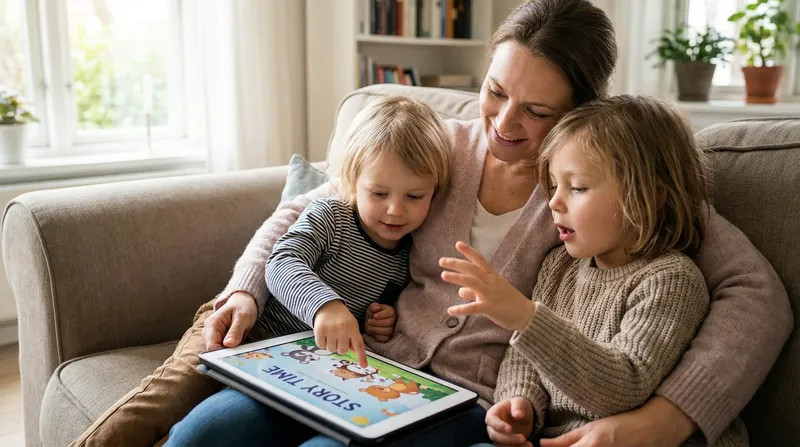
Once each child has created a hero story for their sibling, it's time for the grand reveal. Make it a special event. Gather on the couch, dim the lights, and get ready for a story premiere.
Have each child present the story they created. As you read it aloud from the tablet, point out the heroic actions and positive qualities. Celebrate the story and, more importantly, the thought that went into it. This positive reinforcement connects the act of thinking kindly about a sibling with feelings of pride and family connection.
Pro Tip: Save the stories you create in the app to build a special 'Sibling Adventures' collection. Your kids will love revisiting the stories where they were each other's heroes!
Tips for Success: Adapting for Age Gaps and Personalities
Not all siblings are the same age or have the same temperament. The key is to adapt the activity to fit your family. As experts at Michigan State University Extension advise, a key part of managing sibling relationships is helping children find their own solutions, and this activity can be adapted to do just that.
- For Toddlers and Preschoolers (Ages 3-5): Keep it simple. The parent will do most of the heavy lifting. Focus on one simple, kind act. "Let's make a story about how Sarah shared her favorite crayon with you!" You can find more age-specific ideas in our guide to bedtime stories for preschoolers.
- For Early Elementary (Ages 6-9): Give them more control. Let them come up with the plot and character traits. They can help type the prompts into the app and make creative decisions. Their hero stories can have more complex problems and solutions.
- For Large Age Gaps: This is a wonderful opportunity for an older sibling to take on a nurturing role. They can take the lead in creating a story for their younger sibling, reinforcing their role as a kind and protective big brother or sister.
Beyond a Game: The Lasting Impact on Your Family
While the Sibling Hero activity is a fun game, its effects are much deeper. You are actively rewiring your children's relationship from one of rivalry to one of mutual respect and appreciation. You're giving them a new, positive narrative about who they are to each other.
Research from Vanderbilt University on sibling-focused interventions found that structured programs designed to improve sibling relationships successfully reduced conflict. Think of this activity as your own mini-intervention. Just last week, a parent told us, "My two boys went from constant bickering to asking, 'Can we make a hero story for each other tonight?' It's been a total game-changer for our evenings." You are creating a "deposit" in their emotional bank account that they can draw on when conflicts inevitably arise.
By using creativity and play, you're not just distracting them from a fight; you're teaching them how to be friends. And that's a skill that will last a lifetime. Explore even more unexpected ways to use personalized stories to strengthen your family bonds.
Ready to Transform Squabbles into Stories?
Ready to turn sibling rivalry into a powerful source of friendship? Download the Dreamcraft Tale app and create your first Sibling Hero story together. It's more than just a story; it's a new chapter for your family.
Start Your Free Trial of Dreamcraft Tale Today!
Frequently Asked Questions
What if my kids refuse to say anything nice about each other?
It's completely normal for this to feel a bit forced at first! If your kids draw a blank, start with simple, neutral observations. Ask, "What's his favorite color?" or "What's her favorite food?" Once the ball is rolling, you can gently guide them toward more positive traits. The goal isn't to force compliments but to slowly shift their perspective, and every small step is a win.
How often should we do this activity?
We recommend making this a special family ritual rather than a daily requirement. Try it once a week or every couple of weeks, perhaps on a Sunday afternoon. Keeping it special ensures it feels like a fun treat they look forward to, not another chore on the to-do list.
Can this work for more than two siblings?
Absolutely! For three or more siblings, you have a couple of great options. You can pair them up to create stories for each other, or you can create one big "All-Star Team" adventure. In the team story, everyone works together to solve a problem, with each sibling contributing their own unique superpower to save the day.
What if one child is upset because their sibling's story is 'better'?
This is a perfect opportunity to teach a valuable lesson about effort and intention. Before you begin, frame the activity by saying, "The most wonderful part of this game is the kind gift you are creating for your sibling." When you share the stories, make sure to praise the thoughtfulness and creativity each child put into their gift, rather than comparing the final stories.
Does this really stop siblings from fighting?
While this activity isn't a magic wand that will end all arguments, it's a powerful tool for building a stronger foundation. Normal conflict is part of how kids learn to navigate social situations. This activity builds empathy and connection, which helps reduce the frequency of fights and gives your children the skills to resolve their disagreements more kindly over time.