
5 Story-Based SEL Activities for Your Child's Big Emotions
It's a familiar scene: your child, happily playing moments ago, is now having a full-blown meltdown because their favorite blue crayon broke. You try all the usual advice. "Use your words." "It's okay." "Let's find another crayon." But nothing works. You're left feeling helpless, exhausted, and wondering why the generic advice you read on parenting blogs just doesn't seem to stick.
If you've ever felt this way, you are not alone. We understand. Navigating a child's big, overwhelming emotions is one of the toughest parts of parenting. While tools like feelings charts are a good start, they often fail to connect with a child in the heat of the moment. But what if you could turn these challenges into a magical adventure? What if you had a tool that could make abstract ideas like "empathy" and "resilience" feel as real and exciting as a fairytale?
That's the power of storytelling for social-emotional learning (SEL). By framing emotional challenges as stories, you give your child a safe, engaging way to understand and manage their feelings. In this guide, we'll share five practical, story-based activities you can use at home to help your child become the hero of their own emotional world.
At a Glance: 5 Story-Based SEL Activities
- For Confidence (Self-Awareness): The 'Hero's Quest' Story
- For Anger (Self-Management): The 'Feelings Volcano' Story
- For Empathy (Social Awareness): The 'Animal Helper' Story
- For Sharing (Relationship Skills): The 'Team Treasure Hunt' Story
- For Choices (Responsible Decision-Making): The 'Magical Choice' Story
As experts at the Child Mind Institute point out, helping kids identify and manage their feelings at home is a key building block for success in school and in life.
Why a Story is the Most Powerful Tool for Emotional Regulation
Have you ever been so lost in a book or movie that the real world melts away? That's a phenomenon called "narrative transportation," and it's a secret weapon for teaching children. When kids listen to a story, they don't just hear words; they mentally step into the world and experience the characters' challenges and triumphs as their own. This makes the lessons they learn far more memorable and meaningful than a simple instruction or rule.
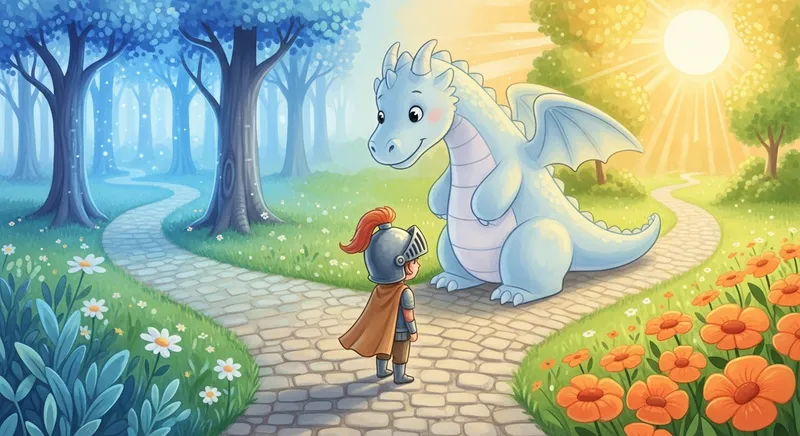
Stories provide a safe, emotional playground. Your child can explore scary feelings like anger or fear from a comfortable distance, without being overwhelmed. And when you make your child the hero of the story, you do something incredible for their confidence. They get to practice being brave, kind, or patient in their imagination first, which makes it easier to do in real life.
In fact, academic research from the University of Connecticut suggests that a child's ability to create and understand a coherent narrative is directly linked to their emotional organization.
A well-structured story helps a child structure their feelings, turning a chaotic emotion into a challenge with a beginning, a middle, and a successful end.
The 5 Core Skills of Social Emotional Learning (and a Story for Each)
To give our stories a strong foundation, we can look to the experts. The Collaborative for Academic, Social, and Emotional Learning (CASEL) has identified five core, interrelated skills that are the basis of all social-emotional development. By targeting these skills, we can help our children build a complete emotional toolkit.
The CASEL 5 are:
- Self-Awareness: Understanding one's own emotions, strengths, and weaknesses.
- Self-Management: Regulating emotions, thoughts, and behaviors.
- Social Awareness: Understanding the perspectives of and empathizing with others.
- Relationship Skills: Building and maintaining healthy relationships.
- Responsible Decision-Making: Making caring and constructive choices.
Here's a story-based activity for each one.
1. The 'Hero's Quest' Story for Building Confidence and Resilience (Self-Awareness)
The Challenge: Your child is afraid to try something new, gives up easily, or says "I can't do it." It could be anything from climbing the big ladder at the playground to speaking up in class.
The Story Activity: Don't just tell them to be brave; show them they already are! Create a story where your child is a hero on a grand quest that mirrors their real-life challenge. If they're scared of the playground ladder, create a tale like Pip's Gigantic Climb, where a brave hero must ascend a magical, wobbly mountain to retrieve a fallen star.
Actionable Steps:
- Name the Hero: Start by saying, "Let's tell a story about a brave knight named [Child's Name]!"
- Create the Quest: Frame the challenge as a fantastical goal. "The knight had to climb the Shimmering Tower to rescue a friendly dragon!"
- Acknowledge the Feeling: "At first, the knight felt a little wobbly in their tummy. The tower looked so tall!"
- Brainstorm a Solution: Ask your child, "What special power could the knight use to feel brave?" Maybe it's a "Brave Song" or "Power Stomps."
- Celebrate the Victory: Describe the amazing feeling of success. "The knight took one step at a time and made it all the way to the top! Everyone cheered!"
Connect to the Real World: The next time your child faces the ladder, you can say, "Wow, this is just like the Shimmering Tower! Let's use your knightly Power Stomps!"
2. The 'Feelings Volcano' Story for Managing Anger (Self-Management)
The Challenge: Your child gets overwhelmed with anger and it comes out as yelling, hitting, or throwing things. They're not being "bad"; their emotions are simply erupting.
The Story Activity: Instead of punishing the eruption, give the feeling a name and a story. Create a tale about a friendly volcano who has to learn how to manage its hot, bubbly lava. The volcano learns that instead of erupting, it can let out steam slowly by taking deep breaths.
Actionable Steps:
- Introduce the Character: "Once there was a happy little volcano who loved to play. But sometimes, it would get big, hot feelings bubbling inside."
- Describe the Feeling: Talk about the physical sensations. "The lava would get hot and start to rumble and bubble, all the way up to its top!"
- Introduce a Strategy: In the story, a wise old cloud teaches the volcano a trick. "The cloud showed the volcano how to let out little puffs of steam. He took a big breath in (breathe in with your child) and blew it out slowly (breathe out)."
- Make Your Child the Helper: Your child can be the "Volcano Whisperer" who helps the volcano remember to breathe. This gives them a sense of control.
Pro-Tip: Short on time? In the Dreamcraft Tale app, you can browse our shared Story Library for keywords like "volcano" or "anger" to find hundreds of ready-to-read stories created by other parents.
Connect to the Real World: When you see your child getting frustrated, you can gently say, "It looks like your lava is starting to bubble. Let's be like the friendly volcano and let out some steam together."
3. The 'Animal Helper' Story for Teaching Empathy (Social Awareness)
The Challenge: Your child has a hard time understanding why a friend is crying or doesn't seem to notice when someone else is sad. Empathy is an abstract skill that needs to be practiced.
The Story Activity: Create a story where your child's character finds a sad or lonely animal and has to become an "animal detective" to figure out what's wrong. This turns empathy into a fun problem-solving game. The Greater Good Science Center at UC Berkeley confirms that engaging in these kinds of perspective-taking activities is key to building empathy.
Actionable Steps:
- Set the Scene: "Brave Explorer [Child's Name] was walking through the Whispering Woods when they found a little bunny crying by a tree."
- Ask Detective Questions: Instead of giving the answer, ask your child. "Hmm, why do you think the bunny is sad? Look at his face. What do you see?" "What could have happened?"
- Brainstorm Kind Actions: "What could our explorer do to help the bunny feel better? Should they give it a hug? Find its mommy? Share their snack?"
Connect to the Real World: Later, if you see a child who is upset at the park, you can whisper, "Look, that little boy looks sad, just like the bunny in our story. What do you think might help him?" With Dreamcraft Tale, you can make the animal your child's favorite, like in Leo and the Pet Pictures, making the lesson even more personal.
4. The 'Team Treasure Hunt' Story for Practicing Sharing (Relationship Skills)
The Challenge: The word "share" triggers an immediate "NO!" from your child. To them, sharing feels like losing.
The Story Activity: Reframe sharing from a loss to a win. Create a thrilling treasure hunt story where two heroes must work together to find the prize. The key is that each hero has something the other one needs: one has the map, the other has the key. The only way to get the treasure is by cooperating.
Actionable Steps:
- Form the Team: "Captain [Child's Name] and their first mate, Pirate Pete, were on a mission to find the legendary Gummy Bear Treasure!"
- Create the Shared Challenge: "But wait! Captain [Child's Name] had the map, and Pirate Pete had the magical spyglass. They couldn't find the treasure alone. They had to work as a team!"
- Show the Benefit: Describe how fun it is to work together. "They took turns looking through the spyglass and reading the map. Together, they solved the riddle and found the treasure chest filled with yummy goodies for everyone!"
Create This Story in 60 Seconds: In the Dreamcraft Tale app, you can:
- Imagine: Type a prompt like, "A story about [Child's Name] and a friend who have to share a map and a key to find treasure."
- Create: Our AI generates a unique, illustrated story in moments.
- Read: Enjoy a magical story that teaches teamwork!
Connect to the Real World: When playing with blocks, you can say, "Let's be like the treasure hunters! You use the blue blocks, and I'll use the red ones, and we can build a giant castle together as a team!"
5. The 'Magical Choice' Story for Making Good Decisions (Responsible Decision-Making)
The Challenge: Your child makes an impulsive choice without thinking, like drawing on the wall instead of paper or grabbing a cookie right before dinner.
The Story Activity: Create a gentle, "choose your own path" style story. Your child's hero character comes to a fork in the road and has to make a choice. The story explores the natural consequences of each choice in a non-shaming way, like in the tale of Justine and the Magical Paintbrush.
Actionable Steps:
- Introduce the Choice: "Justine the Artist found a magical paintbrush! It could paint rainbows on anything. She saw a big, sparkly piece of paper and the plain white castle wall. Where should she paint first?"
- Explore Both Paths (Gently): Let your child decide. If they choose the wall, the story could go: "She painted a beautiful rainbow on the wall! But then, the kind King said, 'Oh my! That is a lovely rainbow, but we have special paper for painting so the walls stay clean. Now we have to wash it off.' Then Justine felt a little sad her painting was gone."
- Highlight the Positive Choice: If they choose the paper: "She painted a rainbow on the paper, and the King loved it so much he put it in a golden frame for everyone in the kingdom to see!"
Connect to the Real World: When you see your child about to make an impulsive choice, you can say, "This looks like a magical choice moment. Remember the paintbrush? Let's find the special 'paper' for our toys."
Bring Your Stories to Life, the Easy Way
These activities are powerful, but we know what you're thinking: "I'm exhausted, and I'm not a creative writer!"
These activities work beautifully with simple, homemade stories. But on those exhausting days when creativity feels impossible, a little help can make all the difference. That's where Dreamcraft Tale comes in.
Our AI-powered app is designed to help busy parents like you bring these stories to life. It transforms your simple prompts ("a story about a girl who is scared of the dark" or "a story about sharing a toy truck") into complete, beautifully illustrated personalized stories where your child is the star.
It's a way to make social-emotional learning a magical, personalized, and deeply connecting experience, even on the toughest days.
Ready to turn tonight's meltdown into a magical adventure? Create your first personalized story for free with Dreamcraft Tale!
Frequently Asked Questions
How old does my child need to be to benefit from story-based SEL?
The beauty of storytelling is its flexibility. You can start with very simple cause-and-effect stories for toddlers as young as 2 or 3 ("The bunny was sad. We gave him a hug. Now he is happy!").
For preschoolers and kids up to age 9, you can create more complex plots and explore nuanced emotions. The key is to tailor the story's complexity to your child's developmental stage. As the experts at ZERO TO THREE explain, even for the youngest children, stories open up conversations about complex emotions.
Does this actually work for calming a child down in the moment?
Think of these stories as proactive training rather than a reactive fix. The magic happens when you build a library of these emotional tools before a meltdown occurs.
Then, in a heated moment, you have a powerful shorthand. A simple, calm reminder like, "Let's be like the friendly volcano," can be far more effective than a complex instruction because the emotional groundwork has already been laid. It's about preparing them for the feeling, not just trying to stop it.
What if I'm not a creative person?
This is the most common concern we hear, and it's completely valid! Please remember: the goal is connection, not literary perfection. Your child will love any story you create simply because it's from you and it's about them.
And for those days when you're feeling tapped out, tools like Dreamcraft Tale are designed to do the creative heavy lifting for you. You provide the loving intention; we'll help with the magical execution.
Are 'social stories' the same thing?
This approach is inspired by the concept of Social Narratives. As research from the National Professional Development Center on Autism Spectrum Disorders notes, this is an evidence-based practice used to help individuals (particularly those with autism) navigate social situations.
We've taken that powerful, proven concept and made it more magical, personalized, and accessible for all children to help them learn and grow through the power of imaginative play.
How often should we do these story activities?
Focus on quality over quantity. You don't need to create a new SEL story every single night. A great time to start is when you notice a recurring challenge or anticipate a new one (like starting school or a visit to the dentist). Making it a special part of your bedtime routine once or twice a week can be a wonderful, low-pressure way to build your child's emotional toolkit.