
Estimated 12-minute read
In a Nutshell: Your 15-Second Summary
Tired of long bedtime routines? This post gives you 15 original, ultra-short stories with positive morals you can read in under 60 seconds each. We've included tips for telling them, conversation starters, and the science behind why these tiny tales are so effective for bonding and teaching values like kindness and honesty.
It's 8:47 PM. You've read the same three books, your voice is getting hoarse, and your child is still buzzing with energy, asking for "just one more story." You're exhausted. You want to make bedtime a special, meaningful moment of connection, but you're running on empty. You want to teach them about kindness and honesty, but you just don't have the energy for another long, drawn-out tale.
If this sounds familiar, you are not alone. The struggle is real, but the solution can be surprisingly simple: ultra-short stories. We're talking about complete, engaging adventures with a valuable lesson, all delivered in under 60 seconds.
This isn't about rushing through story time. It's about making it more impactful. According to the American Academy of Pediatrics, shared reading from an early age is crucial for building parent-child bonds and stimulating brain development. Even a one-minute story strengthens the parts of the brain associated with visual imagery and word comprehension, as research highlighted by PBS for Parents shows. These tiny tales are your secret weapon for turning bedtime battles into magical bonding moments.
Why Short Moral Stories Are More Important Than Ever
In a fast-paced world, the power of a simple story is immense. These micro-stories are more than just a quick way to get to 'lights out'. They are concentrated bursts of wisdom that help your child navigate their world.
Experts at Penn State Extension explain that storytelling is a foundational way children learn to organize their thoughts, develop abstract thinking, and build empathy by feeling for the characters. When you tell a story, you are doing more than entertaining; you are passing down cultural values and lessons that bind your family together, a point echoed by the National Association for the Education of Young Children (NAEYC).
These quick narratives are the perfect tool to introduce big ideas-like honesty, perseverance, and empathy-in a way that a toddler or preschooler can easily grasp.
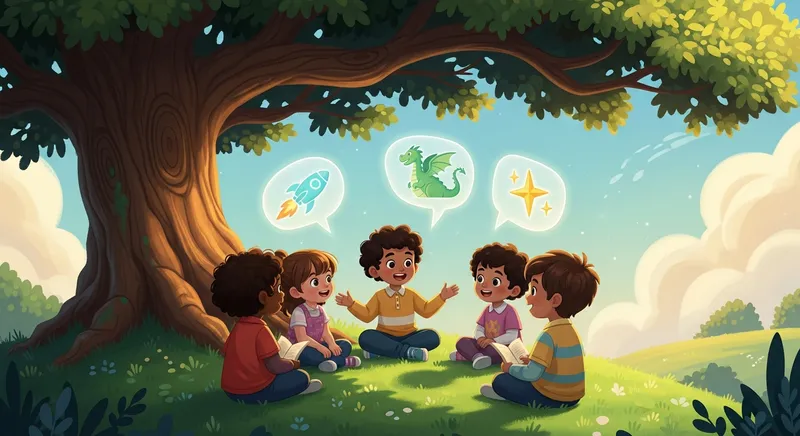
The Parent's Toolkit: How to Tell a 60-Second Story for Maximum Impact
Telling a great story isn't about a perfect performance. It's about connection. With these quick tales, you can become a master storyteller. Here's how to make every second count:
- Embrace the Pause: Even in a 60-second story, a well-timed pause builds suspense. Take a breath before revealing the moral.
- Use Different Voices: A high, squeaky voice for a mouse; a low, slow grumble for a bear. It doesn't have to be perfect-it just has to be fun! The contrast is what brings the characters to life.
- Ask Questions After: The story is the beginning of the conversation, not the end. Recent research published by Taylor & Francis Online found that moral stories are most effective when children are actively encouraged to be like the hero. A simple question can do just that.
To make it easy, each story below includes a Storyteller's Tip and a Talk About It prompt to help you bring the lesson home.
15 Ultra-Short Bedtime Stories with Morals
Here are 15 original stories crafted for modern kids and busy parents. We've even included an estimated reading time to help you stick to your schedule.
Modern Morals for Today's Kids
These stories tackle situations your child might actually encounter.
1. The iPad and the Patient Puppy
Estimated Reading Time: 40 seconds
Leo loved watching cartoons on the iPad. His puppy, Buster, loved to play fetch. One afternoon, Buster dropped his favorite squeaky ball right by Leo's feet, wagging his tail. Leo sighed, "Not now, Buster!" But then he saw Buster's sad, droopy ears. Leo thought for a moment, put the iPad down, and picked up the ball. The cartoons could wait, but his friend couldn't.
- Moral of the Story: It's important to make time for the people (and puppies) you love.
- Storyteller's Tip: Use a slightly whiny voice for Buster and a thoughtful, caring voice for Leo at the end.
Talk About It: "When is a good time to put our screens away and play together?"
2. The Little Toy Drone That Flew Too High
Estimated Reading Time: 45 seconds
A shiny new drone named Zoom loved to show off. "I can fly higher than the trees! I can zip faster than the birds!" he'd buzz. One day, he tried to fly all the way to a cloud. But a big gust of wind caught him, and he tumbled down, landing in a puddle. A little ladybug helped him dry his wings. Zoom learned that showing off wasn't nearly as important as being safe and having a friend.
- Moral of the Story: Humility is more important than showing off.
- Storyteller's Tip: Make a "zoooooom" sound effect and then a dramatic "whoosh" and "splat!" when the drone falls.
Talk About It: "Can you think of a time it's better to be careful than to be flashy?"
3. The Online Compliment
Estimated Reading Time: 40 seconds
Dania was looking at pictures her friend Maya posted online from her art class. One picture was a beautiful, sparkly painting of a butterfly. Dania thought about just scrolling past, but then she decided to type a message. "Your butterfly is amazing, Maya!" she wrote. A minute later, Maya sent back a message with three happy heart emojis. Dania's kind words had made her friend's day sparkle even brighter.
- Moral of the Story: A small compliment can make a big difference, both online and off.
- Storyteller's Tip: Read the compliment with genuine enthusiasm. You can even draw a heart in the air with your finger.
Talk About It: "Who is someone we could say something nice to tomorrow?"
4. The Forgotten Water Bottle
Estimated Reading Time: 50 seconds
After a fun day at the park, a little plastic water bottle was left all alone in the grass. "Oh no," it cried, "I'll be here forever!" But then, a girl named Rosie, who was on her way home, spotted it. She remembered her teacher talking about helping the Earth. She picked up the bottle and dropped it right into the big blue recycling bin. The bottle wasn't trash anymore; it was on its way to becoming something new!
- Moral of the Story: Taking care of our planet is everyone's job.
- Storyteller's Tip: Use a small, worried voice for the bottle and a confident, happy voice for Rosie.
Talk About It: "What's one small thing we can do to help the Earth this week?"
5. The Two Colorful Socks
Estimated Reading Time: 45 seconds
In a drawer lived a blue sock with stripes and a yellow sock with polka dots. "You're too bright!" said the blue sock. "You're too plain!" said the yellow sock. They always sat on opposite sides of the drawer. One day, their owner, Lily, put one of each on her feet. "My favorite pair!" she declared, "They look so happy together!" The socks realized that being different was what made them such a great team.
- Moral of the Story: Our differences are what make us special and beautiful together.
- Storyteller's Tip: Point to two different colored things in the room as you describe the socks.
Talk About It: "What makes your friends different from you, and why is that wonderful?"
Timeless Tales & Classic Values
These stories focus on universal lessons of character, perseverance, and kindness.
6. The Honest Little Gardener
Estimated Reading Time: 35 seconds
Sam was watering the flowers when he accidentally knocked over his mom's favorite pot. It cracked right down the middle! He was scared, but he went inside and said, "Mom, I broke the pot by accident. I am so sorry." His mom gave him a big hug and said, "Pots can be replaced, but my honest boy is irreplaceable."
- Moral of the Story: It is always best to tell the truth, even when you are scared.
- Storyteller's Tip: Whisper the part where Sam is scared, then say his confession in a clear, brave voice.
Talk About It: "Why is telling the truth more important than a broken pot?"
7. The Brave Little Firefly
Estimated Reading Time: 30 seconds
Pip was a tiny firefly who was afraid of the dark. "But you have a light inside you," said his father. That night, a little beetle fell and couldn't see the path. Pip took a deep breath, flew over, and shone his light as brightly as he could, guiding the beetle home. He wasn't afraid anymore.
- Moral of the Story: Your own courage can be a light for others.
- Storyteller's Tip: Flicker your fingers like a firefly's light when Pip gets brave.
Talk About It: "What does it feel like to be brave?"
8. The Sharing Squirrels
Estimated Reading Time: 35 seconds
Two squirrels, Squeaky and Nutsy, found the biggest acorn they had ever seen. "It's mine!" they both chattered. They tugged and pulled until the acorn cracked in half. Each squirrel looked at their half, then at each other. They realized half an acorn with a friend was much better than a whole acorn alone. They sat down and shared their feast.
- Moral of the Story: Sharing with a friend makes everything better.
- Storyteller's Tip: Use fast, chattery voices for the squirrels when they argue, and slow, happy voices when they share.
Talk About It: "What is your favorite thing to share with a friend?"
9. The Persistent Ant
Estimated Reading Time: 30 seconds
An ant named Pip was trying to carry a big crumb up a hill. He slipped and fell. He tried again. He slipped and fell again. A grasshopper laughed, "Just give up!" But Pip tried one more time, taking a different path, and finally reached the top! His entire colony cheered for the little ant who wouldn't quit.
- Moral of the Story: Never give up, even when a task is hard. For another story about persistence, read about Pip's Gigantic Climb.
- Storyteller's Tip: Use your finger to trace the ant's path in the air, showing the slips and the final success.
Talk About It: "Can you remember a time you kept trying and finally did it?"
10. The Grateful Bear
Estimated Reading Time: 40 seconds
Barnaby the bear woke up and stretched. He saw the sun and said, "Thank you, sun, for your warmth." He saw a bee and said, "Thank you, bee, for making honey." He ate a berry and said, "Thank you, bush, for this yummy treat." At the end of the day, Barnaby was the happiest bear in the woods because he noticed all the wonderful things around him.
- Moral of the Story: Having a grateful heart helps you see the good in everything.
- Storyteller's Tip: Use a big, sleepy, stretching motion at the beginning to act like Barnaby.
Talk About It: "What are three things we are grateful for right now?"
11. The Tortoise and the Hare (2.0)
Estimated Reading Time: 55 seconds
The race was on! Harry the Hare zipped ahead of Terry the Tortoise in a flash. "I'm so far ahead," Harry thought, pulling out his smartphone. "I'll just watch one quick video." But one video became ten, and soon he was just scrolling. Meanwhile, Terry kept going, step by steady step. Harry finally looked up, but it was too late. Terry was already crossing the finish line, waving a tiny flag.
- Moral of the Story: Slow and steady wins the race, and distractions can make you lose focus.
- Storyteller's Tip: Pretend to be tapping on a phone and looking down, then look up with a surprised face.
Talk About It: "What are some things that can distract us from finishing what we started?"
12. The Boy Who Cried 'Boring!'
Estimated Reading Time: 50 seconds
Peter was supposed to be watching his little sister, but he was bored. "Help! A giant, purple monster is trying to steal my toys!" he yelled. His parents came running, but there was no monster. A little later, he yelled, "Help! A silly giraffe is tickling me!" His parents came running again, looking annoyed. Then, his sister really did start to climb the bookshelf. "Help!" Peter yelled, "She's really going to fall!" But this time, no one came.
- Moral of the Story: If you don't tell the truth, people won't believe you when you really need them to.
- Storyteller's Tip: Use a bored voice, then a silly yelling voice, then a genuinely panicked voice.
Talk About It: "Why is it important for people to trust the words you say?"
13. The Lion and the Clever Mouse
Estimated Reading Time: 50 seconds
A mighty lion was caught in a hunter's rope net! He roared and roared. A tiny mouse named Millie heard him. "Don't worry!" she squeaked. Instead of chewing the ropes, she pulled out her tiny mouse-tablet, looked up a video on "How to Tie a Slip Knot," and expertly untied the main knot holding the net together. The whole net fell apart, and the lion was free! "Wow," roared the lion, "You are clever!"
- Moral of the Story: Brains can be just as powerful as brawn, and everyone has unique skills.
- Storyteller's Tip: Mime typing on a tiny tablet and then confidently untying a knot.
Talk About It: "What is a clever skill you have?"
14. The Moon Who Wanted to Dance
Estimated Reading Time: 40 seconds
The Moon watched the stars twinkle every night. "They look like they're dancing," she sighed to a passing comet. "I wish I could dance too." The comet whispered, "You do dance! You dance with the ocean tides, pulling them back and forth. You dance across the sky, from one horizon to the other." The Moon looked down at the ocean and saw it swaying, and she realized she had been the belle of the ball all along. For a similar adventure, check out Luna's Moon Quest.
- Moral of the Story: We all have our own special way of shining.
- Storyteller's Tip: Sway back and forth gently as you describe the ocean tides dancing.
Talk About It: "If you could dance with the moon, what would it be like?"
15. The Magical Paintbrush That Painted Feelings
Estimated Reading Time: 45 seconds
Justine found a paintbrush in an old box. When she felt happy, she dipped it in yellow paint and it painted a perfect, smiling sun. When she felt sad, she dipped it in blue and it painted gentle raindrops. One day, her little brother was crying. Justine took the brush, dipped it in bright orange, and painted a silly, curly clown. Her brother saw it and giggled, his sadness forgotten. You can read more about her story in Justine and the Magical Paintbrush.
- Moral of the Story: Art can help us understand our feelings and help others with theirs.
- Storyteller's Tip: Pretend to paint in the air with big, sweeping motions.
Talk About It: "If you could paint a feeling, what color would you choose for 'happy'?"
The Power of Positive Stories: What Science Says
These little flights of fancy are fun, but what about stories that teach a specific lesson? The way we frame those lessons matters more than you might think. It's interesting to note that many classic fables, like "The Boy Who Cried Wolf," focus on the negative consequences of bad behavior. But is that the most effective way to teach a moral? Not according to science.
A fascinating study featured in Psychological Science found that young children are significantly more likely to be honest after hearing a story that praises a character's truthfulness (like the tale of George Washington and the cherry tree) compared to hearing a story that highlights the negative fallout from lying. Stories that celebrate the virtue you want to encourage are more powerful than those that punish the vice you want to discourage.
This is why creating new, positive stories like "The Honest Little Gardener" can be such a powerful part of your parenting toolkit.
Your Personal Storyteller for Endless Adventures
These 15 stories are a great start, but what about tomorrow night? And the night after that? Children's imaginations are limitless, but a parent's time and energy are not.
This is where Dreamcraft Tale can transform your bedtime routine. With our AI-powered app, your child becomes the hero of their own unlimited, personalized stories. Is your child suddenly obsessed with rainbow unicorns on Mars? You can create that exact story in three simple steps: Imagine, Create, Read.
"We went from 45-minute bedtime battles to my daughter asking to create stories together. It's become our favorite part of the day." — a Dreamcraft Tale parent
And on nights when you're just too tired to create? You can explore thousands of magical stories in our community library, all ready to read in a safe, ad-free environment designed to protect and inspire young minds.
Ready to Create Your First Magical Story?
Turn tonight's bedtime into an adventure your child will never forget. With Dreamcraft Tale, you can co-create unlimited, personalized stories in minutes.
✨ Try Dreamcraft Tale for Free ✨
Frequently Asked Questions
What makes a good modern moral for children?
A good modern moral addresses situations and values relevant to today's world. While classic morals about honesty and bravery are timeless, modern morals might tackle topics like managing screen time, showing kindness online, environmental responsibility, or celebrating diversity. The key is to make the lesson relatable to a child's current life experiences.
Why are very short stories good for toddlers?
Toddlers and preschoolers have naturally short attention spans. An ultra-short story, typically under 150 words, is perfectly tailored to their developmental stage. It allows them to hear a complete narrative-with a beginning, middle, and end-before they lose focus. This helps build foundational literacy skills like listening comprehension and narrative understanding, making it a positive and successful experience that encourages a love for stories.
What is a moral story in 5 lines?
A 5-line moral story is a highly condensed narrative designed for maximum impact. It typically follows this structure:
- Character & Setting: Introduce who and where.
- Conflict/Problem: Present a small challenge or choice.
- Action: Describe the character's decision.
- Resolution: Show the immediate outcome of the action.
- Moral: State the lesson learned. Our story "The Honest Little Gardener" is a perfect example of this powerful, compact format.
Can you give a short story about honesty for a 3-year-old?
Absolutely. Here is a very simple one: "Lily was painting and a little red paint dripped on the white rug. Oh no! She felt scared, but she found her dad and said, 'Dad, I made a red spot on the rug by accident.' Her dad hugged her and said, 'Thank you for telling me the truth. We can clean the spot together.'" This story is short, has a clear cause-and-effect, and ends with reassurance, which is crucial for this age group.
What is the best moral for a short story for kids?
The best morals for children are positive and empowering. Research shows that stories praising good behavior are more effective than stories that punish bad behavior. Instead of "don't lie," a better moral is "telling the truth makes people trust you." Focus on virtues like kindness, courage, perseverance, empathy, and gratitude. The goal is to inspire your child by showing them the wonderful outcomes of making good choices.
How can I tell a bedtime story in one minute?
To tell a story in one minute, choose a tale that is around 100-150 words. The key is not to rush your words, but to be efficient with your storytelling. Use expressive tones and simple hand gestures to add excitement. Our "Storyteller's Tips" provide quick ideas for this. Remember, the goal is a minute of focused connection. It's about the quality of the moment, not the quantity of the words.
Pro-Tip: With an app like Dreamcraft Tale, you can even generate stories based on a specific theme or character your child loves, ensuring they're engaged from the very first word.