11 Imaginative Storytelling Activities for Preschoolers (Beyond Just Reading Books)
It's that time of night. You've read the same three books twice, your voice is getting tired, and you're secretly hoping your child doesn't ask for "just one more." We've all been there. While reading books is magical, what if you could invite your child to step beyond the page and become the storyteller—or even the hero—themselves? And on those extra-tired nights, what if you could instantly access a library of stories created by families just like yours?
Welcome to the world of oral storytelling—a playful, interactive way to connect with your preschooler that goes far beyond just reading. It's not just fun; it's a powerful way to spark their imagination, build foundational pre-literacy skills, and strengthen your bond, one silly, co-created adventure at a time.
Why Playful Storytelling is a Superpower for Your Child's Development
Creating stories together is more than just entertainment; it's a cornerstone of healthy early childhood development. When you and your child engage in back-and-forth creative play, you're building their brain in powerful ways.
These responsive "serve and return" interactions are fundamental for building sturdy brain architecture. — Center on the Developing Child at Harvard University
This playful exchange does more than just create a happy memory—it builds essential skills for life and learning:
- Builds Narrative & Language Skills: Oral storytelling helps children naturally grasp story structure (a beginning, middle, and end) while practicing new vocabulary and sentence structure. The national literacy initiative Reading Rockets highlights that these narrative skills are a key predictor of future reading comprehension and writing ability.
- Boosts Imagination & Confidence: This is where the real magic happens. By giving them a voice to create worlds, characters, and outcomes, you empower them. You show them that their ideas are valuable and exciting, building the confidence to express themselves.
- Strengthens Emotional Bonds: The ability to narrate emerges and grows significantly between ages 3 and 5, often through interaction with others, according to research in the ASHA Journals. These shared creative moments build trust, connection, and a library of inside jokes and family memories.

11 Creative Oral Storytelling Activities for Kids (Ages 3-5)
Ready to get started? The best part is that these activities require little to no prep. Remember, there's no right or wrong way to do this—the only goal is to have fun and connect.
1. DIY Story Stones
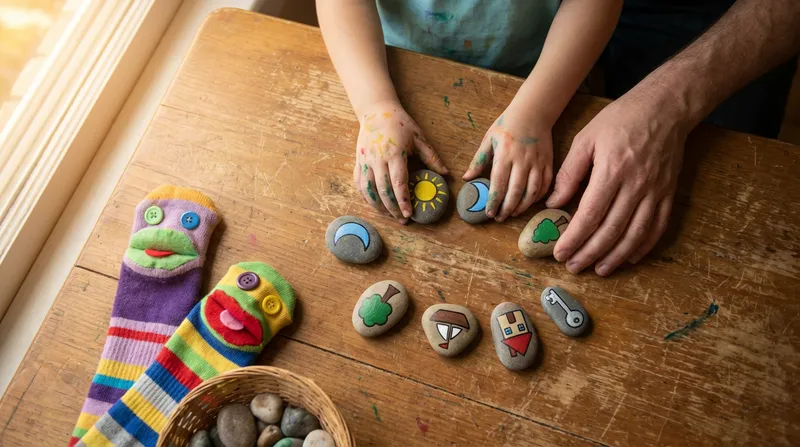
Story stones are smooth rocks with simple pictures painted on them (a sun, a key, a boat, a monster). To play, have your child pull stones from a bag one by one, using each picture to build the next part of a collaborative story.
Dreamcraft Tale Tip: After creating your tale, use the characters and plot points from the stones as prompts in the Dreamcraft Tale app. You can turn your spontaneous story into a beautifully illustrated book you can read again and again.
2. Character Puppets
Giving a character a physical form can help even shy children open up. As PBS KIDS for Parents suggests, simple puppets work wonders. A paper bag with a drawn-on face, a sock with button eyes, or their favorite stuffed animal can become the star of the show.
Dreamcraft Tale Tip: Snap a picture of your child's puppet hero! Then, describe the puppet to the Dreamcraft Tale AI to make it the main character in a brand-new, personalized adventure.
3. Sound Effect Stories
This is a fantastic sensory activity where sounds drive the narrative. You start telling a simple story and pause for your child to fill in the sound effects. For example: "The little bear walked through the forest… thump, thump, thump… when suddenly, the wind began to blow… whooooosh!"
Dreamcraft Tale Tip: Write down the story you created together. Later, you can read the text from the Dreamcraft Tale app on your tablet while your child performs their sound effects live!
4. The 'And Then...' Group Story Game
Perfect for car rides or waiting in line, this turn-based game teaches collaboration. One person starts with a story opener like, "Once upon a time, there was a purple squirrel who loved to bake…" and the next person adds to it, beginning their sentence with "and then…" If you need inspiration, try these 50+ Creative Story Starters for Kids.
Dreamcraft Tale Tip: Use your phone's voice recorder to capture your family's silly "And Then…" story. Transcribe the best parts into the app later to see your spontaneous tale come to life with professional illustrations.
5. Story Jar Prompts
Fill a jar with slips of paper in three categories: Characters (a brave mouse), Settings (a candy castle), and Problems (a lost key). Have your child pull one from each category and build a story that connects the three prompts.
Dreamcraft Tale Tip: These prompts work perfectly in the Dreamcraft Tale app! When you're short on time, just input your three prompts and watch the AI generate a complete story in minutes.
6. Reimagine a Classic Tale
Take a story everyone knows and ask, "What if?" What if the Big Bad Wolf just wanted to borrow a cup of sugar? Deconstructing a familiar story is a fun way to teach plot and character. It's a great way to create your own Classic Fairy Tales Reimagined.
Dreamcraft Tale Tip: Use the prompt box in Dreamcraft Tale to explore these new twists. Try starting with, "A story where Cinderella goes to a science fair instead of a ball," and see what happens!
7. Character Hot Seat
In this game, your child pretends to be a character. You act as an interviewer, asking them questions: "What's your favorite food?" "What are you afraid of?" This exercise develops character depth and empathy.
Dreamcraft Tale Tip: Use the answers from the "hot seat" interview to build a rich character profile for a new story in the app. The more details you provide, the more personal the story will be.
8. Three-Object Story
Ask your child to find three random objects from around the room (a crayon, a sock, a toy car). Your mission is to weave all three objects into a short, silly story. This encourages flexible thinking and creative connections.
Dreamcraft Tale Tip: This is a perfect way to generate a totally unique story prompt. Enter the three items into the app—like "a story about a crayon, a sock, and a toy car"—and see what wild adventure it creates.
9. Draw-a-Story
Start by drawing a character or a scene on a piece of paper. Then, pass it to the next person, who adds to the drawing and continues the story. This creates a visual narrative that can be less intimidating than purely verbal storytelling.
Dreamcraft Tale Tip: Use your final drawing as the inspiration for your story's illustrations. When creating your story in the app, describe the scene you drew to help guide the AI's artwork.
10. 'My Day' as an Epic Adventure
This is a wonderful bedtime activity to help children process their day. Recast their daily events in an epic light: "The treacherous journey to preschool," or "The noble quest for the lost teddy bear." It's a fun way to build narrative skills using their own life experiences.
Dreamcraft Tale Tip: Turn a really special day into a personalized storybook. Rest assured that with our content filters and ad-free environment, every story you create together stays wholesome and focused on your child's imagination.
11. Shadow Play Theater
In a darkened room, use a flashlight against a blank wall to create a stage. Show your child how to make simple hand shadow puppets, like a bird or a rabbit. Act out a simple story using just shadows and your voices for a truly magical, low-tech experience.
Dreamcraft Tale Tip: Create a story in the app about shadows that come to life at night. Let the AI illustrate the magical, secret world they discover after everyone else is asleep.
From Playtime to Keepsake: Capturing Your Child's Stories
These verbal stories are beautiful, precious, and… fleeting. The amazing adventure you created in the car might be forgotten by bathtime. But what if you could capture that spark?
This is where Dreamcraft Tale | AI Story Generator for Kids bridges the gap between physical play and a lasting memory. It empowers you to take the core of your child's oral story—the characters, the plot, the silly details—and transform it into a beautifully illustrated, personalized storybook.
Imagine the pride on your child's face when they see their idea turned into a "real" book where they are the author and the hero. It validates their creativity in a powerful, tangible way, all within a safe, ad-free space designed to protect and inspire young minds.
Frequently Asked Questions
At what age can children start storytelling?
Children can begin their storytelling journey around age 3. According to research published in the ASHA Journals, this is when the ability to create narratives starts to emerge. Their first stories might be simple, but this is the perfect time to encourage them with playful, supportive activities.
What if my child is shy and doesn't want to tell a story?
That's perfectly normal. The key is to keep it fun and low-pressure. Try using a puppet to do the talking for them, or begin with a collaborative game like 'And Then...' where they only need to add a few words. When you model storytelling with enthusiasm, you create a safe space for their confidence to grow.
Is using an AI app to create stories good for my child's creativity?
Absolutely. Think of an app like Dreamcraft Tale as a collaborative tool, not a replacement for imagination. Your child remains the hero and creative director—they provide the spark and the core ideas. The app then acts as their personal illustrator, turning their vision into a tangible product they can feel proud of. For a deeper look, check out our Parent's Guide to AI & Our Safety Promise.
What are the most important pre-literacy skills storytelling helps with?
Oral storytelling is a powerhouse for building the skills needed for reading. Experts at the University of Connecticut's Neag School of Education highlight several key benefits, including a bigger vocabulary, understanding of narrative structure, and print awareness—the crucial realization that spoken words can be written down and read.
How can I make storytelling a regular part of our routine?
Start small and weave it into moments you already share. Use the 'My Day as an Epic Adventure' activity on the drive home from school, play the 'Three-Object Story' game while waiting for dinner, or make it a fun and creative part of your bedtime routine.
Ultimately, storytelling isn't about creating a perfect plot. It's about connection. It's about showing your child that their voice matters, their ideas are magical, and you love exploring new worlds with them.
Ready to see your child's eyes light up when they become the hero of their very own adventure? Download Dreamcraft Tale and create your first magical memory together!